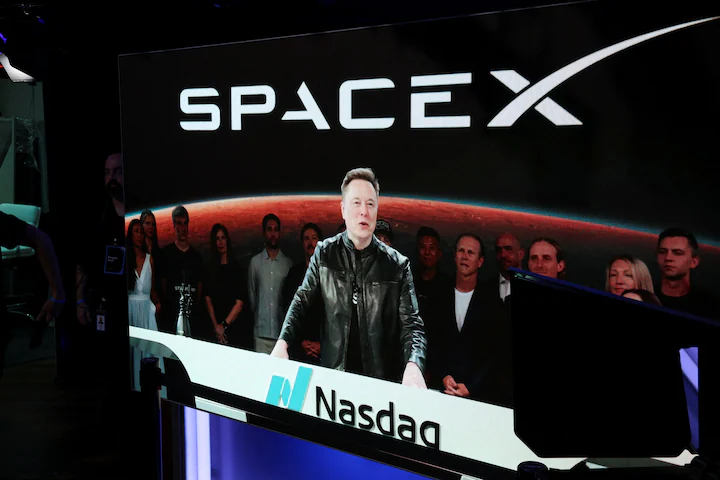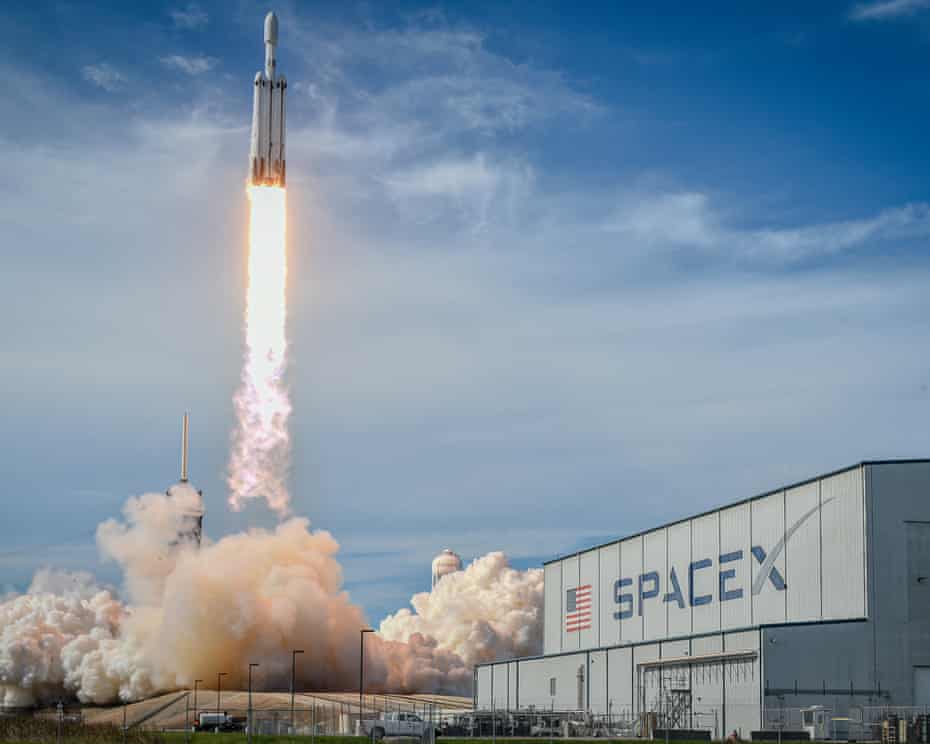
Elon Musk’s rocket company, SpaceX, made a stunning debut on the Nasdaq on Friday as its shares surged 19 percent, pushing the company’s valuation above $2 trillion and making it the sixth most valuable company in the United States.
The rally also propelled Musk to become the world’s first trillionaire following SpaceX’s record-breaking $75 billion initial public offering.
Investors rushed to buy into Musk’s expanding business empire, which spans rockets, satellite technology, and artificial intelligence.
More than 510 million shares worth approximately $84 billion exchanged hands during the trading session despite the company remaining unprofitable and generating far less revenue than similarly valued technology giants.
SpaceX shares closed at $160.95, giving the company a market value of about $2.1 trillion. The valuation surpassed that of Broadcom, while Amazon remains next ahead at roughly $2.6 trillion.
Trading began smoothly on Friday morning, avoiding the technical problems that affected Facebook’s market debut in 2012.
However, concerns had mounted ahead of the launch following recent declines in technology stocks and worries over lofty valuations attached to AI-related companies.
The blockbuster listing has also increased anticipation surrounding potential future public offerings from artificial intelligence firms such as Anthropic and OpenAI.
Investors ranging from large institutional funds to retail traders ended the day in high spirits.
“For many investors, SpaceX is the closest thing to investing in the railroads during the Industrial Revolution and they are willing to pay the Elon Musk premium for that opportunity,” said Seth Hickle, chief investment officer at Mindset Wealth Management in Indianapolis.
Despite the excitement, analysts warned that the stock could experience significant volatility in the coming weeks because of its relatively small public float and steep valuation metrics.
With reported revenue of $18.7 billion, SpaceX currently trades at a price-to-revenue ratio of roughly 112, far higher than most megacap technology companies.
“The question remains is, what happens in a couple of weeks from now. Right now, people want to bid the stock higher because it’s a winner at this point. Whether it stays that way, that remains to be seen,” said Todd Schoenberger, chief investment officer at Crosscheck Management in Washington, D.C.
Retail investors were allocated about 20 percent of the IPO shares, significantly more than is typical for a public offering, with some investors celebrating receiving allocations as small as one share.
SpaceX President Gwynne Shotwell and Chief Financial Officer Bret Johnsen joined executives at Nasdaq’s market site in New York’s Times Square to ring the opening bell, while Musk hosted a separate celebration for employees in Texas.
The listing marks a major milestone in Musk’s long-standing ambitions in the space and technology industries and has already been described as one of Wall Street’s most transformative IPOs.
“Elon deserves an extreme premium because of his track record and his vision for calling technology trends early,” said Shaun Maguire, a Sequoia Capital partner who led the firm’s $2 billion investment in SpaceX.
According to Reuters, Sequoia Capital’s stake is now worth more than $20 billion based on the IPO valuation.
At $75 billion, SpaceX’s IPO raised more than double the amount generated by Saudi Aramco’s record-setting listing in 2019.
The company’s valuation could climb even higher if underwriters decide to exercise their option to sell additional shares within 30 days of the offering.
“Seeing the company that I joined when it was just some sketches on paper become this valuable is almost surreal,” said Tom Mueller, a founding SpaceX employee and current CEO of Impulse Space.
Reports also indicate that around 4,000 current and former SpaceX employees are expected to become millionaires from their holdings in the company.
Although SpaceX is not yet eligible for inclusion in the S&P 500 because it remains unprofitable, analysts expect the company to join the Nasdaq 100 index within about a month under Nasdaq’s fast-track inclusion rules.
Such an inclusion could trigger fresh demand for the stock from passive investment funds and exchange-traded funds tracking the index.
Some market analysts believe SpaceX’s debut may also force investors to reshuffle their portfolios, creating pressure on other technology and space-related stocks.
Shares of Planet Labs fell nine percent on Friday, while EchoStar dropped 11 percent following SpaceX’s market debut.
SpaceX has projected its total market opportunity at $28.5 trillion, describing it as the largest opportunity in human history.
The company also highlighted its dominance in space launches, claiming responsibility for more than four-fifths of all mass launched into orbit over the past three years.
While some analysts have issued bullish ratings on the stock, others remain cautious. Morningstar recently estimated SpaceX’s fair value at about $780 billion, while CFRA initiated coverage with a sell recommendation.
“This is not a name you’re buying based on fundamentals. For me, the analogy is Amazon. This was a company that changed the way we live,” said Nancy Tengler, CEO and CIO of Laffer Tengler Investments.