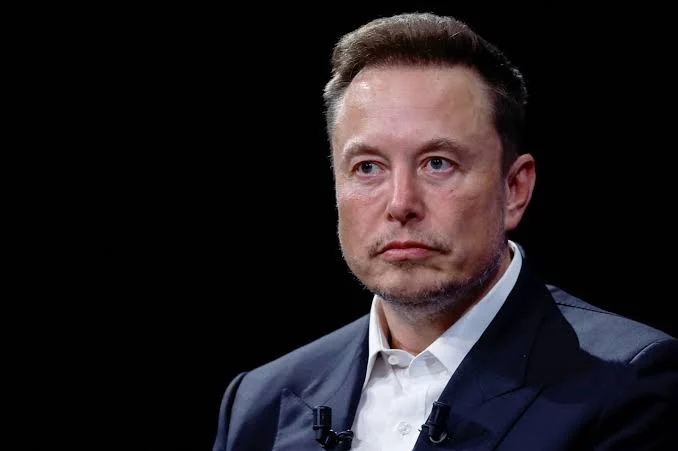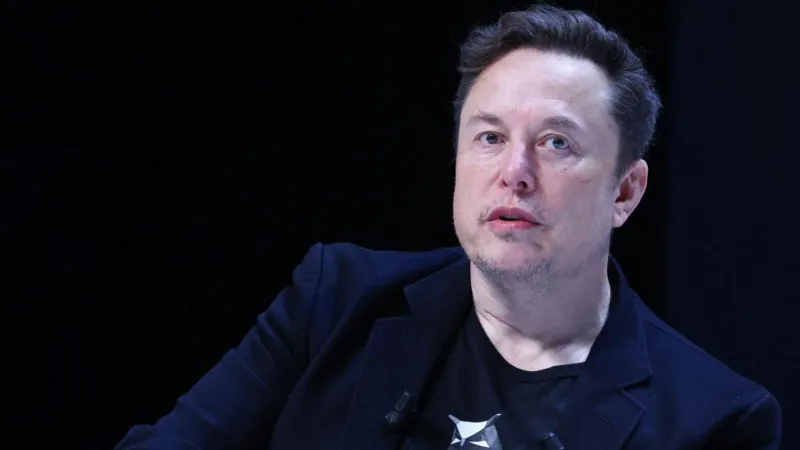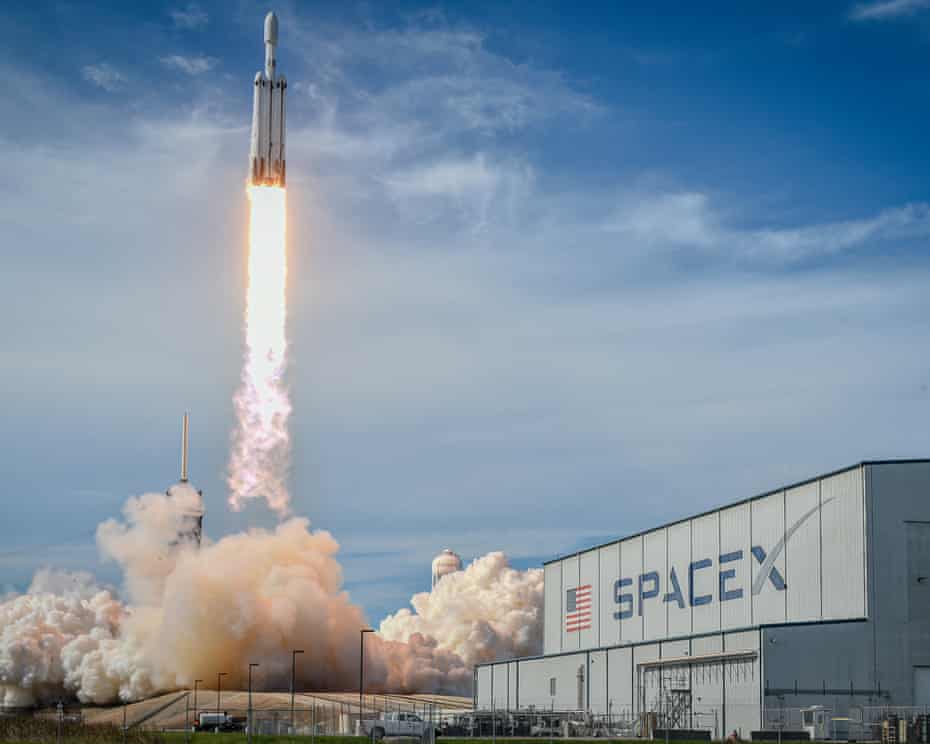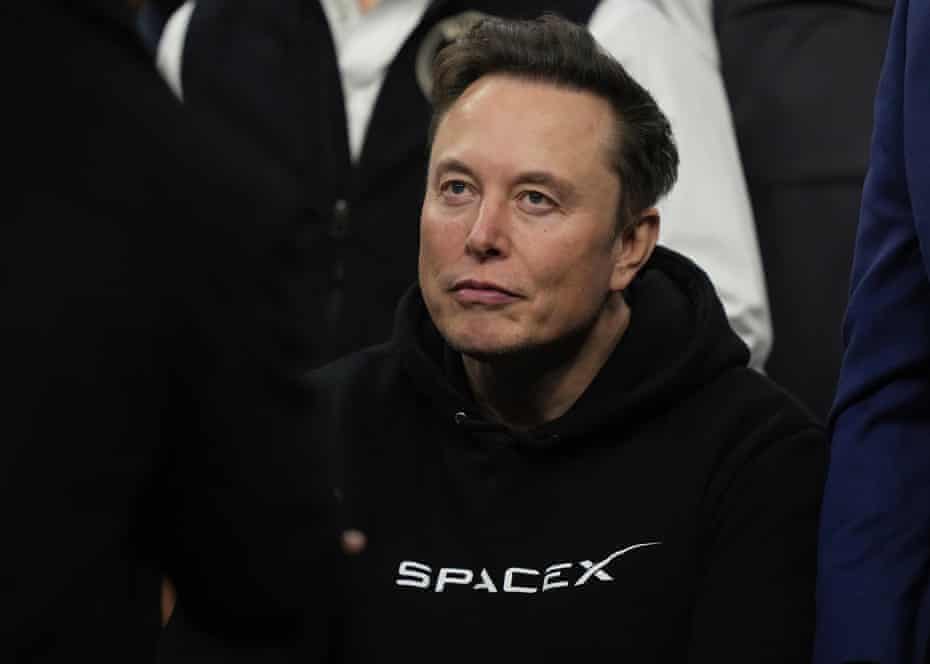
Elon Musk has acknowledged that his company, SpaceX, restricted Ukraine’s access to its Starlink satellite internet service, following reports from Ukrainian officials that connectivity had returned to normal.
The billionaire entrepreneur accused Ukraine’s military of breaching the service’s terms and conditions by using the civilian internet network for offensive military operations.
However, he denied responsibility for a simultaneous disruption involving Starshield, a separate military-grade satellite communications system operated under US government control.
Ukraine has yet to issue an official response to Musk’s latest comments.
However, presidential adviser Serhii Beskrestnov described the billionaire’s statement as “very strange”.
The controversy emerged last week after Ukrainian forces reported difficulties accessing Starlink, which they rely on for battlefield communications and the coordination of defensive operations.
Kyiv said the disruption had affected its military activities for more than a week.
Musk had previously denied deliberately restricting Ukraine’s access to the network.
His latest remarks came after US President Donald Trump said he had instructed the technology entrepreneur to restore the service.
Trump had repeatedly denied ordering restrictions on Starlink’s operations in Ukraine.
In a post on X on Saturday, Musk defended SpaceX’s decision, insisting that the civilian satellite service was never intended to support offensive drone attacks.
“Using Starlink, a civilian commercial service, for offensive drone strikes to kill people has never been allowed, nor should it be,” Musk wrote.
He added, “Ukraine[‘s] military violated Starlink terms of service and used it for offensive drone strikes to kill people.
That loophole was closed last week.”
Musk also defended his company’s contribution to Ukraine’s war effort, saying SpaceX had “done more to defend Ukraine than any private company on Earth”.
He further stressed the distinction between Starlink and Starshield, explaining that the latter was controlled by the US government and that decisions concerning its use were outside his authority.
“What they decide to do is up to them,” he added.
In another post, Musk clarified the circumstances under which the civilian network could be used by the military.
“[Starlink] can be used for infrastructure that is military, but it cannot be used for unequivocally offensive strikes that make it fair game to be struck back.”
Beskrestnov challenged Musk’s explanation, arguing that technical restrictions imposed on Starlink in Ukraine made the network unsuitable for the type of long-range attacks the billionaire described.
According to the Ukrainian presidential adviser, drones operating through Starlink were limited to speeds of between 70 and 90 kilometres per hour and could not use the service while operating inside Russian territory.
“Therefore, we physically cannot use commercial Starlink for deep strikes and medium-range strikes,” he wrote on Telegram.
“It is very strange that Elon Musk is not aware of Starlink restrictions in Ukraine.”
Ukraine’s defence ministry had not immediately commented on the dispute.
Ukraine Reports Improved Connectivity
Ukraine’s military has relied heavily on SpaceX’s satellite technology since Russia launched its full-scale invasion in February 2022.
Starlink provides internet connectivity that enables troops to communicate and coordinate operations, particularly in remote battlefield locations where conventional communications infrastructure is unavailable or damaged.
Starshield, meanwhile, provides more secure military communications and supports certain battlefield applications, including helping Ukrainian drone operators monitor targets and operate interceptor drones.
Both systems depend on networks of low-Earth-orbit satellites launched by SpaceX, although they serve different purposes and operate under different arrangements.
Russia is not authorised to use Starlink.
Consequently, the service does not function for Ukrainian long-range missiles and drones operating deep inside Russian territory.
Ukraine’s Defence Minister, Yevhenii Khmara, said on Saturday that the military was recording a “stable connection” following the latest developments.
He added that drones could now reach speeds exceeding 400 kilometres per hour, indicating that the previous operational restrictions had eased.
President Volodymyr Zelensky also welcomed the improvement, writing on Telegram, “The speeds are now where they need to be.”
Kyiv had previously reported that the connection would be lost when drones exceeded speeds of 161 kilometres per hour.
Despite acknowledging the restrictions, Musk did not explain why SpaceX had introduced the changes last week, particularly given Ukraine’s longstanding reliance on the network for military communications.
Restrictions Emerge Amid US-Ukraine Tensions
The Starlink disruption coincided with heightened diplomatic tensions between Washington and Kyiv over Ukraine’s attacks on Russian oil infrastructure.
Ukraine has targeted Russian oil refineries, arguing that the facilities generate revenue that helps Moscow finance its war effort.
However, Trump criticised the strikes, saying they had contributed to higher global energy prices.
Although attacks on oil infrastructure have affected fuel markets, recent price increases have been attributed primarily to the war involving Iran.
Facing midterm elections next month and growing domestic concerns over rising fuel costs, Trump has eased some sanctions on Russia and agreed to a deal with Moscow to supply Russian diesel to the United States and international markets.
The arrangement has attracted criticism from European allies, who argue that the revenue could help sustain Russia’s military campaign.
Zelensky had initially agreed to suspend attacks on Russian oil facilities on the condition that Moscow also stop targeting Ukraine’s energy infrastructure.
However, Kyiv resumed the strikes after accusing Russia of repeatedly violating the understanding.
The Ukrainian president also claimed that Washington had threatened to suspend intelligence-sharing arrangements if Ukraine continued attacking Russian oil installations. Trump denied making such a threat.
The developments have raised further questions about Ukraine’s dependence on American technology and intelligence support as the war continues.
Fighting Continues Across Ukraine
Meanwhile, Russian and Ukrainian forces continued exchanging attacks overnight.
Emergency services in Ukraine reported that three people were killed and 15 others injured, including an 11-year-old girl, during attacks in the southeastern Dnipropetrovsk region.
In the central city of Vinnytsia, another six people were injured after a Russian drone struck an apartment building.
Russia’s Defence Ministry also claimed on Sunday that its forces had attacked a cargo vessel allegedly transporting supplies for the Ukrainian military as it travelled towards the Black Sea port of Chornomorsk.
The ministry further reported strikes on a logistics centre, a distribution centre and a logistics terminal in Kharkiv.
Separately, Ukraine’s Defence Ministry said its forces had attacked a facility in the Russian city of Oryol operated by a heavy machinery manufacturer under sanctions.
Russian authorities reported that three people were killed in the strike.
Russia launched its full-scale invasion of Ukraine in February 2022, and the conflict has now entered its fifth year.