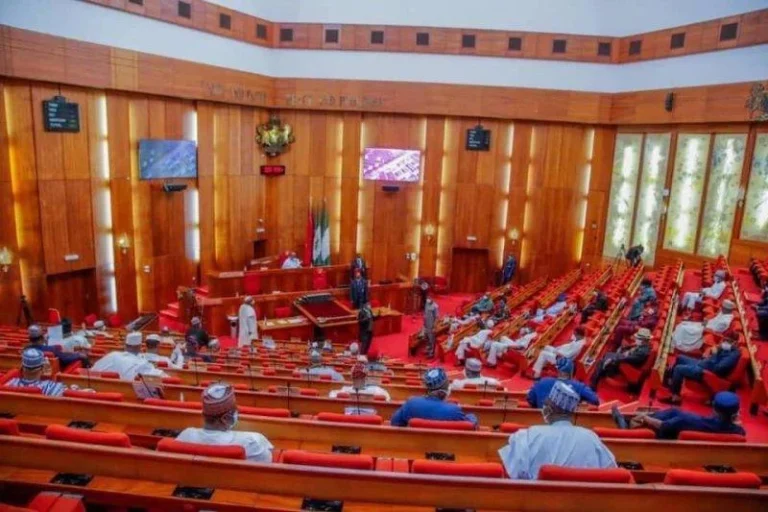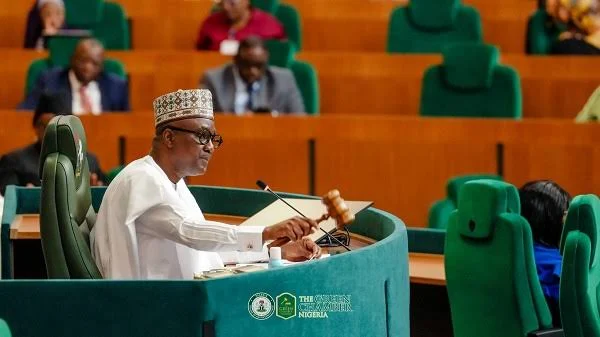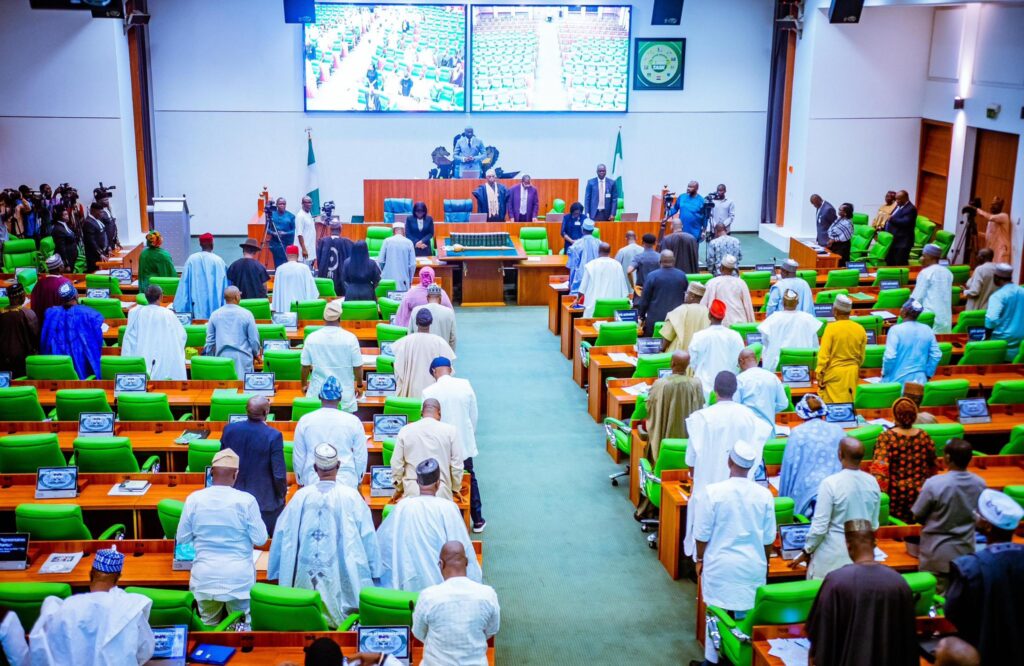
The Senate Leader, Opeyemi Bamidele, has said the establishment of state police in Nigeria is progressing towards reality, following the approval of the proposed constitutional amendment by at least 30 State Houses of Assembly.
Bamidele disclosed this on Thursday while delivering a lecture to participants of Senior Executive Course 48 at the National Institute for Policy and Strategic Studies, Kuru, Plateau State.
He said the National Assembly had started collating reports from the state legislatures after the proposed State Police Constitution Alteration Bill, 2026, received the required support from at least two-thirds of the 36 states.
According to the Senate Leader, the National Assembly will review the reports and pass a resolution by a simple majority in both chambers before forwarding the bill to President Bola Tinubu for assent.
Bamidele, who is also Vice Chairman of the Senate Committee on the Review of the 1999 Constitution, said the lawmakers intended to conclude the remaining legislative procedures by December 2026.
He said, “We are pleased to inform our constituents across the federation that State Police have moved from rhetoric to reality. We have already received formal reports from the State Houses of Assembly and, as of today, no fewer than 30 states have approved the State Police Constitution Alteration Bill, 2026.
“By the provision of Section 9(2) of the 1999 Constitution (as amended), which requires the concurrence of not less than two-thirds of all State Houses of Assembly, the constitutional requirement for the alteration has been duly met. This is a historic milestone in our collective quest to re-engineer our security architecture and make it more responsive, more local, and more effective.
“What happens next is procedural, but critical. The National Assembly is now constitutionally obligated to consider the reports transmitted by the State Houses of Assembly, collate those reports, and pass a resolution by simple majority of members in both chambers. Once this resolution is passed, the Alteration Bill will be transmitted to the President and Commander-in-Chief for assent.
“We have set a clear timeline for ourselves. We intend to conclude all these legislative stages — consideration of reports, passage of resolution, and transmission for presidential assent — on or before December 2026,” the Senate Leader emphasised.
The proposed reform is part of efforts to decentralise Nigeria’s security system amid persistent cases of killings, kidnapping and other violent crimes across the country.
Under the current arrangement, the Nigeria Police Force operates mainly under a centralised structure.
Supporters of state police believe allowing individual states to establish their own police services would improve intelligence gathering, enhance response to security threats and strengthen accountability at the community level.
However, critics have expressed concerns that state governors and other political office holders could use the proposed police structure to intimidate political opponents.
Bamidele maintained that the reform would be guided by constitutional provisions, oversight mechanisms and human rights protections.
He described the development as a major breakthrough after more than 15 years of unsuccessful efforts to establish state police through constitutional amendments.
“What this means is that State Police is no longer a campaign promise or a subject of endless debate. It is now a constitutional reality. It means that the security of lives, private property and public assets occupies a prime place in the legislative agenda of the 10th National Assembly,” he said.
Bamidele added that the proposed arrangement would enable states to develop policing systems suited to their respective circumstances and security needs.
He stressed that the initiative was not designed to weaken the Federal Government but to strengthen Nigeria’s federal system through a more responsive approach to security.
According to him, the proposal is intended to create state-led and community-based policing structures rather than state armies, with clearly defined constitutional and operational standards.
The Ekiti lawmaker also acknowledged the support of Senate President Godswill Akpabio for the initiative, assuring Nigerians that the National Assembly would remain committed to its implementation.
He said the National Assembly, under the leadership of the President of the Senate, Senator Godswill Akpabio, “remains committed to delivering on the establishment of State Police. We will not falter until every Nigerian, whether in Kuru, in Iyin-Ekiti, in Gusau or in Yenagoa, can sleep with both eyes closed.”
Beyond the state police proposal, Bamidele highlighted other legislative priorities of the 10th National Assembly, including measures aimed at improving citizens’ welfare, strengthening institutions and supporting economic development.
He said the legislature’s performance should be measured by the practical impact of its laws on citizens rather than the number of bills passed.
Among the laws he cited were the Student Loans (Access to Higher Education) Act, 2024; the Minimum Wage (Amendment) Act, 2024; the four Tax Reform Acts of 2025; and the National Social Investment Programme Act.
He also listed the Electoral Act, 2026, the Cybercrimes (Amendment) Act, the Investments and Securities Act, 2025, the Nigerian Insurance Industry Reform Act, 2024, and the Regional Development Commissions Acts as part of the Assembly’s legislative achievements.
According to him, the measures were designed to anticipate emerging challenges, improve public institutions and strengthen governance.
He said proactive legislation could support national security, economic transformation, public financial management, electoral credibility, education, healthcare, technological innovation, environmental sustainability and cooperation among the different levels of government.
The Senate Leader also called for stronger collaboration between the National Assembly and NIPSS to improve legislative foresight and policy development.
He noted that passing laws alone could not guarantee good governance, emphasising the importance of effective implementation, adequate funding and proper monitoring.
Bamidele said legislation must address citizens’ needs and deliver measurable improvements in their lives.
He, thus, observed that good governance “requires good laws. But good laws alone do not guarantee good governance.”
“We require laws that are relevant, evidence-based, implementable, adequately funded, properly administered, effectively monitored, periodically reviewed and ultimately measured by their impact on citizens,” Bamidele stated.