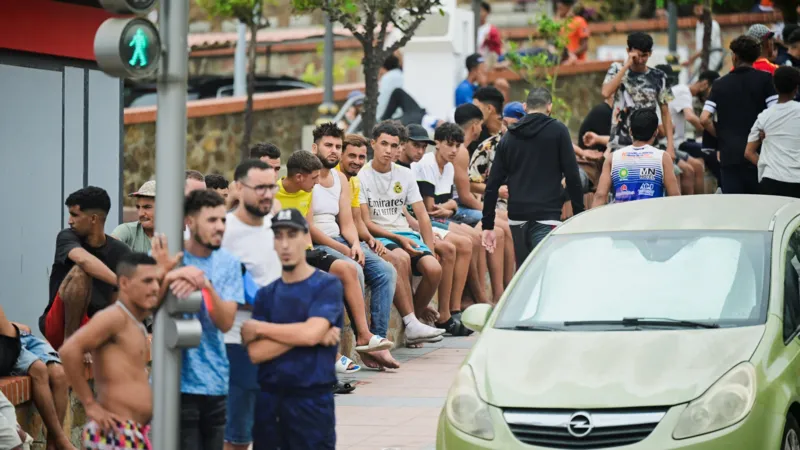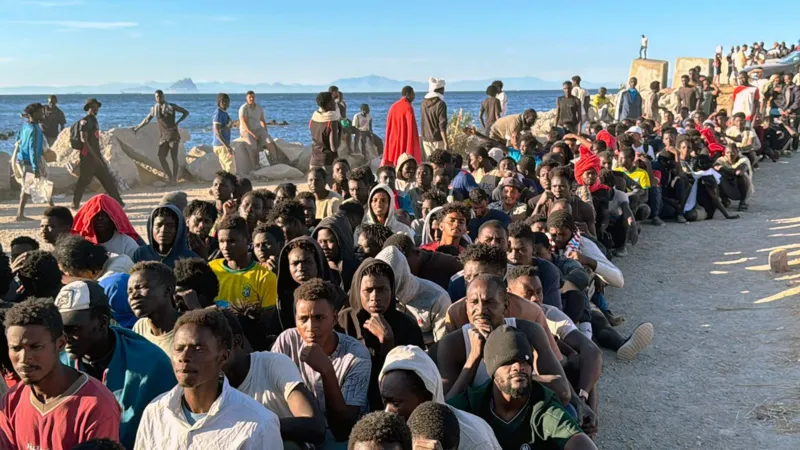
Spain has introduced temporary border checks on travellers arriving from Italy, escalating a growing diplomatic dispute between the two European Union countries over a major influx of migrants into the Spanish territory of Ceuta.
The new measures, which took effect at midnight and will remain in place for one month, came about a week after Italy imposed similar restrictions on travellers from Spain.
Italy introduced the checks following the arrival of about 78,000 migrants from Morocco into Ceuta, a Spanish exclave on the North African coast.
Madrid had demanded that Rome withdraw its restrictions by Sunday, but the Italian government said the measures would remain until at least August 15. Italian authorities cited concerns that Spain could face another major migration surge around that date.
The dispute has brought Spanish Prime Minister Pedro Sanchez into a confrontation with Italian Prime Minister Giorgia Meloni, who has consistently advocated tougher migration policies across the EU.
Italy does not share a land border with Spain.
Rome said its decision to temporarily suspend the border-free Schengen arrangement was aimed at preventing migrants who had entered Ceuta from moving onward into Italy.
However, Madrid rejected that justification, describing it as based on “spurious arguments” and arguing that the migrants who entered Ceuta had no route into the Schengen area.
Responding to Spain’s demand on Friday, the Italian government said it would not accept “ultimatums”.
Rome also said it had no intention “under any circumstances to reconsider the decision to suspend the application of the Schengen Agreement for third-country nationals arriving from Spain, at least until August 15th and in any case until security and terrorist risks for Italy have been completely eliminated”.
Italian officials said authorities conducting the checks were working to minimise disruption and provide maximum comfort for Spanish and other European travellers arriving from Spain.
Rome also stressed that Spanish citizens were not subject to the additional checks, which apply only to non-EU nationals.
However, reports in El Pais said some airport terminals had experienced long queues, with passengers from Spain being directed into separate lines for inspection.
Spain’s counter-measures will involve checks on passports, nationality and visas for Italian travellers and other passengers arriving from Italy.
The Spanish government said the measures were necessary because of “the persistent irregular migratory pressure” facing the country.
The restrictions are scheduled to remain in force until September 7, although Madrid said the period could be changed if the circumstances that prompted the decision improve.
Most of the migrants who reached Ceuta during last week’s crisis were sent back to Morocco within days.
However, nearly 1,400 minors remain in the territory, while about 100 people are believed to have died during the crossings.
Spain has not officially predicted another major influx from Morocco.
However, BBC Arabic identified dozens of Facebook posts promoting another attempted crossing around the middle of August.
Some posts reportedly offered swimming equipment for people planning to make the journey, while six of the groups identified had more than 100,000 followers.
Meta said it had removed posts that breached its policies.
The Spanish prime minister’s office told El Pais that officials were monitoring the situation but did not expect a repeat of the scenes witnessed the previous week.
The reasons behind the sudden movement of tens of thousands of migrants towards Ceuta remain unclear.
EU Migration Commissioner Magnus Brunner has suggested that criminal networks may have contributed by spreading disinformation, a view also supported by the Spanish government.
The crossings followed a ruling by Spain’s Supreme Court that migrants intercepted at sea while attempting to reach Ceuta or Melilla cannot simply be returned to Morocco without due process.
Morocco has blamed the court ruling for the crisis.
An unnamed government source told local media that “the deterrent element of the system collapsed and the dam gave way, not under the weight of the criminals, but of a judge’s decision”.
The unusually large number of people attempting to swim into Ceuta has also raised questions about why Moroccan border guards did not prevent the crossings.
Ceuta and Spain’s other North African exclave, Melilla, have long been at the centre of tensions between Spain and Morocco, which does not recognise Spanish sovereignty over the territories.
The latest dispute over migration now threatens to deepen tensions between Spain and Italy, despite both countries being members of the EU and the wider Schengen system.