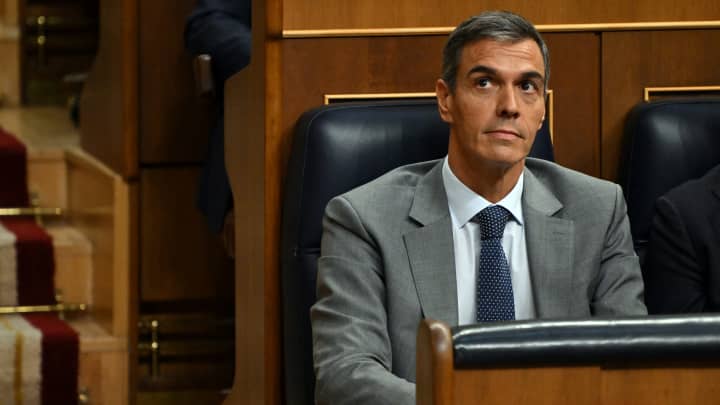
Spanish Prime Minister, Pedro Sánchez, has announced a snap general election for November 29, following mounting protests over the country’s housing crisis and growing pressure on his government.
Sánchez made the announcement on Monday after his government failed to secure parliamentary support for two proposed laws aimed at addressing the housing crisis.
The early election will bring the current parliamentary term to an end more than six months ahead of schedule.
“After informing the head of state, I have decided to convene an extraordinary meeting of the Council of Ministers this morning to dissolve Parliament and call a general election,” Sánchez, who leads the Socialist Workers’ Party, said in a televised address from his official residence in Madrid.
The political pressure intensified following the eviction of 87-year-old Maria del Carmen Abascal, popularly known as Maricarmen, from her home in Madrid’s Retiro neighbourhood.
She had lived in the property for more than 70 years before her rent reportedly rose from €500 to €2,650, leading to her eviction and triggering widespread public anger.
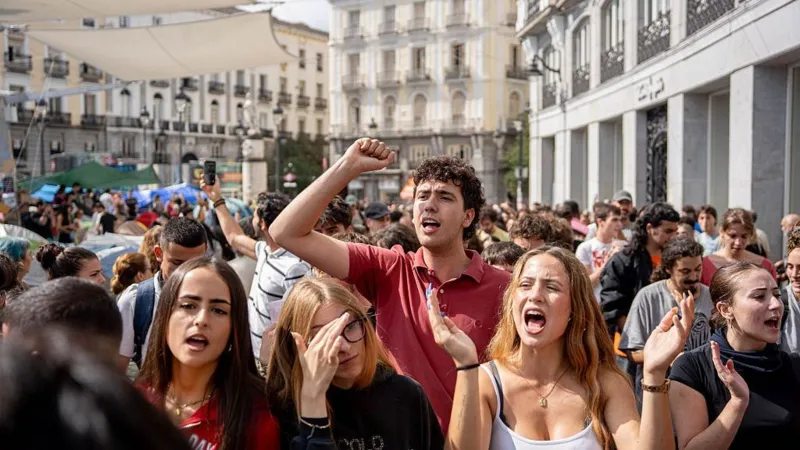
Protests have continued for more than a week, with hundreds of demonstrators camping at Madrid’s Puerta del Sol and rallies held in other parts of Spain.
The Madrid Tenants Union, one of the groups organising the demonstrations, said about 950,000 people participated in protests across the country over the weekend.
Sánchez said his decision was aimed at securing stronger public backing for his government, as opinion polls show the conservative Popular Party ahead.
“We need to renew people’s support,” Sánchez said on Monday. “We need to mobilise and win a much larger progressive majority in parliament, one that will allow us to overcome vested interests, deliver new social advances and continue transforming Spain.”
The prime minister acknowledged that his government had made some “mistakes” but defended its record, citing challenges including the war in Ukraine and conflicts in the Middle East.
He also pointed to Spain’s emergence as one of Europe’s strongest economies.
Sánchez’s Socialist party has suffered setbacks in regional elections this year, while corruption scandals involving some of his close associates have further weakened the government.
His administration has also struggled to pass legislation after relying on coalitions with left-wing and separatist parties, and Spain has gone three years without an approved budget.
Opinion polls indicate that a coalition led by the centre-right People’s Party, with support from the far-right Vox, could emerge from the November election.
Such an arrangement would mark the first participation of the far-right in a Spanish government since the country returned to democracy following the death of dictator Francisco Franco in 1975.