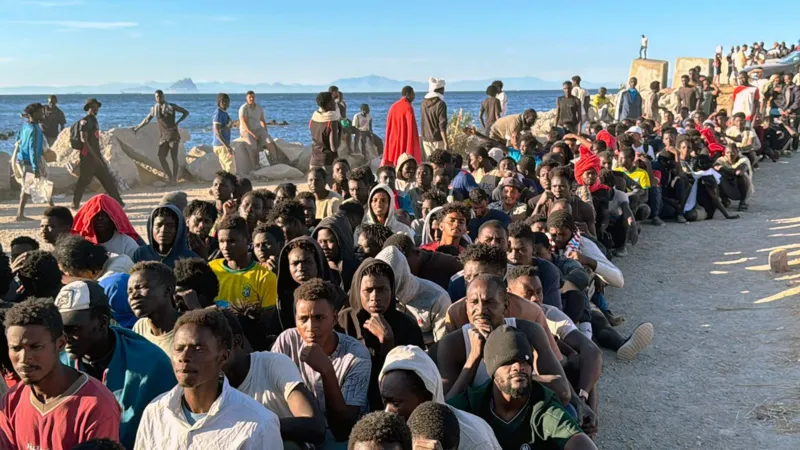
At least 34 people have died attempting to reach Spain’s North African enclave of Ceuta after about 49,000 migrants crossed into the territory from Morocco within hours, sparking a political crisis for the Spanish government and drawing criticism from several European Union member states.
The unprecedented influx, with migrants either swimming across the sea or scaling the heavily fortified border fence, overwhelmed the enclave of about 85,000 residents and created what local police representatives described as a “serious humanitarian crisis.”
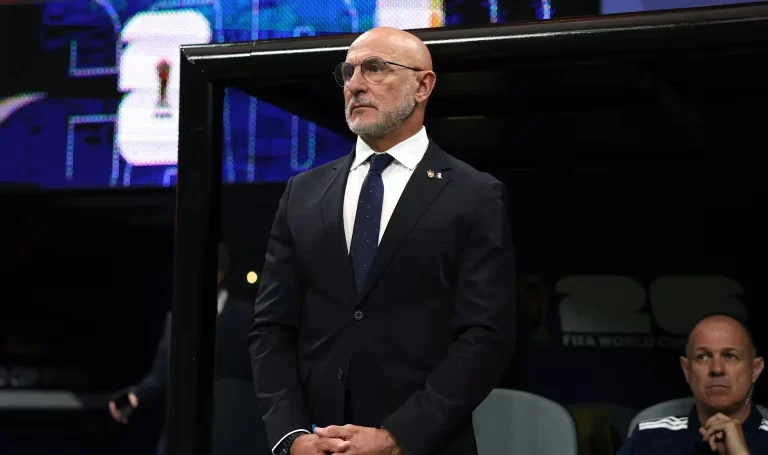
Spanish Prime Minister Pedro Sánchez, who travelled to Ceuta on Friday, condemned the mass crossing, describing it as “a violation of Spain’s territorial integrity.”
He pledged to deploy every available state resource to safeguard the enclave and restore order.
Sánchez blamed the surge on “human trafficking mafias,” saying criminal networks had exploited a recent ruling by Spain’s Supreme Court, which barred authorities from immediately returning migrants intercepted at sea while attempting to enter Ceuta or Melilla.
“That has spread like wildfire during these last few hours through the networks of mafias that traffic in human beings and has produced an avalanche of the characteristics and dimension that we experienced yesterday,” he said.
To address the crisis, the Spanish government announced plans to establish a temporary reception centre where migrants would be documented, registered, assessed and, where appropriate, subjected to “expedited” deportation procedures.
Sánchez also said authorities would install a floating buoy barrier near Tarajal beach to clearly mark the maritime border while complying with the court’s ruling.
The current influx far exceeds the previous record in May 2021, when about 10,000 migrants entered Ceuta over two days after Morocco relaxed border controls during a diplomatic dispute with Spain over Western Sahara.
That crisis eased in 2022 after Madrid abandoned its long-standing neutral stance on Western Sahara and endorsed Morocco’s autonomy proposal for the disputed territory, straining ties with Algeria. Relations with Algeria have since improved, highlighted by Sánchez’s visit to Algiers on July 20, the first by a Spanish prime minister in four years.
Moroccan government sources told Europa Press that “criminal organisations” were responsible for the latest crossings, insisting Rabat’s cooperation with Spain remained “exemplary.”
As the number of arrivals continued to grow, Spain’s Interior Ministry deployed 60 military personnel alongside 30 additional Guardia Civil officers to reinforce security operations in Ceuta.
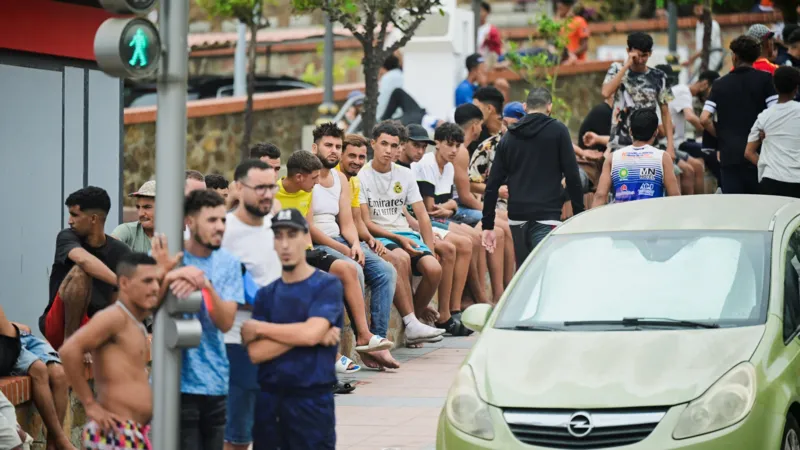
Despite the reinforcements, authorities acknowledged the city was struggling to cope. Rachid Sbihi, head of a local Guardia Civil workers’ association, described the situation as a “serious humanitarian crisis.”
“People are still entering. The reinforcements that have arrived are only helping the injured and other humanitarian efforts,” he said.
Thousands of migrants, including unaccompanied children, were reportedly left without shelter, sleeping in parks and on pavements while others wandered through the city.
“It’s chaotic,” Sbihi added.
He said many of those who died drowned during the crossing, while others were killed in a crush near the breakwater fence at Tarajal beach.
Video footage from Thursday showed large groups of migrants walking through the breakwater area into Ceuta, with most appearing to be young men, although families with women and children were also among them. Some were heard shouting, “Viva España!” as they entered the enclave.
Ceuta and Melilla, Spain’s two enclaves in North Africa, share the European Union’s only land borders with Africa and have long been focal points for migrants seeking entry into Europe.
Ceuta’s mayor-president, Juan Jesús Vivas, urged Madrid to send more police officers and troops “to guarantee the inviolability of the frontier” and protect residents. He also called for the government to declare a national emergency over the migration crisis.
The central government rejected that request, arguing that national emergencies could only be declared in cases such as extreme weather events, volcanic eruptions or nuclear threats, not migration.
The situation also triggered strong reactions across Europe.
Spain’s Foreign Minister, José Manuel Albares, summoned Italy’s ambassador after Prime Minister Giorgia Meloni’s government proposed suspending Spain from the Schengen free-movement area.
Meloni said Italy was prepared to take “extraordinary measures” to defend its borders, arguing that the scenes in Ceuta proved “illegal immigration poses a real threat to the security of Europe’s borders.”
Italy’s Foreign Minister, Antonio Tajani, blamed the crisis on Spain’s now-closed programme that regularised the status of more than one million undocumented migrants and asylum seekers.
He said the initiative had encouraged human trafficking and was “profoundly wrong.”
Albares dismissed the remarks as “unbecoming” and accused the Italian government of engaging in “partisan demagoguery.”
France also responded by tightening controls along its border with Spain. French Interior Minister Laurent Nuñez said additional border checks had been ordered, while former Prime Minister Michel Barnier argued that France “cannot suffer the consequences of its neighbours’ migration choices.”
He added: “If a member state makes decisions that create a pull factor for migration, we must be able to immediately protect our borders … Mastering immigration is a condition of sovereignty, security and trust between European states.”
Swedish Prime Minister Ulf Kristersson urged Spain to “act swiftly to regain control of the situation and fulfil its commitments within Schengen cooperation.”
Finnish Interior Minister Mari Rantanen also criticised Madrid, saying that as “Spain has completely failed to protect the Schengen Area’s external border”, EU member states should back Italy’s proposal to suspend Spain’s Schengen status.
Within Spain, opposition parties intensified pressure on the government.
The opposition People’s Party said the security reinforcements announced by the government were inadequate.
In a post on X, party leader Alberto Núñez Feijóo wrote: “People have continued to arrive in Ceuta throughout the night, and those on the ground describe an occupied city, with nothing sufficient being done to prevent it.”
The far-right Vox party, meanwhile, described the mass arrival of migrants as “an invasion.”