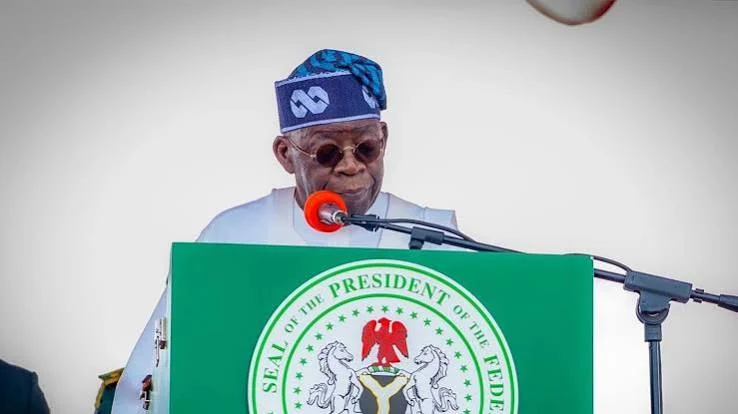
The Presidency has clarified why President Bola Ahmed Tinubu did not leave the airport during his recent visit to Jos, Plateau State, attributing the decision to time constraints and logistical limitations.
The President had travelled to Jos following the deadly attack in Angwan Rukuba, located in Jos North Local Government Area, where several lives were lost. During the visit, he met with victims and their families, who were brought to the airport to see him.
Addressing the gathering, Tinubu said, “I understand your pain. There is nothing material I can offer that will replace what you have lost, but I assure you that such an incident will not happen again.”
His decision to remain at the airport, however, sparked criticism from some quarters, including former Vice-President Atiku Abubakar, who described the arrangement as insensitive and overly staged.
Responding to the backlash, the Special Adviser to the President on Information and Strategy, Bayo Onanuga, explained that Tinubu’s schedule had initially included hosting Mahamat Idriss Déby Itno in Abuja before proceeding to Ogun State.
According to Onanuga, “Following a security briefing from the Plateau State Governor, the President made a last-minute decision to visit Jos. However, the earlier engagement with the Chadian leader could not be postponed and lasted longer than anticipated.”
He added that the delay affected the President’s travel timeline, making it difficult to carry out a full visit within Jos city.
“Although the drive from the airport to the city takes about 40 minutes, the airport does not support night operations due to limited navigational facilities.
This made it impractical for the President to travel into town and return before dusk,” Onanuga stated.
He explained that, as a result, officials arranged for victims and community representatives to meet the President at a hall near the airport.
“The decision ensured that the President could meet directly with affected persons, while also complying with aviation safety restrictions,” he said.
Onanuga noted that top security officials, including the Chief of Army Staff and the Inspector General of Police, had already visited the affected communities prior to the President’s arrival.
He further emphasised that Tinubu’s visit was not merely symbolic but part of a broader effort to address insecurity in Plateau State.
“The President engaged with victims, traditional leaders, and stakeholders, listened to their concerns, and reassured them of the Federal Government’s commitment to justice and lasting peace,” he said.
Onanuga also disclosed that Tinubu promised to deploy advanced surveillance systems to improve security in the state.
“He assured residents that the government would deploy thousands of AI-enabled cameras to enhance monitoring and aid security operations,” he added.
The Presidency maintained that despite the constraints, the visit achieved its purpose of showing solidarity with victims and initiating steps toward ending the recurring violence in the region.