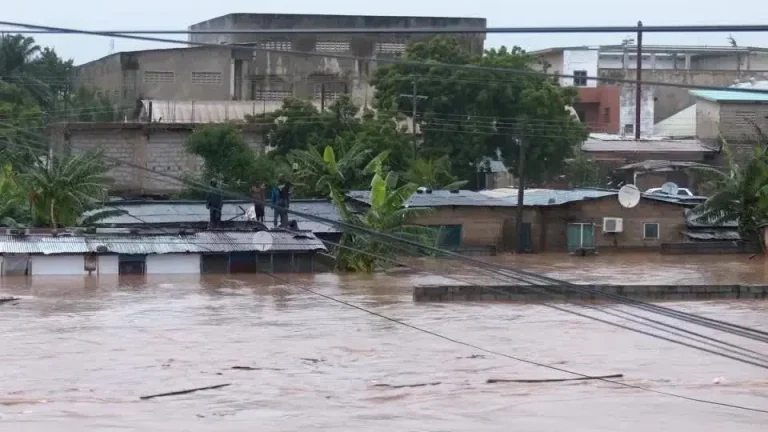
At least three people have died after torrential rainfall triggered severe flooding across Ghana’s capital, Accra, on Monday, with President John Mahama attributing the worsening situation to climate change and rapid urban development.
Flooding is a recurring challenge during Ghana’s rainy season, but many residents say the situation has deteriorated in recent years as expanding urbanisation, blocked waterways and inadequate drainage systems continue to increase the city’s vulnerability.
According to Mahama, about 140 millimetres of rain fell across Accra within 24 hours, the highest single-day rainfall recorded in several years and almost three times the peak level experienced last year.
“That aspect of the problem is beyond our control because it is driven by changing climatic conditions,” he said on X.
The president, however, stressed that human actions were also contributing significantly to the recurring disasters.
“Whenever government begins removing structures built in waterways, some people accuse us of being inhumane,” he said. “Yet when disasters such as today’s flooding occur, the consequences affect everyone.”
In Tse Addo, a suburb in eastern Accra, emergency personnel and community volunteers deployed boats to rescue at least 15 children and an infant after floodwaters overwhelmed the area following heavy rains that began around 3:00 a.m.
Authorities also confirmed the recovery of the body of a man believed to be in his 60s from the flood-prone Alajo district, where several homes and vehicles were damaged by rising waters.
Reports from local journalists indicated that two additional fatalities occurred when floodwaters came into contact with electrical wiring inside residential buildings.
The Ministry of the Interior advised residents to avoid non-essential travel while security agencies, including the police, military and fire service, were mobilised to support rescue efforts.
The Greater Accra Metropolitan Area, home to more than five million residents, frequently experiences flooding during periods of intense rainfall, leading to loss of life and widespread damage to property and infrastructure.
Among those affected was retired journalist Philip Mensah, 67, whose home was inundated by floodwaters.
“Unfortunately, my house is flooded,” retired journalist Philip Mensah, 67, told AFP, adding that his “1970s collection of vinyl records is now underwater”.
Another resident, schoolteacher Patience Naa Adjeley Adjei, said she spent hours battling to prevent water from taking over her room.
“I have mopped my room more than eight times,” the schoolteacher told AFP. “I can’t even step out because my room is flooded, and outside is flooded.”
The Ghana Meteorological Agency warned that rain-bearing clouds were expected to remain over southeastern parts of the country before moving westward later in the day, increasing the likelihood of further flooding.