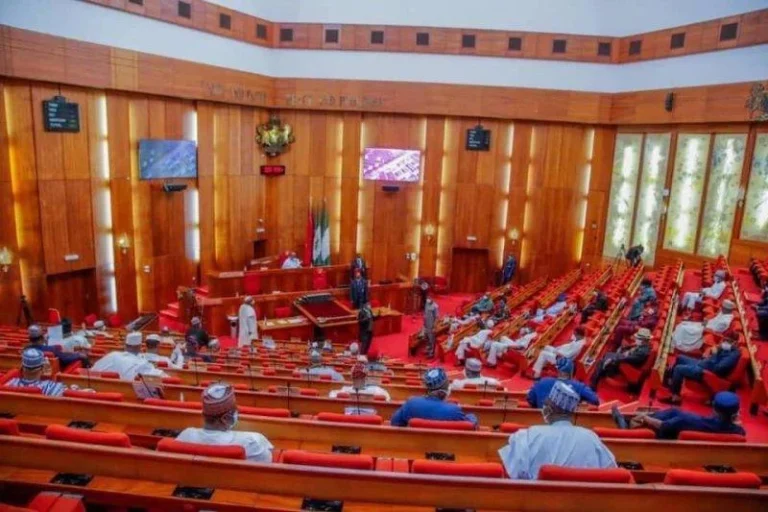
The Senate has ruled out any further amendment to the Electoral Act 2026 before the 2027 general elections, insisting that a review of the legislation can only be considered after the polls.
The Chairman of the Senate Committee on Media and Public Affairs, Senator Yemi Adaramodu, disclosed this in an interview with Saturday PUNCH, saying the National Assembly had completed the legislative process and the law was already in force.
He explained that reopening the law at this stage could disrupt preparations by political parties ahead of the elections.
“We have already done the electoral reform and passed that one; it is meant for the 2027 elections,” Adaramodu said.
He added that lawmakers would consider possible amendments after the elections if the need arose.
“It is only after the elections that we can consider a review if there is any necessity or calls for amendments and rejigging,” he stated.
Adaramodu, however, said individuals or groups dissatisfied with specific provisions could submit petitions to the Senate.
“Anybody who has any petition against it should submit it to the Senate, but for us at the Senate and National Assembly, we have passed the electoral bill into law,” he said.
The senator warned that changing the electoral framework while political parties were preparing their candidates could create complications for the electoral process.
“Parties have used the law to produce candidates who are going to contest in January and February. So, are you now going to shift the goalpost in the middle of the game?” he asked.
He added, “How do you halt an electoral act that is already in use for a new one? We are not going to do that.”
The Senate’s position follows a recent Supreme Court judgment that restored provisions of the Electoral Act 2026 previously declared unconstitutional by the Court of Appeal.
The appellate court had nullified Sections 77(5), 77(6), 77(7) and 84(2) of the law following a suit filed by the Zenith Labour Party, which challenged the provisions as an interference with the internal affairs of political parties.
However, the Supreme Court, in a unanimous decision by a seven-member panel, overturned the Court of Appeal’s ruling and reinstated the disputed provisions.
The judgment also set aside the lower court’s decision nullifying aspects of the Independent National Electoral Commission’s timetable for the 2027 general elections.
Sections 77(5), 77(6) and 77(7) regulate political party membership registers, requiring that participation in party primaries, congresses and conventions be limited to members whose names appear on the registers submitted to INEC.
Section 84(2), on the other hand, provides for direct primaries and consensus as methods through which political parties can select their candidates for elections.
The Supreme Court ruling has renewed discussions about the implementation of the provisions, particularly their implications for party membership records, nomination procedures and the eligibility of candidates.
Despite the renewed debate, Adaramodu maintained that the National Assembly would not reopen the legislation before the 2027 general elections.