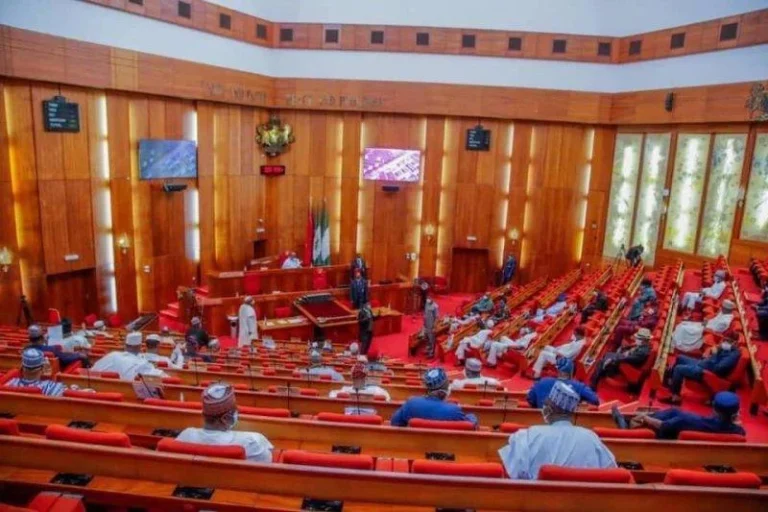
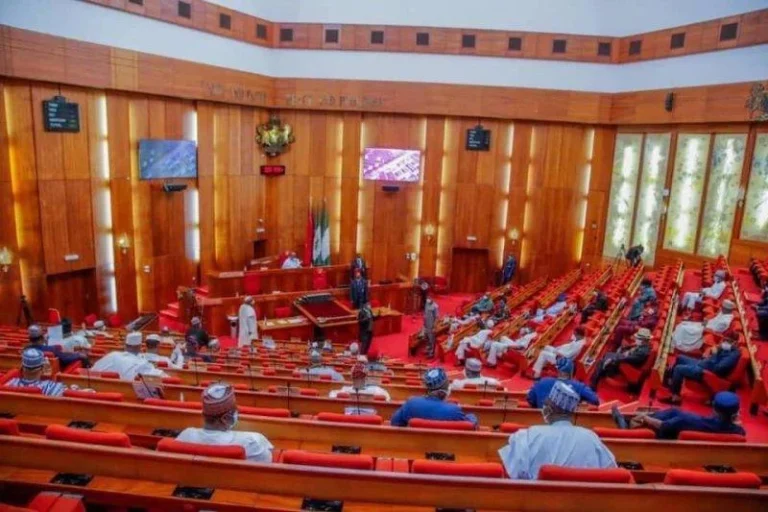
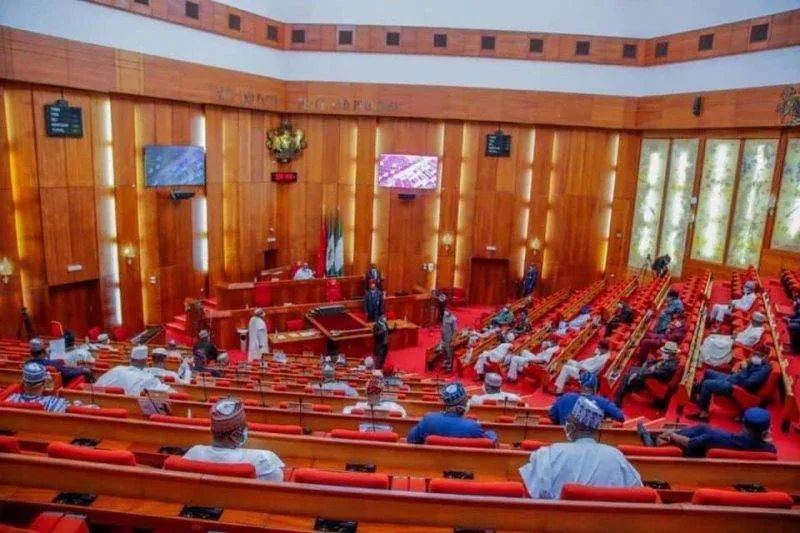
The Nigerian Senate on Tuesday passed the Electoral Act, 2022 (Repeal and Re-Enactment) Bill 2026, following intense deliberations over Clause 60, which deals with the electronic transmission of election results.
The session grew tense when Senator Enyinnaya Abaribe (ADC/Abia South) demanded a division on Clause 60(3), challenging the provision that Form EC8A should not serve as the sole basis for declaring results if electronic transmission fails.
Senate President Godswill Akpabio responded, noting that the matter had been previously withdrawn.
“I believe this point has been addressed already,” he said, prompting immediate objections from opposition senators.
Deputy Senate President Barau Jibrin cited Order 52(6) of the Senate Standing Orders, arguing that it would be out of order to revisit provisions already ruled upon. This triggered further disruptions, including a brief confrontation between Senator Sunday Karimi and Senator Abaribe.
Senate Leader Opeyemi Bamidele defended Abaribe’s stance, stating, “His demand aligns with the motion for rescission I sponsored. Prior decisions by the Senate no longer hold in this context.”
Abaribe formally called for the removal of the provision allowing manual transmission in case of network failure. During the division, Akpabio asked senators supporting the caveat to stand, followed by those opposed. The vote concluded with 55 senators in favor and 15 against.
Earlier, the Senate had temporarily stalled proceedings to review the bill clause by clause, following a motion to rescind the earlier amendment.
Bamidele explained that the motion was necessary after the Independent National Electoral Commission announced the 2027 general elections would hold in February, raising timing and logistical concerns.
“The proposed election date conflicts with Clause 28, which requires elections to be scheduled at least 360 days before the expiration of tenure,” Bamidele said. “Holding elections during Ramadan may affect voter turnout, logistics, and overall credibility.”
The motion also highlighted discrepancies in multiple clauses of the bill, including Clauses 6, 9, 10, 22, 23, 28, 29, 32, 42, 47, 51, 60, 62, 64, 65, 73, 77, 86, 87, 89, 93, and 143, affecting internal consistency and cross-referencing.
Senate President Akpabio directed the proceedings, emphasizing that the division was intended to clarify the chamber’s stance on electronic transmission while ensuring the bill’s compliance with legal and electoral standards.
The passage of the bill now sets the stage for detailed reconsideration and re-enactment of the Electoral Act ahead of the 2027 general elections.