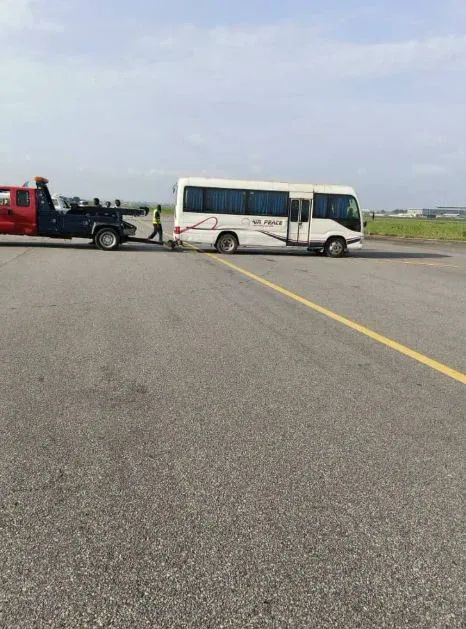
The Nigerian Civil Aviation Authority has temporarily suspended its “No Pay, No Service” enforcement action against domestic airlines indebted to aviation agencies, citing concerns over operational stability in the aviation sector.
The suspension, announced on Monday by the Director-General of the NCAA, Chris Najomo, followed consultations with stakeholders and an assessment of the financial realities facing local airlines.
In a statement, the authority explained that rising aviation fuel costs, particularly Jet A1, foreign exchange challenges, and increasing operational expenses informed the decision.
According to the NCAA, the move is aimed at preventing further strain on airlines while maintaining stability in the country’s aviation industry.
“This decision follows extensive consultations within the sector and a careful review of current operating realities, particularly the rising cost of aviation fuel and its impact on airline operations and overall industry stability,” the statement read.
The authority, however, clarified that the suspension does not amount to debt cancellation or forgiveness, stressing that airlines remain obligated to settle outstanding statutory payments.
“It is important to state clearly that this suspension does not represent a cancellation, waiver, or forgiveness of outstanding statutory financial obligations, as such decision is beyond the purview of the Authority,” Najomo said.
The NCAA noted that President Bola Tinubu had earlier approved a 30 per cent reduction on outstanding fees owed by domestic carriers to aviation agencies as part of efforts to cushion the effect of rising Jet A1 prices and support airline operations.
The regulator described the intervention as part of broader Federal Government measures to prevent disruptions in the aviation sector.
The authority stated that affected operators would continue to engage with the regulator to ensure debt repayment without jeopardising operations.
“All affected operators remain fully responsible for the settlement of their statutory debts, and the NCAA will pursue structured engagements with airlines individually to ensure recovery in a manner that supports both compliance and sector stability,” the statement added.
The NCAA also explained that the five per cent Ticket and Cargo Sales Charge, which forms part of the disputed remittances, is a statutory fee embedded in ticket and cargo sales and meant for sustaining aviation oversight and services.
Najomo emphasised that the funds are collected by airlines on behalf of the aviation ecosystem and should not be treated as part of airline profits.
“It must be emphasised that this charge is collected at the point of ticket and cargo sales by airlines on behalf of the aviation ecosystem and is expected to be remitted to the NCAA for defined purposes. It is not a part of operating profit or revenue for the collecting airline,” he stated.
Describing the suspension as a balancing measure, the NCAA maintained that the temporary relief was designed to preserve regulatory integrity while ensuring the survival of domestic airline operations.
“The temporary suspension of the ‘No Pay, No Service’ measure is a calibrated step aimed at maintaining operational stability within the sector while continued engagement is pursued toward full settlement of outstanding obligations,” the authority said.