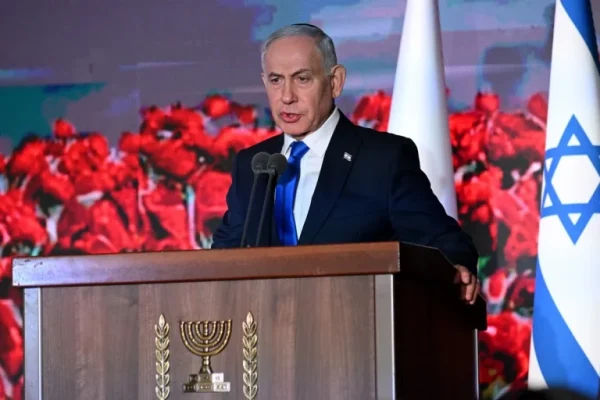
Israeli Prime Minister, Benjamin Netanyahu, has formally requested a pardon in his long-running corruption trial, arguing that doing so serves the “public interest.”
In a letter addressed to President Isaac Herzog, Netanyahu wrote that his trial had become “a focal point of fierce controversy” and said he bears “broad public and more responsibility, with an understanding of the overall ramifications of these events.”
Netanyahu emphasized that while it is in his “personal interest” to prove his innocence in court, “the public interest dictates otherwise.” The letter was submitted on Thursday and made public on Sunday.
As head of state, Herzog alone holds the authority to grant pardons. His office confirmed receipt of the request, noting that Herzog would “consider it with great care and responsibility.”
Netanyahu’s one-page appeal does not include any admission of guilt nor does it outline his future political plans.
He has consistently proclaimed his innocence against charges of bribery, fraud, and breach of trust.
The pardon request marks a notable reversal for the veteran leader, who has long maintained that the indictments would collapse and that he would prove his innocence in court.
“Faced with the security challenges and diplomatic opportunities currently before the State of Israel, I am committed to do everything in my power to heal the rifts, achieve national unity, and restore public trust in the state’s institutions,” Netanyahu wrote. “And I expect all branches of government to do the same.”
Opposition Reacts Critically
Netanyahu’s request drew swift criticism from opposition leaders. Yair Lapid, head of Israel’s opposition, called on Herzog to reject the pardon in its current form.
“You cannot grant Netanyahu a pardon without an admission of guilt, an expression of remorse, and an immediate withdrawal from political life,” Lapid said in a video statement.
Similarly, Democrats party leader Yair Golan commented on X, “Only someone guilty asks for a pardon. After eight years of trial, when the cases against him have not collapsed, Netanyahu is now asking for a pardon.”
However, some of Netanyahu’s political allies voiced support. Far-right Minister of National Security Itamar Ben Gvir described the pardon as “critical for the security for the security of the state.”
International Attention
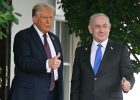
United States President, Donald Trump,has also weighed in, sending a letter to Herzog advocating for a pardon for Netanyahu, whom he has repeatedly praised.
“I hereby call on you to fully pardon Benjamin Netanyahu, who has been a formidable and decisive War Time Prime Minister, and is now leading Israel into a time of peace,” Trump wrote.
A Channel 12 poll conducted in mid-November after Trump’s letter indicated divided public opinion: 48% opposed an unconditional pardon, 44% supported it, and 8% were undecided.
Legal Context
According to the Israel Democracy Institute, the president’s pardon powers are broad but generally exercised only after a conviction.
“The possibility that the President might pardon someone before or during trial risks turning the President into an authority that bypasses the law-enforcement and judicial system,” wrote Dana Blander, a research fellow at the institute. “The rule is that the President acts as a ‘compassionate authority’ only after all other authorities have spoken.”
Netanyahu is the first sitting Israeli prime minister in history to face criminal prosecution while in office. His trial, which began in May 2020, involves three separate cases, including bribery, fraud, and breach of trust in relation to regulatory benefits allegedly granted to Shaul Elovitch, controlling shareholder of Bezeq, in exchange for positive media coverage on Walla! News. Elovitch denies the charges.
Netanyahu’s testimony began in December 2024 but has experienced repeated delays, most at his request. With remaining testimony, judgments, and potential appeals ahead, the trial is expected to continue for several more years.
There is no set deadline for Herzog to rule on the pardon request.