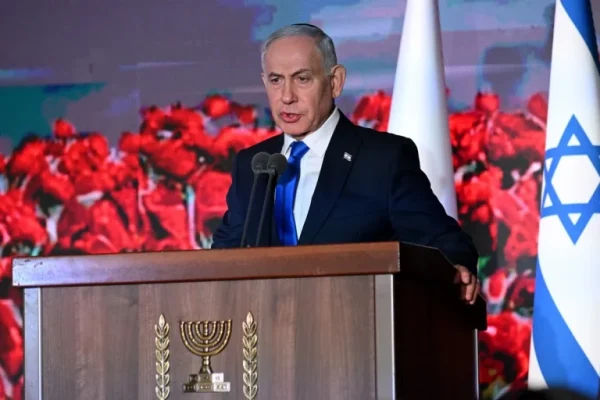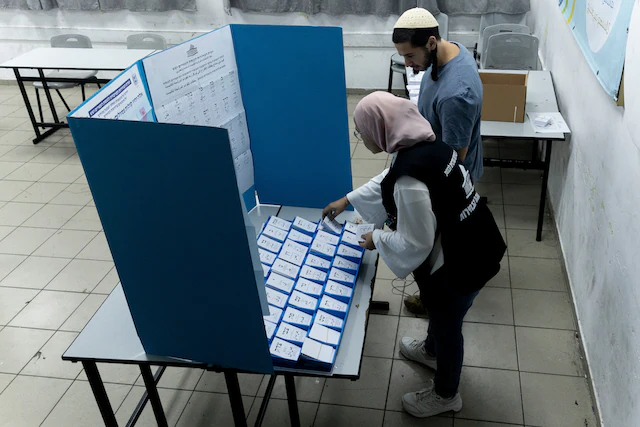
Israeli voters have delivered an inconclusive outcome in the country’s first national election since the October 7, 2023, Hamas-led attacks, with exit polls indicating that neither Prime Minister Benjamin Netanyahu’s coalition nor the opposition has secured a clear path to forming the next government.
The election, held on Tuesday, October 27, recorded voter turnout of more than 77 per cent, the highest in decades. However, the results remained uncertain after polling stations closed, with election officials beginning the counting process that could take several days.
According to The Washington Post, the closely contested election has left Israel facing political uncertainty as rival parties await the final results to determine their chances of forming a government.
Exit polls from major Israeli television networks indicated that Netanyahu’s right-wing and religious coalition was competing closely with the opposition bloc led by former military chief Gadi Eisenkot.
Neither side appeared to have secured the 61 seats required for a majority in Israel’s 120-member parliament, known as the Knesset.
The results also pointed to a strong performance by Arab-led parties, which could win a combined 18 to 19 seats.
Their performance could prove decisive in determining which political bloc forms the next government, although cooperation with Arab parties remains controversial among several opposition leaders.
The election was widely viewed as a referendum on Netanyahu’s leadership, particularly his handling of the October 7, 2023, attacks and the wars that followed.
The attacks triggered the war in Gaza and contributed to wider regional conflicts involving Lebanon and Iran, deepening political divisions within Israel and straining its international relations.
Netanyahu’s supporters have defended his leadership, pointing to his handling of national security and military operations. However, critics have questioned his government’s failure to prevent the October 7 attacks and raised concerns about its policies and the influence of far-right political allies.
Eisenkot, who is seeking to replace Netanyahu, has positioned himself as an alternative to the long-serving prime minister.
His opposition bloc could have an opportunity to form a government if the final results confirm the exit polls, but reaching the required parliamentary majority may prove difficult because of differences among the parties.
Israel’s political system generally requires parties to form coalitions because no single party has ever won an outright majority in the Knesset.
The president is expected to ask the politician considered most capable of assembling a governing coalition to begin negotiations after the official results are confirmed.
The coalition-building process could take weeks, particularly if neither major bloc can secure sufficient support.
If political leaders fail to agree on a government, Israel could face another election, prolonging uncertainty over the country’s leadership.
The final results are expected in the coming days and could differ from the exit polls.
Until then, Netanyahu and his rivals face a difficult political contest, with the outcome likely to shape Israel’s domestic policies, security priorities and relations with its international partners.