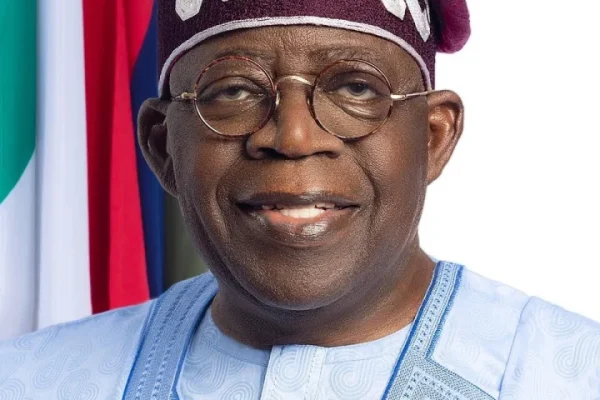
Civil servants under the Trade Union Side of the Joint National Public Service Negotiating Council have urged President Bola Tinubu to reduce the pump price of petrol to N500 per litre, alongside introducing a Wage Award and reviewing salaries and allowances across the public service.
The workers made the demand in a letter to the President at the State House, Abuja, amid rising concerns over the cost of living and the increase in petrol prices to N1,430 per litre and above in some parts of the country.
The council also asked the Federal Government to immediately set up a committee to commence negotiations for a new National Minimum Wage ahead of January 2027.
The workers gave the government until Wednesday, September 30, 2026, to respond to their demands, warning that worsening economic conditions were increasing tension among workers and Nigerians.
The JNPSNC attributed the hardship to the removal of the petrol subsidy three years ago, saying the policy had led to a sharp increase in fuel prices and pushed up the cost of goods and services.
It rejected the use of food palliatives as a sustainable response to the economic crisis, saying, “It has dawned on Nigerian workers that the provision of palliatives such as bags of rice, Indomie, vegetable oil, garri, among other edible foods, is as good as weaponising Nigerians with poverty because it is a Pyrrhic intervention which is unsustainable, inaccessible to the majority of Nigeria’s population and also limited to political cronies.”
Instead, the council called for an intervention that would benefit Nigerians more broadly through lower petrol prices.
“Consequent upon the above, it is preferable that the Federal Government should provide an intervention that will trickle down to all Nigerians by making fuel available at an affordable amount as low as N500 (five hundred Naira), the amount at which fuel was being sold when the subsidy was first removed in the year 2023,” it said.
The council said reducing the cost of petrol would have wider economic benefits, while urging the government to “look inward and stabilize the prices of fuel to an affordable minimum,” given the commodity’s impact on transportation and other sectors.
It stated, “As a matter of reality, the current hardship being faced by the hapless Nigerian workers is caused by the astronomical increase in the price of Premium Motor Spirit (PMS) to as much as N1,430.00, or more per one litre (this is a killing amount).”
The JNPSNC also proposed the creation of an intervention fund for stakeholders in the oil industry to help stabilise petrol prices and eventually bring the pump price down to N500.
“The fuel intervention fund will give the opportunity to every Nigerian to benefit from the intervention fund because it will have multiplier effect in the life of every Nigerian and will naturally trickle down to the downtrodden and all the remotest parts of the country,” it said.
The council further endorsed proposals attributed to Nigeria Labour Congress President, Joe Ajaero, on measures to address the fuel crisis.
Ajaero was quoted as saying, “Nigeria as an oil-producing country we have sufficient local refining capacity even as this substantially resides with the private sector.”
He also said: “As a nation, and as a people endowed with enormous fossil resources, we are deserving of a certain level of protection or buffer against the gales from the Gulf, and indeed, other gales.”
According to the NLC position cited by the council, “As part of the process of creating this buffer government should sell sufficient crude in Naira to our local refineries; expand our national storage capacity in pursuance of meeting energy emergencies and security. These measures will create jobs, economic value as well as deal with mutating security challenges.”
The JNPSNC said it “wholeheartedly subscribe[s] to the submission of NLC leadership” and urged the government to implement the proposals without delay.
On workers’ welfare, the council demanded an immediate Wage Award for employees at the federal, state and local government levels.
“Wage Award as an urgent intervention and upward review of salaries and allowances of all serving Public Servants in the Nigeria Public Service should be provided with immediate effect to cut across all Federal, State and Local Government workers,” it said.
The workers said the Wage Award should serve as an interim measure before the implementation of a new National Minimum Wage in January 2027.
They also called for the immediate constitution of a negotiating committee, saying an early commencement would help avoid delays in introducing the new wage structure.
“There is urgent need to immediately set up committee for the negotiation of New National Minimum Wage to accelerate the commencement of the New National Minimum Wage before 2027 so that it can take effect from January, 2027,” the council stated.
The JNPSNC proposed that workers on Grade Level 01, Step 1 should earn at least N500,000 monthly under the proposed 2027 salary structure.
It also sought harmonised remuneration across Ministries, Departments and Agencies, with similar reviews encouraged at the state and local government levels.
The council called for periodic salary and allowance reviews in line with inflation, as well as welfare measures including subsidised transportation and affordable housing for civil servants.
It said rising inflation, fuel and transport costs, alongside increases in food, housing, healthcare and education expenses, had significantly weakened workers’ purchasing power.
“Many workers are now struggling to meet basic financial obligations, which has inevitably affected the morale, motivation, and overall productivity within the Public Service,” it stated.
The council urged the President to direct the National Salaries, Incomes and Wages Commission to begin discussions with the NLC, Trade Union Congress of Nigeria, JNPSNC and other relevant stakeholders on the proposed Wage Award and salary review.
The JNPSNC said: “Your Excellency, we trust that this request will receive the prompt attention and action it deserves in the interest of Nigerian workers and their dependants, the Public Service as an age-long institution and the nation at large on or before Wednesday 30th September, 2026 to douse the palpable tension that may erupt.”
The workers also expressed hope that Tinubu would address their concerns in his Independence Day broadcast.
“It is the high expectations of Nigerian workers and all patriotic Nigerians that your Independence Day broadcast will attend to our sincere suggestions in order to bring succour and life back to all dying Nigerians,” the council said.