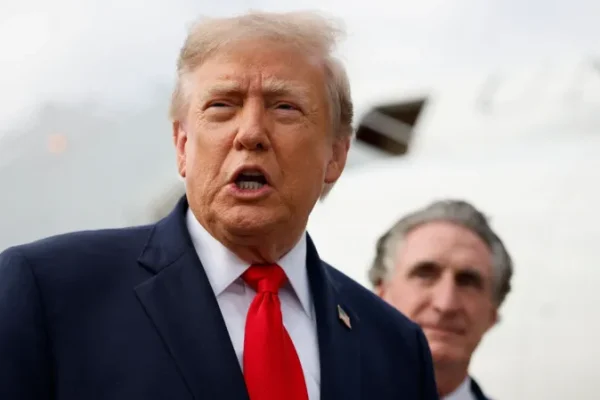
United States President, Donald Trump, has said he is highly unlikely to order fresh military strikes against Iran if ongoing negotiations to end the conflict make progress, despite reports of attacks on vessels around the Strait of Hormuz.
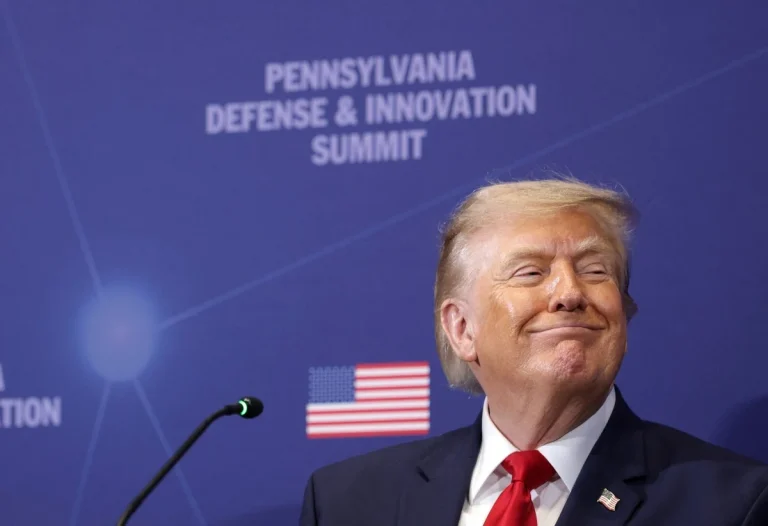
Trump made the remarks during a telephone interview with CNN on Sunday, saying the possibility of further attacks would depend on Tehran agreeing to a firm deal with Washington.
“It depends on whether or not they sign a very strong agreement,” Trump told CNN in a phone interview. “The answer is, highly unlikely it’s going to be necessary.”
Although CNN did not disclose the specific question that prompted Trump’s response, the US President said Washington had identified potential infrastructure targets in Iran should military operations resume.
He claimed that 38 bridges could be destroyed within an hour.
Trump had previously indicated that the United States could intensify its military campaign against Iran after last week’s midterm elections.
However, no large-scale offensive has been reported since the polls, while Tehran has warned it would retaliate against American and Israeli targets if attacks resumed.
In a separate development, Trump announced on his Truth Social platform on Sunday that “Task Force Iron Gate is in full force and effect” on Iran.
The initiative is aimed at restricting Tehran’s movement of advanced weapons and other sanctioned materials across its land borders and through the Caspian Sea.
The President also acknowledged that the Iran war contributed to the Republican Party’s defeat in the midterm elections.
Vice President JD Vance went further, attributing the party’s loss directly to the conflict.
“The reason we lost is the war,” Vance said in a social media post.
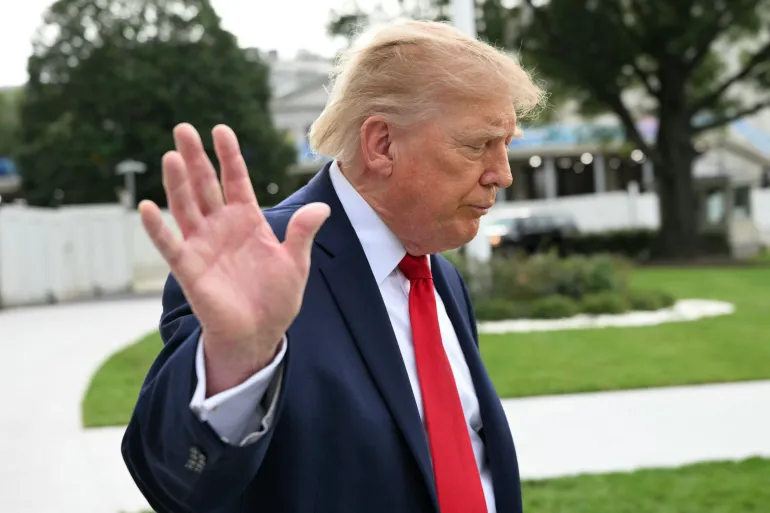
Trump told reporters on Sunday that “a lot of people did not like Vance’s comments on Iran.”
US Secretary of State Marco Rubio, who is also considered a potential successor to Trump, declined to directly link the conflict to the election outcome, insisting that the President had acted in response to a longstanding threat.
“All I can tell you is that the president of the United States identified a very real threat to this country that existed for a very long period of time, and he addressed it,” Rubio told reporters.
Rubio also expressed doubts about the possibility of an immediate diplomatic breakthrough, accusing Iran of making demands that Washington considers unacceptable.
“The president would always prefer to solve this and every problem diplomatically. Sometimes that’s not possible, unfortunately. But if there’s a chance to do it. We’ll explore it. Right now, it hasn’t been very productive because the Iranian demands are simply not just unacceptable, but in some cases outrageous and ridiculous and really not realistic,” Rubio said.
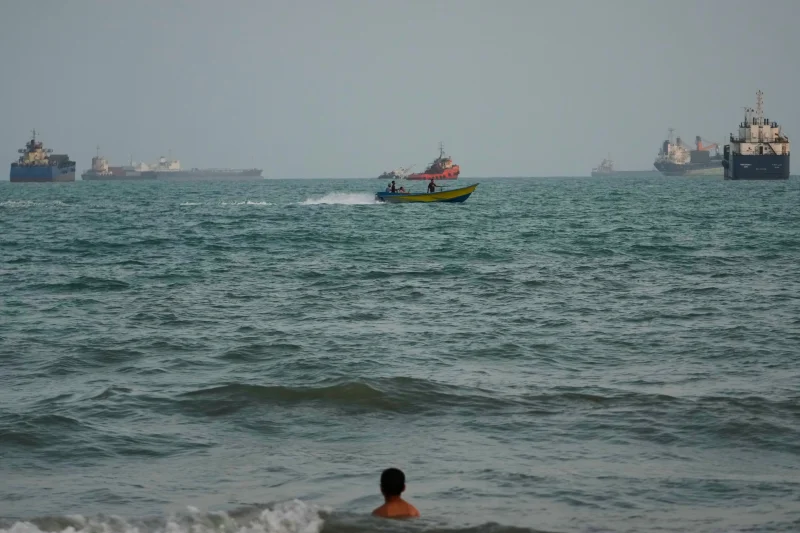
Meanwhile, tensions continued to escalate around the Strait of Hormuz, a critical global shipping route, as both Washington and Tehran reported incidents involving commercial vessels.
Iran’s state television said explosions heard in parts of southern Iran on Saturday could be connected to military activities in the waterway.
The broadcaster said authorities had not confirmed reports of missile attacks on Iranian territory, despite blasts being heard in several locations, including Qeshm Island.
The US military, however, announced that its air force had disabled a commercial vessel in the Gulf of Oman after it attempted to breach the American blockade of Iranian ports.
Iran’s Revolutionary Guards Navy said two oil tankers caught fire after hitting mines while attempting to navigate an unauthorised route through the Strait of Hormuz.
The semi-official Fars news agency subsequently reported that a third tanker had suffered an explosion and caught fire.
Reuters could not independently verify the reported attacks.
The United Kingdom Maritime Trade Operations also reported an incident involving a bulk carrier and military forces in the Gulf of Oman, about 18 nautical miles east of Khor Fakkan in the United Arab Emirates.
The extent of the damage remained unknown, and it was unclear whether the incident was connected to the reported US attack.
The conflict, which began in February with US and Israeli attacks on Iran, has disrupted energy exports and other global commodity shipments.
Tehran has targeted vessels in the Strait of Hormuz, while American forces began imposing a blockade on movements to and from Iranian ports in April.
Diplomatic efforts to end the war have continued, with Qatar maintaining its mediation role between the two countries.
The Gulf nation on Saturday dismissed reports that Washington and Tehran had failed to reach an agreement, saying negotiations were ongoing.
A senior Iranian official also told Reuters on Thursday that Tehran had submitted a nuclear proposal to the United States through Qatar.
The official said Washington was reviewing the proposal, but discussions would depend on the US meeting Iran’s seven demands, including sanctions relief, access to frozen assets and war reparations.
Washington, however, has insisted that nuclear issues must be included in the initial stages of negotiations.