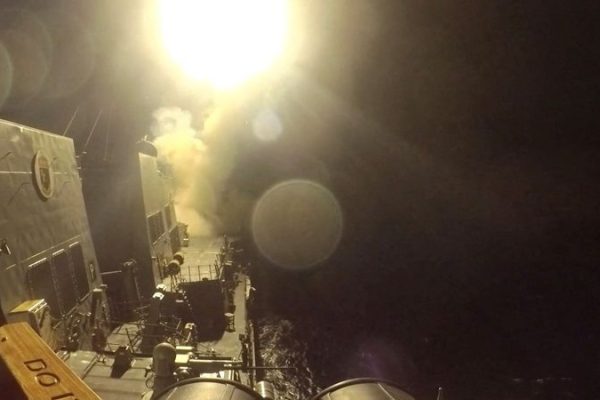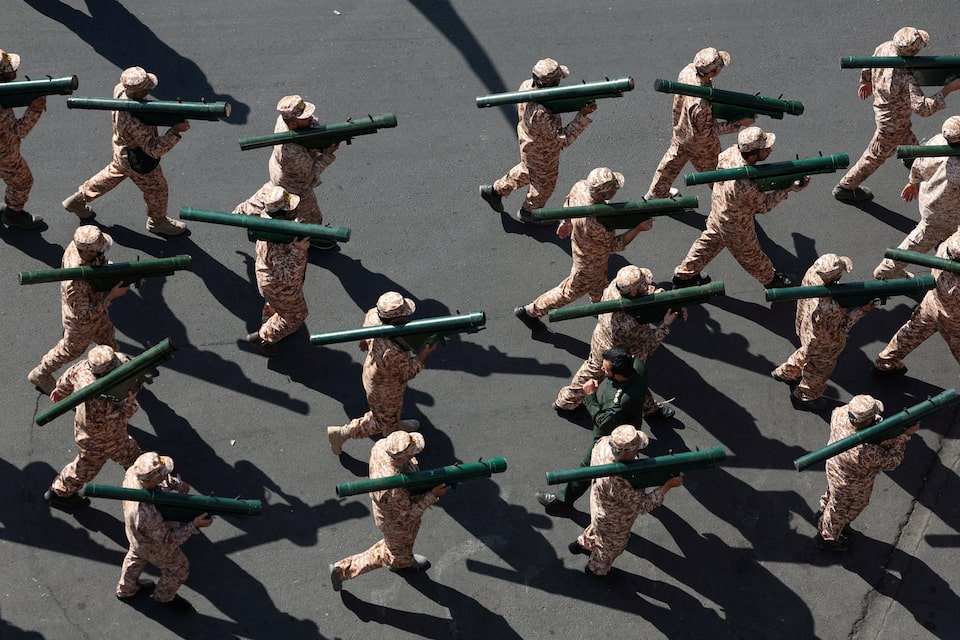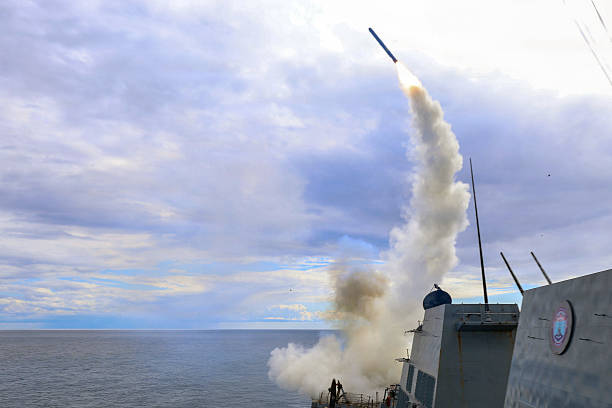
The United States military has struck three Iranian crude oil tankers after Iran’s Islamic Revolutionary Guard Corps launched ballistic missiles at two US Navy vessels.
The latest escalation has raised fresh concerns over shipping security in and around the Persian Gulf, particularly the strategically important Strait of Hormuz, where tensions between Washington and Tehran continue to intensify.
US Central Command said on Saturday that an American aircraft carrier and a guided-missile destroyer avoided multiple attacks launched by Iranian forces.
“A U.S. aircraft carrier and guided-missile destroyer successfully evaded multiple unprovoked Iranian attacks,” US Central Command said in a statement Saturday.
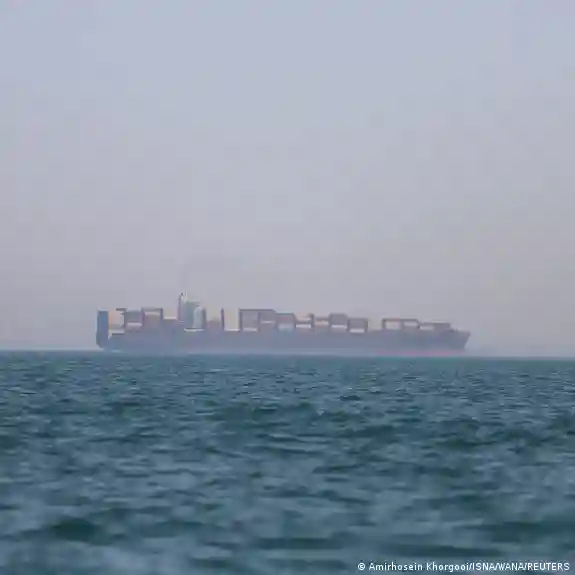
CENTCOM said the US subsequently targeted two IRGC-linked crude carriers, the M/T Downy off Kharg Island and the M/T Stark 1 near Jask, leaving both vessels permanently disabled.
A third tanker, the M/T Kylo, which was carrying no cargo, was also destroyed after being struck several times outside the Persian Gulf, according to the US military.
CENTCOM alleged that the three vessels belonged to a multibillion-dollar network used to generate funds for the IRGC and groups allied with it across the region.
“Let the message to the IRGC be clear: If you shoot at two of our ships, we will impose an even higher economic cost — taking out three of yours,” said Adm. Brad Cooper, the CENTCOM commander.
US Defence Secretary Pete Hegseth also issued a warning on X, saying, “It’s simple: if Iran shoots at U.S. ships, we will destroy (and sink) their oil tankers. All they have to do is stop shooting at @USNavy.”
Hegseth further warned that American forces could target Iranian oil tankers operating not only in the Middle East but also in the Indo-Pacific.
“Iran’s oil tanker fleet is defenseless — Iran has no navy or air force,” he wrote.
Iran has strongly condemned the US strikes, describing them as unlawful acts of aggression and a threat to international peace and the safety of commercial shipping.
Iran’s Foreign Affairs Ministry said the attacks amounted to a “clear violation” of the UN Charter and warned that Tehran would respond to further attacks.
Iranian media earlier reported that a tanker near Kharg Island had been hit by four US missiles.
Tasnim reported that there were no casualties.
Audio obtained by CNN indicated that a US military aircraft warned the crew of the M/T Stark 1 before the attack, ordering them to leave the rear section of the vessel.
“Motor Tanker STARK 1, this is the United States military aircraft. I am preparing to fire at your stern. You have 10 minutes to clear the crew from the stern of your ship. Over.”
A subsequent warning from the US aircraft stated: “This was your final warning … get into your lifeboats and abandon the ship immediately.”
The confrontation comes amid an increasingly tense standoff over the Strait of Hormuz, a crucial global oil shipping route.
Both Washington and Tehran are seeking greater control over movement through the waterway.
Kharg Island, located off Iran’s coast, is a major oil export hub and has historically handled about 90 per cent of Iran’s crude exports.
The island has been repeatedly targeted during the ongoing conflict, while US President Donald Trump has previously threatened to seize it.
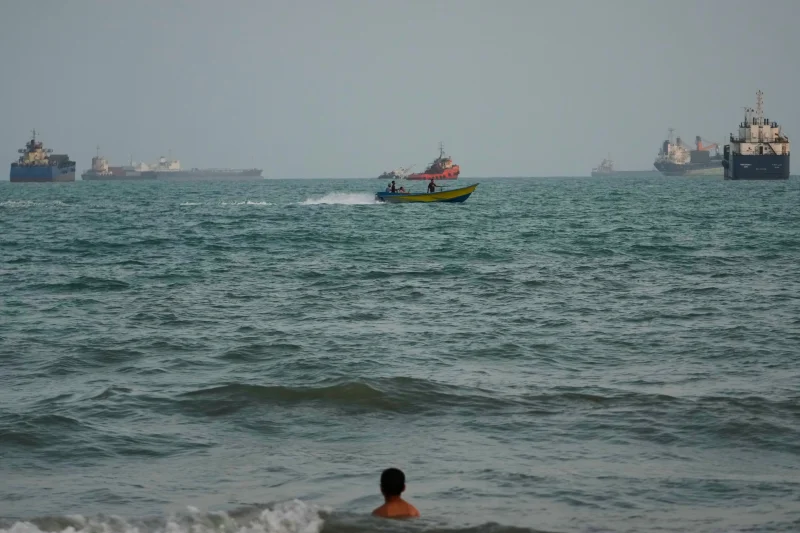
Shipping trackers and satellite imagery suggest that nearly 20 Iranian tankers remain anchored around Kharg Island, unable to leave the Gulf because of the US naval blockade. Many of the vessels are reportedly carrying crude oil.
More than 50 Iranian tankers are believed to be positioned in the wider Gulf region and the Gulf of Oman.
The latest confrontation follows renewed US-Iranian exchanges earlier in the week, marking the first direct strikes between the two sides in more than a month.
US Vice President JD Vance on Thursday rejected the description of the confrontation as a “war,” saying there was “no active shooting” despite the latest escalation.
He also declined to provide a timeline for the conflict’s conclusion, arguing that Iran holds the key to ending the hostilities that began six months ago following joint US-Israeli airstrikes.