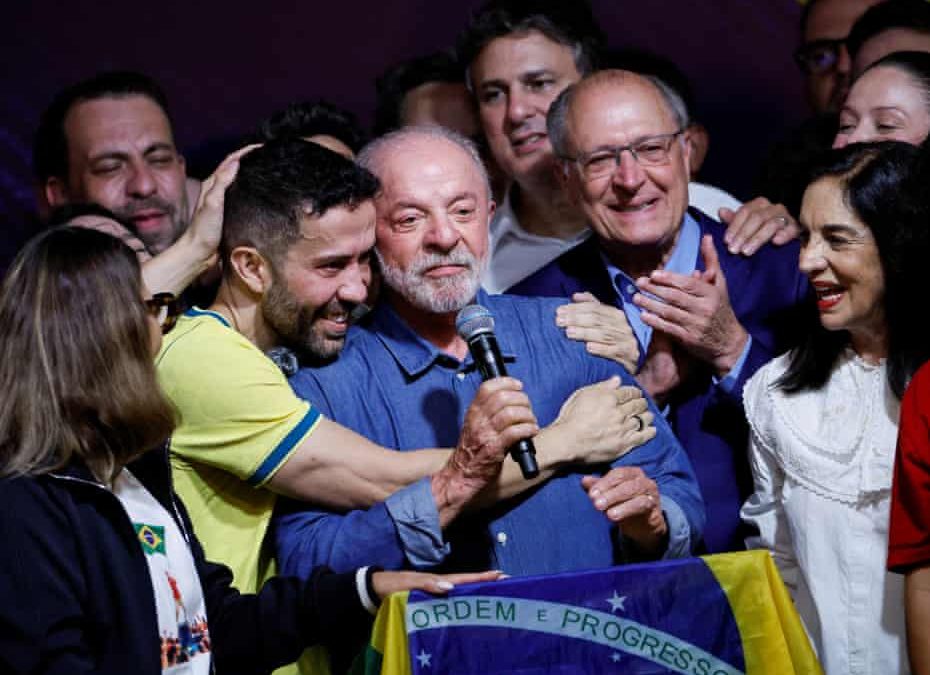
Brazilian President, Luiz Inacio Lula da Silva, has secured a historic fourth presidential term after defeating conservative challenger Flavio Bolsonaro in Sunday’s election, but his opponent has rejected the outcome and vowed to seek its annulment.
Official results showed that the 80-year-old left-wing leader won 51.8 per cent of the votes against Bolsonaro’s 48.2 per cent, giving him a lead of approximately 4.4 million votes in the closely contested runoff.
Lula’s victory halted a growing conservative trend across Latin America, where countries including Argentina, Chile, Colombia and Peru have moved towards the right, with support from US President Donald Trump.
The result also marked a remarkable turnaround for Lula, who had lost to Bolsonaro in the first round, breaking a pattern in which no candidate defeated in Brazil’s first round had won the second since 1989.
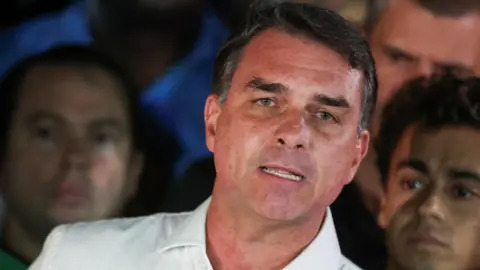
However, Bolsonaro, a 45-year-old senator and son of former Brazilian President Jair Bolsonaro, refused to recognise the result.
Speaking in Brasilia, he said, “It is impossible to recognize the results. I am going to request the annulment of these elections,” after describing a decision to extend voting hours as “unacceptable” and a “dirty trick”.
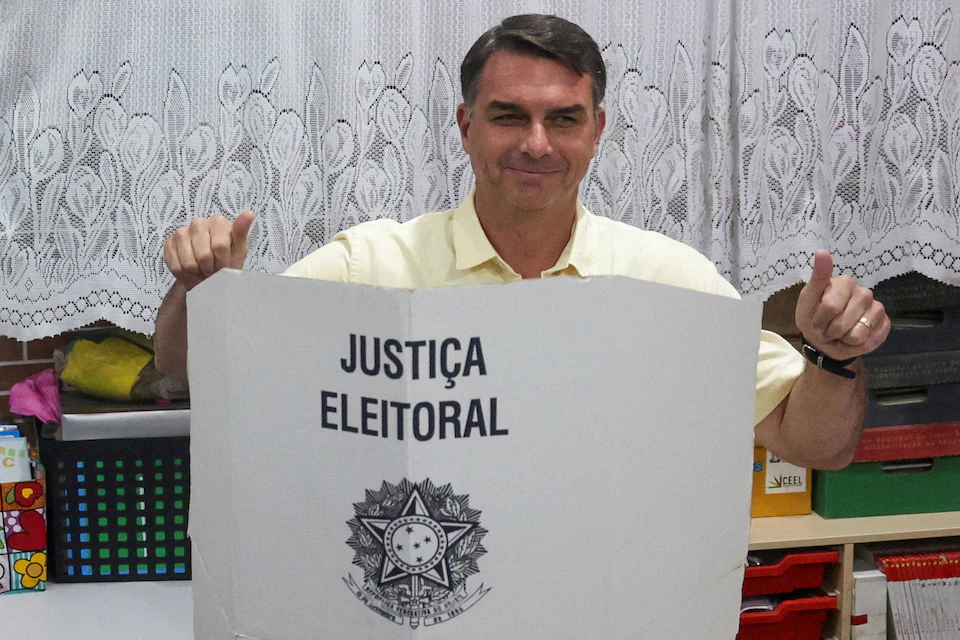
The Supreme Court had extended voting by two hours following complaints from both candidates about difficulties affecting voters.
Lula had argued that the withdrawal of buses from circulation in several cities prevented some citizens from reaching polling stations, while Bolsonaro sought an extension in certain areas affected by heavy rainfall.
Speaking after his victory, Lula said the campaign had successfully persuaded voters to defend the country’s democratic process.
“People went to vote because we managed to convince them that voting was very important for ensuring democracy in the country,” he said.
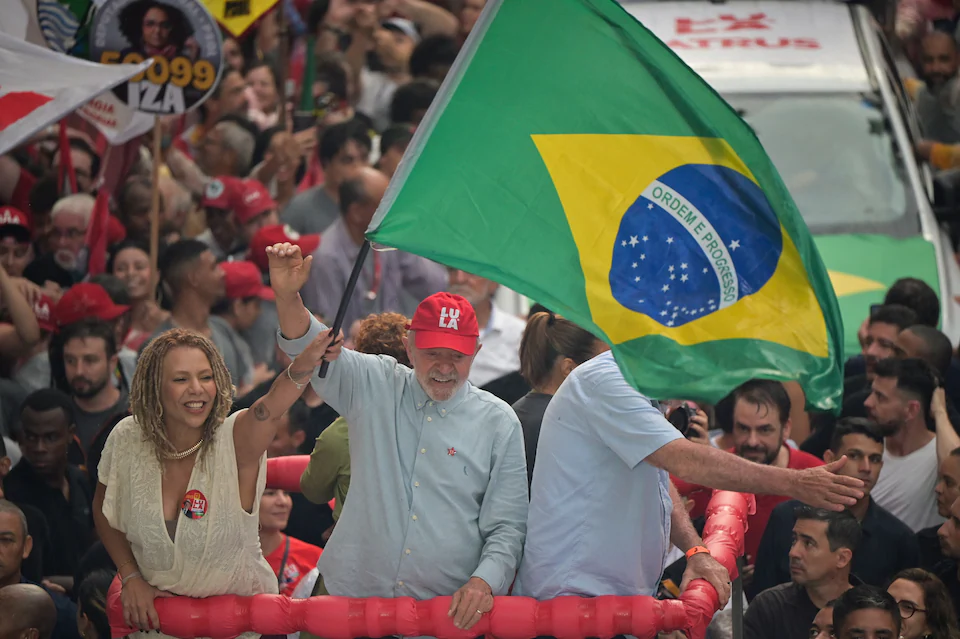
Celebrations erupted in several parts of Brazil, with supporters setting off fireworks and sounding vuvuzelas in Rio de Janeiro.
In Sao Paulo, thousands of Lula supporters, dressed in the red colours of his Workers’ Party, gathered in the streets to celebrate his victory.
Following his first-round setback, Lula’s campaign intensified its efforts through large rallies and an expanded social media strategy, rallying supporters around the slogan “Never Again Bolsonaro”.
Voter abstention also declined from 21 per cent in the first round to 19 per cent in the runoff.
The campaign was marked by intense online exchanges, with Lula’s team accusing Meta, the parent company of Facebook, Instagram and WhatsApp, of favouring his opponent through “algorithmic manipulation.”
Meta denied the allegation but acknowledged that technical errors had mistakenly led to the deactivation of some advertisements from Lula’s campaign.
“We are going to have to regulate them,” Lula said, referring to social media companies after his victory.
The election exposed deep political divisions that have persisted in Brazil for more than a decade, with the bitter campaign characterised by scandals and attacks between the rival camps.
Despite winning, Lula faces the challenge of governing a country where nearly half of voters supported his opponent.
Lula first became president in 2003 and won re-election in 2006 before returning to office in 2022.
His comeback followed the annulment of corruption convictions that had resulted in him spending more than 18 months in prison.
During his third term, Lula oversaw declining inflation and unemployment and helped lift millions of Brazilians out of hunger.
However, concerns over rising living costs and insecurity remained significant issues for voters.
Bolsonaro, meanwhile, presented himself as a more moderate alternative to his father, former President Jair Bolsonaro, who is serving a 27-year prison sentence for attempting a coup following his defeat in the 2022 election.
His campaign attracted conservatives and voters seeking political change.
“We’re in a deep hole, things are dire. People can barely afford to eat — buying meat is out of the question,” said Tereza Cristina Ramos, a 68-year-old retiree who voted in Rio de Janeiro.
Lula, who turns 81 on Tuesday, will be 85 by the end of his new term in 2030.
He will also have to contend with a Congress dominated by right-wing lawmakers, presenting a significant obstacle to his legislative agenda.
During the campaign, Lula emphasised Brazil’s independence amid commercial and diplomatic pressure from Trump’s administration in the United States. Addressing the issue on Sunday, he declared, “This country will not accept being anyone’s backyard.”
Following the announcement of his victory, Lula received congratulations from Chilean President Jose Antonio Kast and Ecuadorian President Daniel Noboa, both of whom are aligned with Trump.
Mexican President Claudia Sheinbaum also congratulated the Brazilian leader in a message on X, writing, “Long live democracy, the people of Brazil won.”