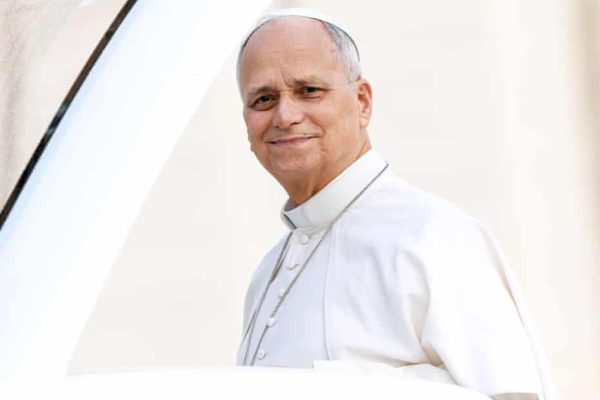
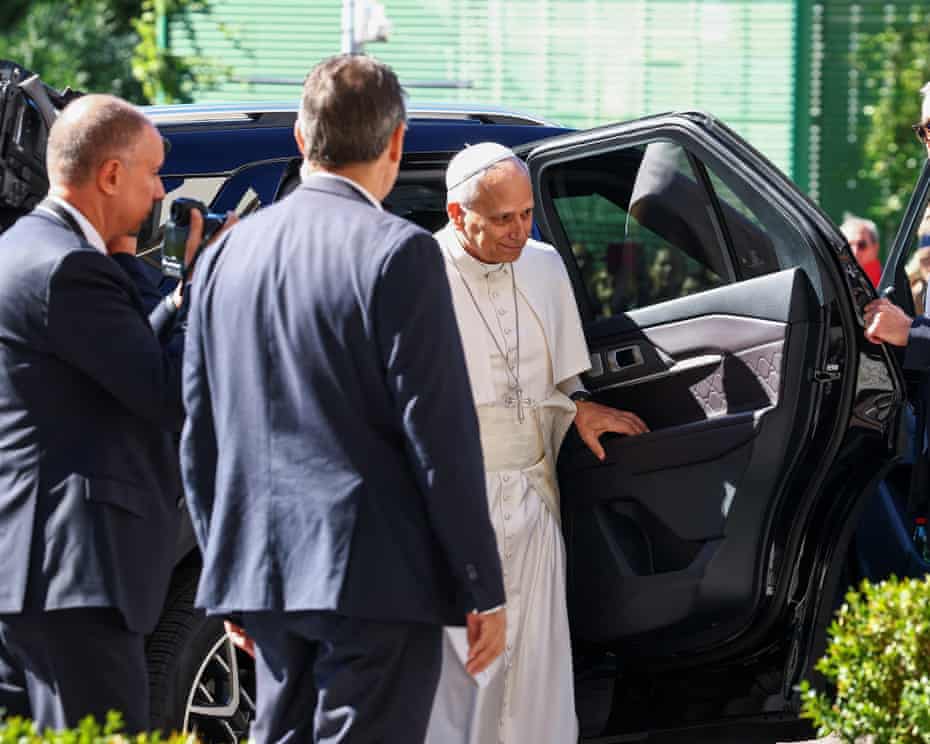
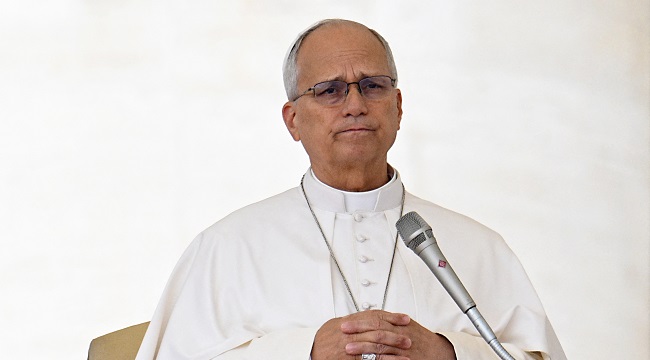
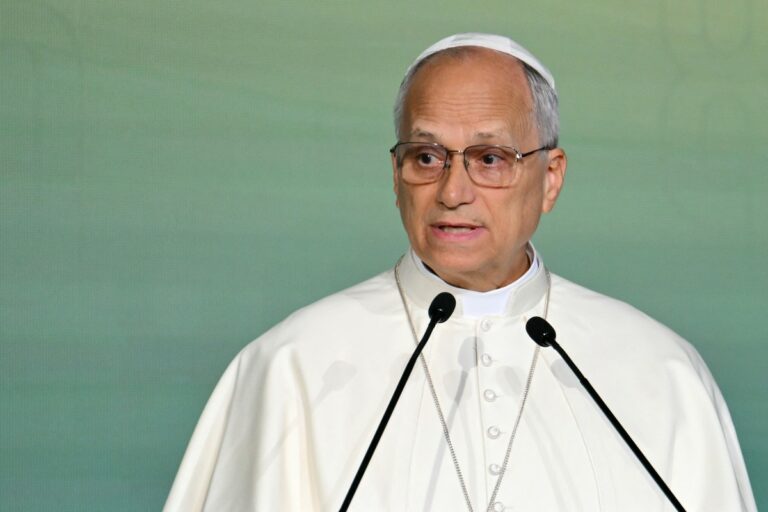
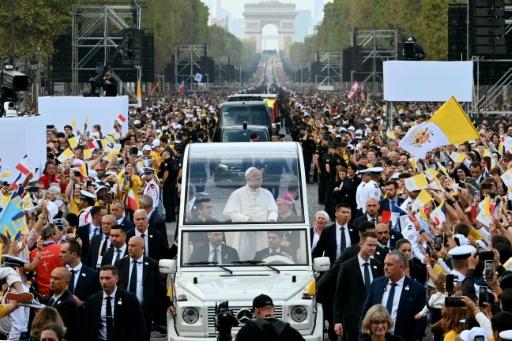
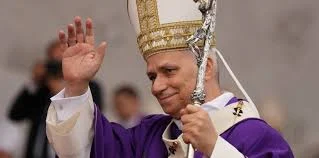
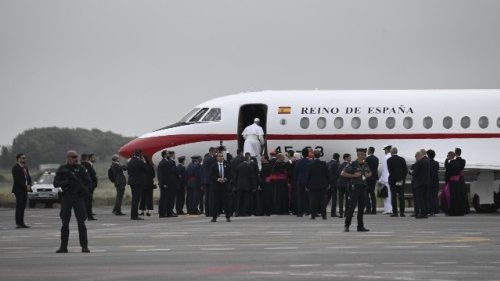
Pope Leo XIV is celebrating his first year since being elected, completing 12 months in which he has moved from a relatively low-profile cardinal to one of the most globally recognized religious leaders.
His election made history with the emergence of the first American pope. It also ushered in a papacy unfolding during a period of visible tension between the Vatican and the White House, as he assumed office only months after President Donald Trump’s re-election.
Despite the dramatic shift in his life, those close to him insist his personality remains largely unchanged.
“We don’t see great differences,” Rev. Joseph Farrell, prior general of the Augustinian Order and friend of the pope, told CNN. “It still is a bit unbelievable to see him (as pope) and yet it makes so much sense. As one of our friars said to me: ‘it looks like he went to pope school.”
Friends also say his humor is intact. Rev. Tom McCarthy, another Augustinian friar, recalled a light moment after the election: he embraced Leo but later wondered if it was appropriate.
“They were about to shoot you!” the pope joked.
So, after a year in office, observers are asking what defining traits have emerged from the first American pontiff.
1. Willing to speak out, even against Trump
Leo XIV is described as careful and methodical in his approach, shaped in part by his background as a mathematician. His style contrasts with his predecessor Pope Francis, who was more openly disruptive and less bound by protocol.
Yet on key moral and social issues, Leo has followed Francis’ path, speaking strongly on immigration, climate issues, poverty, and capital punishment. His pastoral years in Peru, serving impoverished communities, are often cited as shaping his focus on social justice. He has described US immigration treatment as “inhuman,” and has recently called for the abolition of the death penalty.
“Pope Leo XIV has managed to ensure that his voice and actions are heard and seen with particular force by not backing down on his call for world peace, his support for migrants, and his appeal against the use of nuclear weapons,” Paola Ugaz, an investigative journalist from Peru who knows the pope well, told CNN.
His strongest interventions have come during global conflicts, including the Iran war, where he unusually named Trump directly while rejecting any religious justification for violence. During a recent Africa trip, he warned in Cameroon that the world is being “ravaged by a handful of tyrants” and condemned corruption.
“The only thing that I’ve noticed that has been heavy upon him is the tragedy of war, and the suffering that people go through,” Farrell said. “His response has been very clear… that the way towards resolution, of finding solutions, is not with arms, it’s not with weapons, it’s to be disarmed, and disarming, and to dialog.”
The Pope’s outspoken tone has contributed to an unusual public clash with a sitting US president. Even so, associates say he remains steady under criticism.
Cardinal Blase Cupich of Chicago told CNN that’s because the pontiff “doesn’t see himself as a rival to any head of state” and instead his mission is to bring “a unique perspective, beyond any given nation.”
Cupich added that Trump’s attacks would not unsettle him, explaining that “frustration and being perturbed are luxuries he can’t afford.” Instead, the cardinal said the pope is “going to do what’s right” and is “not going to hedge his bets.”
2. A distinctly American touch in the Vatican
The past year has also introduced a more American cultural presence in Vatican life. Leo has been seen wearing a White Sox cap, enjoying pumpkin pie during a Thanksgiving trip, and engaging casually with visiting pilgrims.
In informal settings, he has joked about baseball, expressed fondness for Chicago-style deep-dish pizza, and is known to enjoy candy such as Peeps.
He is also the first pope in centuries whose first language is English. Unlike previous pontiffs whose messages were often translated, Leo speaks directly in a Midwestern accent, giving his words a more immediate impact for English-speaking audiences.
3. Reforming, but cautiously
According to Cardinal Cupich, Leo continues the reform-oriented direction of Pope Francis, particularly regarding a more inclusive Church and expanded roles for women. At the same time, Cupich says he is also advancing the legacy of the Second Vatican Council, the landmark 1962–65 meeting that shaped modern Catholicism.
While Francis famously said “who am I to judge” regarding gay priests, Leo has taken a broader framing of moral priorities.
“We tend to think that when the Church is talking about morality, that the only issue of morality is sexual,” he said last month. “And in reality, I believe there are much greater, more important issues, such as justice, equality, freedom of men and women, freedom of religion, that would all take priority before that particular issue.”
He has signaled gradual rather than sweeping reform, while continuing to appoint women to senior Vatican roles.
“Leo XIV’s style is measured, with few but necessary words, and when he makes a decision, there is no going back,” Ugaz said.
On clerical abuse, he has consistently met survivors and maintained a firm stance that there can be “no tolerance for any form of abuse in the Church.”
4. Comfortable in the digital age
Friends describe Leo as unusually tech-literate for a pope. “He’s very tech savvy,” McCarthy said. He uses a smartphone, wears an Apple Watch, and writes his own emails.
His brother, John Prevost, told CNN’s Erin Burnett that the pope once helped him regain access to a locked computer.
During his African visit, he was even seen advising Vatican photographers on framing shots and positioning subjects. He is also attentive to media coverage and once joked to reporters, “you think you can read my mind or face. You are not always correct.”
His first encyclical is widely expected to focus on artificial intelligence, an issue he has repeatedly addressed.
5. Quietly reshaping the US Church
Leo has also begun influencing the American Catholic hierarchy through key bishop appointments.
Among them are Archbishop Ronald Hicks in New York, Evelio Menjivar-Ayala in West Virginia, and Bishop Michael Pham in San Diego. Several of his early picks have immigrant backgrounds or experience in Latin America and refugee communities.
Menjivar-Ayala, who entered the US hidden in a car trunk in 1990, has been openly critical of Trump-era immigration policies.
In fact, three of the pope’s first four US bishop appointments were born outside the United States, reinforcing his emphasis on immigration as a source of national strength when properly integrated.
6. A possible “Leo effect” on faith
His first year has also coincided with renewed interest in Catholicism, particularly among younger people in the US and Europe. Some observers have dubbed this trend the “Leo effect,” pointing to increased engagement and even more vocations to religious life within his Augustinian order.
At 70, Leo is younger than many recent popes, giving him time to shape a longer-term agenda. His experience spans the United States, Latin America, and Rome, a combination supporters say gives him a uniquely broad perspective.
Ugaz summarized it this way: his outlook reflects “three dimensions: the United States, a Latin America marked by diversity, and a Vatican where the battles to be fought must be carefully chosen on a daily basis.”
As he enters his second year, Leo continues to frame his mission around peace, even when it places him at odds with powerful political figures.