The National Emergency Management Agency has reported that flooding across 28 states in Nigeria has affected 673,350 people, killed 245 and displaced 214,997 others as of October 20, 2026.
The agency disclosed the figures at the National Emergency Coordination Forum held at Ajuji Greenwich Hotel in Abuja, where stakeholders met to assess the country’s disaster situation and strengthen emergency preparedness.
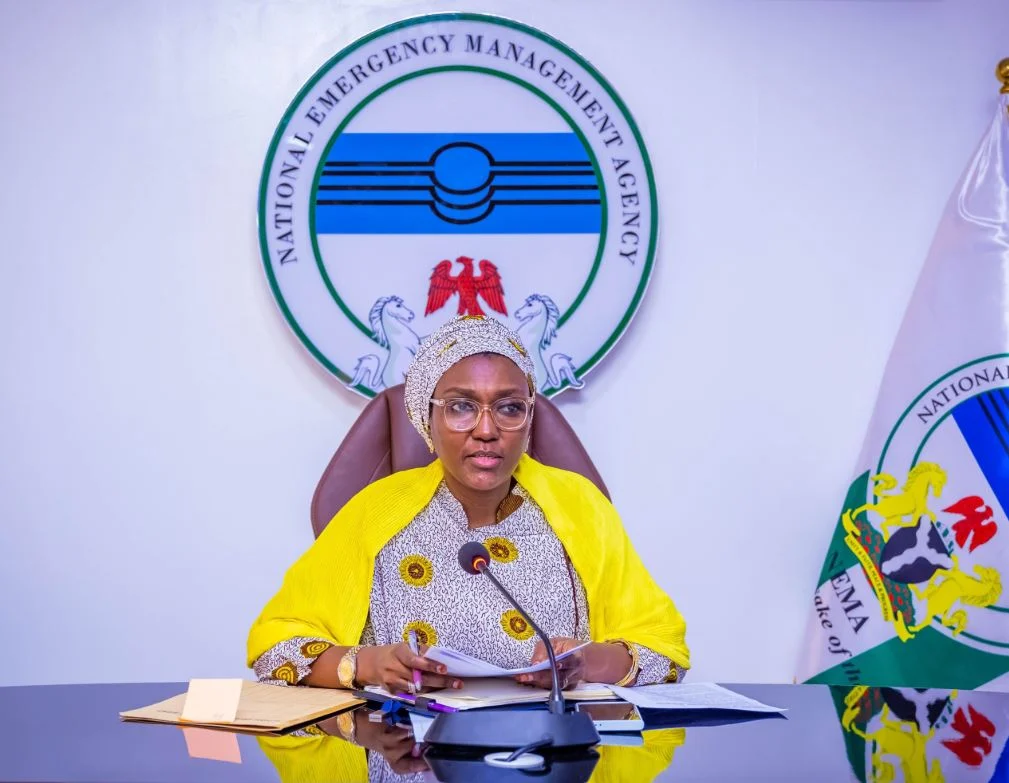
According to a statement released by NEMA on Friday, the agency’s Director-General, Zubaida Umar, presented the figures, highlighting the growing impact of flooding on communities across the country.
“Speaking at the forum, the Director-General of NEMA, Mrs. Zubaida Umar, disclosed that the Agency’s flood dashboard had recorded 673,350 persons affected across 134 Local Government Areas in 28 states as of 20 October 2026. Of this number, 214,997 persons had been displaced, while 245 lives had been lost”, the statement said.
Umar, who was represented at the meeting by the Director of Planning, Research and Forecasting, Godwin Topikor, said the scale of the disaster made it necessary to evaluate existing relief efforts, identify weaknesses in emergency responses and improve cooperation among relevant agencies.
She stressed the need for stronger coordination among government institutions, humanitarian organisations and development partners to ensure a more effective response to disasters.
The NEMA chief also called for increased monitoring, improved information sharing and better preparedness against public health risks, particularly in communities affected by flooding.
She warned that displacement, inadequate sanitation and restricted access to essential services could worsen health conditions among affected residents.
The forum brought together representatives of ministries, departments and agencies, security organisations, humanitarian groups and development partners to review emerging disaster threats and strengthen national preparedness and response mechanisms.
Participants also discussed the anticipated 2026/2027 El Niño phenomenon and its possible implications for the country’s climate and water systems.
Umar urged relevant institutions to work together to assess potential risks and ensure that climate forecasts and early warnings translated into practical measures to protect lives, livelihoods and critical infrastructure.
On disaster management, she maintained that a coordinated approach involving multiple sectors was essential for effective preparedness, timely intervention, risk reduction and long-term recovery.
She further called on participating organisations to avoid overlapping responsibilities and focus on protecting vulnerable groups, including women, children, older people and persons with disabilities.
Discussions at the forum covered the country’s flood situation, cholera updates, regional and global climate forecasts, and the potential effects of El Niño on hydrological conditions.
Stakeholders also reviewed preparedness and response plans in critical sectors, including food security, healthcare, education, water supply, sanitation, nutrition, emergency shelter, logistics, security and information management.
In his welcome address, the Deputy Director of Planning, Research and Forecasting, Tony Ephraim, emphasised the importance of cooperation among emergency management institutions.
He encouraged participants to identify operational shortcomings, improve information exchange and develop practical recommendations to strengthen the country’s capacity to manage disasters.
According to NEMA, the forum was designed to review existing emergency response arrangements, align priorities across sectors and improve collective readiness for ongoing emergencies and potential future disasters.