A heavy United States military bomber on a routine test sortie crashed shortly after takeoff on Monday in Southern California, killing all eight people on board and leaving behind wreckage so badly burned it was barely identifiable.
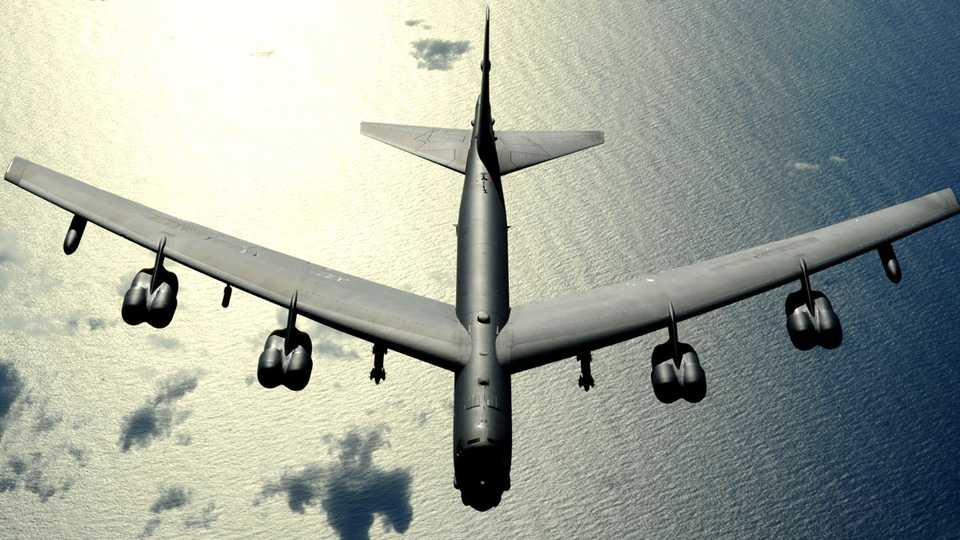
The accident involved a B-52 Stratofortress operating from Edwards Air Force Base, about 100 miles northeast of Los Angeles.
After impact, a large column of black smoke rose over the desert, while the runway and surrounding terrain were left scorched and deeply scarred.
Air Force officials confirmed the severity of the crash. “It was tragic and unsurvivable,” Air Force Col. James Hayes said at a news conference.
Authorities said the crew included active-duty military personnel, civilian government employees, and contractors. The identities of the victims have not yet been formally released, as officials continue notifying next of kin.
However, one person has been identified by family members as Jeromy Smith, a civilian flight test engineer working for the Department of Defense.
His widow, Lauren Smith, described the personal loss and the life he left behind, including their two young sons.
“He’s a hero. He is someone that people look up to, and just an all-around amazing person,” she told CNN affiliate KBAK/KBFX. She added, “I went the whole day just hoping and praying that he was OK,” after first hearing about the crash through a friend before receiving official confirmation hours later. Reflecting on her hopes for their children, she said, “I want them to know how much that my husband loved his country, and how much he’s done for this community.”
Lauren Smith also noted that her husband had more than a decade of experience at the base and was deeply committed to his work in aviation testing.
The aircraft involved was a B-52 Stratofortress assigned to a test mission supporting the radar modernization program.
Officials said it took off at 11:20 a.m. local time for evaluations tied to upgrades intended to extend the bomber’s service life into the 2050s.
Defense contractor Boeing confirmed that two of its employees were among those killed. “We are in contact with their families and are offering support,” Boeing said in a statement.
The White House and state officials expressed condolences. Air Force leadership and California Gov. Gavin Newsom also extended sympathy to the Edwards community and praised emergency responders who quickly secured the area.
Operations at Edwards Air Force Base were disrupted following the crash. While the base has reopened in limited capacity, officials said the airfield will remain closed until at least Thursday, with flight testing expected to resume early next week.
Crews continue to deal with lingering fires and ensure the area is safe for recovery teams.
“It’s a hero base with a tragic history,” said aviation expert Richard Kolko, describing its long-standing role in experimental aviation. “If it flies, it’s tested at Edwards Air Force Base,” he added.
Investigators have begun examining the cause of the crash, though officials warned that a full public report could take up to six months.
The base is one of the U.S. Air Force’s primary flight-test facilities, used for aircraft, drones, helicopters, and even spaceflight operations due to its vast dry lakebed and long runways.
Despite its safety systems and experienced personnel, it has recorded several fatal accidents across decades of testing.
The B-52 Stratofortress itself remains one of the Air Force’s oldest active bombers, first introduced in 1955 and capable of carrying up to 70,000 pounds of weapons.
Before the crash, 76 of the aircraft were still in service, with ongoing modernization efforts designed to keep the platform operational for decades more.
The bomber involved in Monday’s accident was part of that upgrade program, which includes improvements to radar, engines, communications systems, avionics, and weapons integration.
The aircraft remains central to long-range strike strategy while the newer B-21 program is introduced.
Previous fatal incidents involving the aircraft type include a 2008 crash near Guam that killed six service members. Since production ended in the 1960s, the Air Force has relied on extended maintenance and storage of retired airframes to sustain the fleet.
As investigations continue, officials say support services have been set up for families and personnel affected by the tragedy at Edwards.