The Economic Community of West African States has warned member states against the diversion of legally acquired arms and ammunition from authorised stockpiles, saying such practices could pose serious threats to national security.
The regional body gave the warning in Port Harcourt, Rivers State, during a five-day training on physical security, stockpile management and property management for national security in Nigeria.
The programme was organised by the ECOWAS Small Arms Division in collaboration with the Bonn International Centre for Conflict Studies.
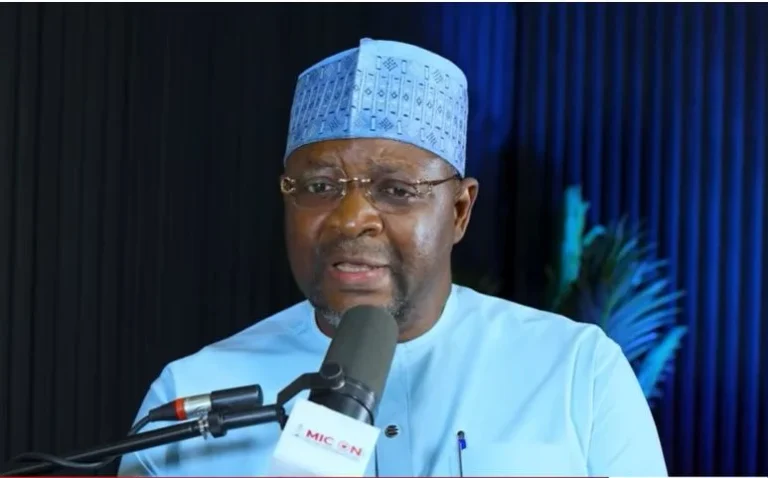
Speaking at the event, the Acting Head of the ECOWAS Small Arms Division, Abayomi Adeomi, said efforts to tackle arms trafficking should go beyond weapons smuggled across national borders.
He stressed the need for member states to strengthen the management and monitoring of arms kept in authorised government facilities.
Adeomi said, “While most attention is often paid to weapons trafficked across borders, we must equally remain vigilant about the diversion of weapons from legally authorised stockpiles of member states.”
According to him, effective stockpile management was an important component of national security and conflict prevention.
He said accurate inventory records, regular inspections, safe handling procedures and properly trained personnel were necessary to prevent the theft, loss or diversion of weapons and ammunition.
The Director-General of the National Centre for the Control of Small Arms and Light Weapons, Johnson Kukomo, disclosed that the agency had destroyed more than 17,000 illicit, obsolete, unserviceable and decommissioned weapons since its establishment in 2021.
He added that more than 20,000 rounds of illicit ammunition had also been destroyed.
Kukomo, who was represented by the South-South Zonal Director of the centre, Alex Ebimiebo, said the destruction of the weapons was part of efforts to prevent them from returning to circulation.
He said, “Since its inception, the National Centre for the Control of Small Arms and Light Weapons has destroyed over 17,000 illicit, unserviceable, obsolete and decommissioned weapons, as well as over 20,000 rounds of illicit ammunition.”
Ebimiebo said the centre had also focused on training personnel from the armed forces, police and other security agencies on weapons and ammunition management, marking and tracing, record-keeping and the identification of illicit arms.
He noted that effective arms control required cooperation among countries and institutions because the proliferation of illicit weapons crossed national borders.
He said, “Illicit arms proliferation is transnational in character and cannot be effectively addressed by any single institution or country acting alone.”
The General Officer Commanding, 6 Division, Nigerian Army, Maj Gen Everest Okoro, also warned that poor management of weapons stockpiles could expose security personnel and surrounding communities to serious risks.
Okoro, represented by the Commander, 6 Division Garrison and Sector 3, Joint Task Force, South-South Operation Delta Safe, Brig-Gen A.A. Bello, said inadequate storage and security could lead to theft, unauthorised access, diversion and accidental explosions.
He said, “Poorly managed stockpiles increase the risk of theft, diversion, unauthorised access, deterioration and unplanned explosions, with potentially serious consequences for military personnel, surrounding communities and national security.”
Okoro added that proper stockpile management would help protect lives and materials, improve accountability and prevent weapons from falling into the hands of criminals and terrorist groups.
The training brought together 20 participants from the Nigerian Army, Nigeria Police Force and other security agencies.
It was designed to strengthen the capacity of security personnel from agencies including the Nigerian Air Force, Nigerian Navy, Department of State Services, police and paramilitary organisations across Rivers State and the Niger Delta region.