The Minister of Defence, Gen. Christopher Musa (retd.), has urged security agencies to begin preparations for election security well ahead of polling day, warning against reliance on last-minute deployment of personnel.
Musa said effective election security required sustained intelligence gathering, inter-agency cooperation and continuous monitoring of emerging threats.
He spoke on Tuesday at the Blueprint newspaper seminar on security, where he delivered the keynote address.
The minister said election security should be treated as a continuous process rather than an operation that begins shortly before voters head to the polls.
He said, “Successful election security is not achieved through last-minute deployments. It is achieved through months of planning, intelligence-led operations, inter-agency coordination, effective communication and continuous assessment of emerging threats.”
Musa added that public confidence in security and electoral institutions was equally important to the success of the process.
“Security should never be viewed as an event. It is a process that begins long before campaigns commence and continues long after the final vote has been counted,” he said.
According to the minister, the evolving nature of threats means that election security can no longer focus solely on protecting polling centres.
He identified cyberspace, misinformation, economic difficulties and the manipulation of ethnic and religious sentiments as potential threats to the electoral process.
Musa warned that election interference could increasingly come from online actors rather than individuals physically carrying weapons at polling stations.
He said security planning should therefore incorporate both conventional and digital threats.
The minister outlined six key areas he described as pillars for stronger election security: strategic intelligence, protection of digital infrastructure, civil-military coordination, unified strategic communication, a responsible information environment and engaged citizens.
On intelligence, Musa said security agencies must move from reacting to incidents to identifying and addressing threats before they escalate.
“Modern election security must be intelligence-led rather than incident-driven, with threat assessments, early warning systems and real-time information sharing among security, intelligence and electoral institutions,” he said.
He also stressed the importance of protecting electoral technology and communication systems from cyberattacks, sabotage and other forms of interference.
On coordination among security agencies, the minister called for respect for the constitutional responsibilities of each institution while promoting joint planning and interoperability.
“Seamless collaboration, not institutional competition, delivers the best outcomes during national emergencies and major public events,” he said.
Musa further said coordinated communication was necessary to prevent misinformation from eroding public confidence during elections.
“In today’s information environment, silence often creates space for misinformation, and timely, accurate, coordinated public communication is essential to sustaining public confidence before, during and after elections,” he said.
He maintained that tackling misinformation could not be left to government alone, urging the media, technology companies, civil society groups, educational institutions and citizens to play their part.
“Government alone cannot defeat misinformation; the media, technology companies, civil society organisations, educational institutions and citizens all share responsibility for promoting fact-based public discourse,” Musa said.
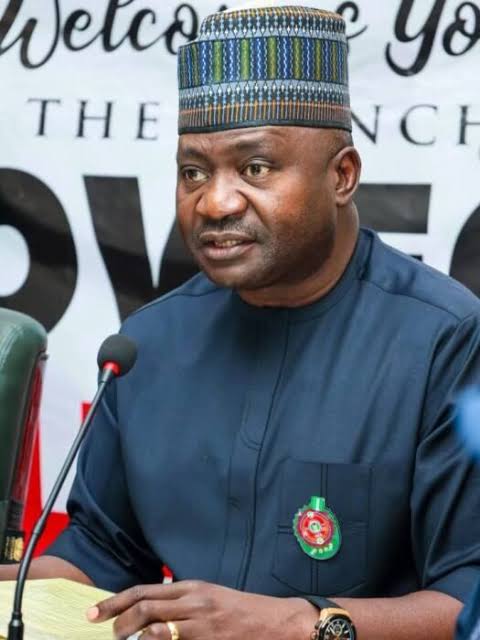
Also speaking at the event, former Zamfara State Governor, AbdulAziz Yari, appealed to political parties to stop exploiting insecurity for political advantage.
Yari described the fight against insecurity as a collective responsibility requiring cooperation beyond government and security institutions.
“Let us encourage all political parties to understand that insecurity is not something to be traded with for the purpose of winning the hearts of citizens,” he said.
Drawing on his experience as Zamfara governor between 2011 and 2019, Yari said insecurity had remained a persistent national challenge under successive administrations.
He called for fairness and justice in addressing the country’s security problems, noting that the challenge had continued across different political administrations.