President of the Christian Association of Nigeria, Archbishop Daniel Okoh, has urged a strong partnership between the Church and the Federal Government to tackle the nation’s escalating mental health crisis, a concern he said has personal meaning for him, shaped by his childhood experiences among people living with mental illness.
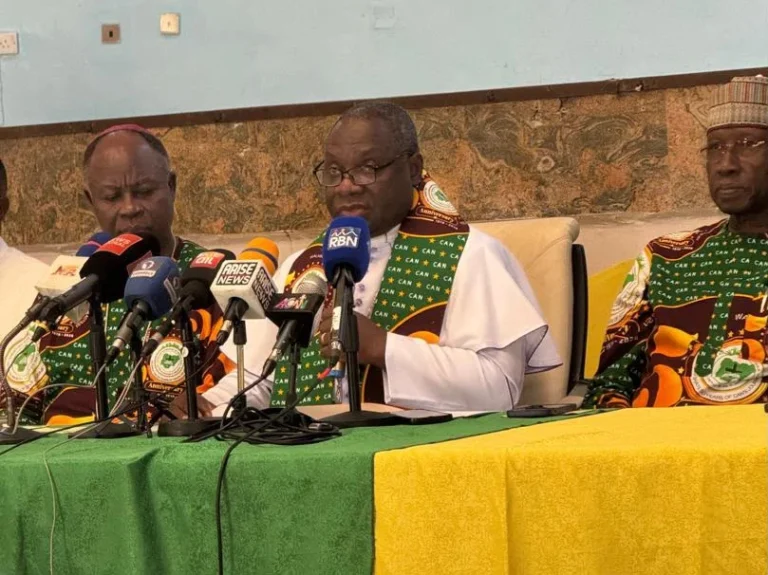
Speaking at the National Mental Health Summit held at the National Christian Centre, Abuja, to commemorate World Mental Health Day, Archbishop Okoh reflected on how growing up in a church environment exposed him early to the struggles and recovery of those facing mental challenges.
“I grew up in a church compound that had what we called ‘faith homes’. They were places where people who were ill, including those with mental health challenges, stayed close to the church so they could receive prayers, counselling, and care. As a child, I lived among people with severe mental conditions; some violent, some withdrawn, and I watched some of them regain their sanity and go on to live full lives,” he recalled.
According to him, those early experiences helped him understand that mental health goes beyond medical diagnosis — it is a deeply human issue requiring empathy, patience, and a holistic approach.
“I saw people who came in under terrible conditions but were transformed through love, prayer, and guidance. Some became pastors, married, and raised families. Those experiences taught me that no one is beyond restoration,” the CAN President added.
Okoh explained that the summit, themed “Faith and Mental Health: Break the Silence,” was not just a formal gathering but a rallying point to end stigma and encourage collaboration between faith communities and government institutions.
“For too long, discussions about mental health have remained in the shadows of ignorance and fear. Many Nigerians suffer quietly, even within our churches, battling depression, anxiety, trauma, or emotional exhaustion. They are often misunderstood or judged instead of supported. This summit challenges us to change that narrative,” he said.
He cautioned against viewing mental illness purely as a spiritual failure or demonic attack, noting that faith and medicine must complement each other.
“Mental illness does not mean a lack of faith. The Bible teaches us to ‘bear one another’s burdens’. The Church must be a place of refuge, not rejection, for those struggling mentally or emotionally,” he emphasized.
The cleric called on the Federal Government to reinforce existing mental health policies, improve funding, and integrate therapy and counselling services into primary and community healthcare structures.
He also pledged that CAN would leverage its nationwide presence to support such initiatives through awareness campaigns, counselling programs, and education on mental wellness.
“Many people are afraid to confide in family but find comfort in speaking with pastors. We must use that trust responsibly, in partnership with professionals,” he advised.
Archbishop Okoh further linked the surge in mental health issues among Nigerians — especially the youth — to social pressures, economic hardship, and moral decay.
“Not all our social problems stem from poverty. Some are rooted in greed; the desire for instant wealth without process. We must teach our youth patience, discipline, and purpose,” he warned.
He added that mental distress cuts across all levels of society, including among the affluent and clergy members themselves.
“Some of my wealthy friends have children who attempted suicide; some pastors themselves are silently struggling. We must care for our caregivers too,” he disclosed.
Okoh also advocated for renewed investment in training counsellors, chaplains, and lay ministers to detect early signs of distress and refer cases for professional help, stressing that complete healing must cater to body, soul, and spirit.
“Our sermons and teachings must remind people that seeking help is not weakness but courage. No one is beyond restoration. We can take people off the streets and help them reintegrate into society with dignity and hope,” he stated.
Concluding his address, the CAN President described the summit as a turning point in the country’s approach to mental wellness.
“This summit is more than a meeting; it is the beginning of a movement; a movement where the Church, the government, and the people unite to ensure that every Nigerian, regardless of background or status, can live with peace of mind, dignity, and belonging,” he declared.