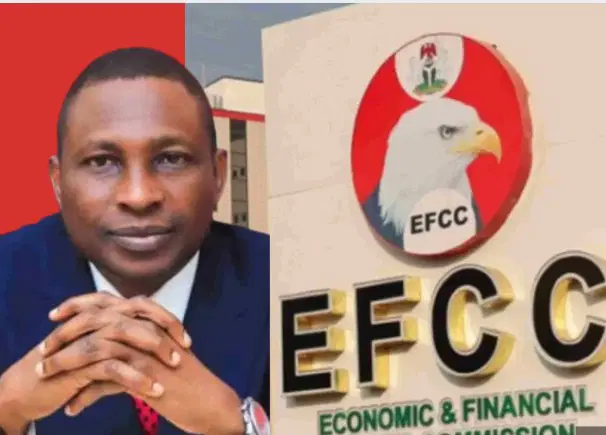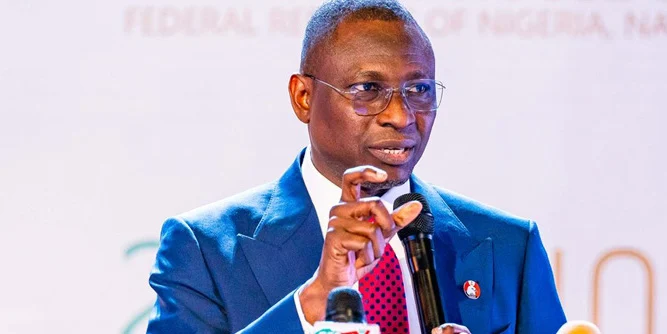
The Chairman of the Economic and Financial Crimes Commission, Ola Olukoyede, has called on pastors and imams to intensify anti-corruption messages in churches and mosques, saying religious institutions can help prevent corrupt practices before they require the intervention of law enforcement agencies.
The Punch reported that Olukoyede made the appeal on Wednesday in Abuja at the second 2026 Council Meeting of the Nigeria Inter-Religious Council and the unveiling of the Anti-Corruption Interfaith Manual for religious leaders.
He said religious leaders wielded significant influence in shaping the values and character of their followers, making them important partners in the fight against corruption.
“The EFCC can investigate a person’s conduct. Faith communities can influence that person’s character. We can prosecute fraud. Religious teaching can cultivate honesty.
“We can confiscate illicit wealth. Churches and mosques can challenge the values that make society worship wealth without questioning its source. We can punish corruption after the event. Faith can help prevent it before it begins,” Olukoyede said.
The EFCC chairman stressed that corruption and financial crimes should not be associated with any particular religion or ethnic group, noting that their consequences affect Nigerians across religious divides.
“Financial crime has no religion. Corruption has no tribe. Fraud does not become Christian or Muslim because of the identity of the person accused of committing it,” he stated.
Olukoyede added, “When public money is stolen, both Christians and Muslims suffer. A badly equipped hospital does not first ask a dying patient where he worships. A collapsed road does not distinguish between a Christian traveller and a Muslim traveller. Unemployment does not respect denomination. Inflation does not spare one faith community.”
He urged religious leaders to make use of the newly launched manual to educate their congregations on the dangers of corruption and discourage the pursuit of wealth without regard to its source.
According to him, the EFCC has continued to work with Christian and Muslim leaders under its interfaith framework to strengthen preventive efforts against corruption.
“We have been doing this through the interfaith framework. Over the years, we have specifically spelt out what should be the roles of religious leaders and the doctrine they need to pass down to their followers.
“We believe that no religion condones corruption and no faith entertains fraudulent engagements,” he said.
Olukoyede said the manual was developed with the input of Christian and Muslim leaders and contains the doctrinal perspectives of both faiths on corruption.
The Executive Secretary of NIREC, Prof Cornelius Omonokhua, said the second edition of the anti-corruption preaching and teaching manual was produced through the Interfaith Anti-Corruption Advisory Committee of the EFCC.
He explained that the manual and facilitators’ guides were designed to help Christian and Muslim preachers communicate religious teachings against corruption while also encouraging peaceful coexistence.
“No nation can flourish in the face of corruption at all levels,” Omonokhua said, adding that a religious leader who engages in corrupt practices could not claim to uphold the teachings of his faith.
The Secretary to the Government of the Federation, George Akume, who represented President Bola Tinubu at the event, also called for greater collaboration among religious leaders, traditional rulers and government in addressing insecurity and other challenges facing the country.
Akume said violence, banditry, kidnapping, communal clashes and terrorism had created fear among Nigerians, including parents who were increasingly reluctant to send their children to school.
He urged stakeholders to work together to counter narratives capable of deepening division and conflict.
The event was attended by the President of the Christian Association of Nigeria, Rev Daniel Okoh; the Sultan of Sokoto, Alhaji Sa’ad Abubakar; former Joint Admissions and Matriculation Board Registrar, Prof Ishaq Oloyede; the Emir of Zazzau, Alhaji Ahmed Nuhu Bamalli; and the Shehu of Borno, Abubakar Umar El-Kanemi, among others.