Nigerian football stakeholders have become increasingly divided over whether the planned Nigeria Football Federation elections should be suspended, with recent failures by the country’s teams adding fresh urgency to calls for reforms in the administration of the sport.
According to The Punch, former internationals have pointed to Nigeria’s disappointing results on the continental stage as evidence that significant changes are needed, while others insist that the September election should proceed as scheduled.
Abiodun Obafemi, a member of Nigeria’s gold medal-winning Dream Team at the 1996 Atlanta Olympics, expressed concern over the contrast between the unity and determination that characterised the team of his era and the current state of Nigerian football.
“We were celebrating the anniversary of our Olympic triumph just a few days ago, and now we find ourselves facing a World Cup miss for the first time, with the Falcons and the young Flying Eagles both missing out,” Obafemi said.
“In our days, we came into camp with hunger, and our relationship with the administration and our coaches was open and sincere. Today, it appears to be a different story entirely.”
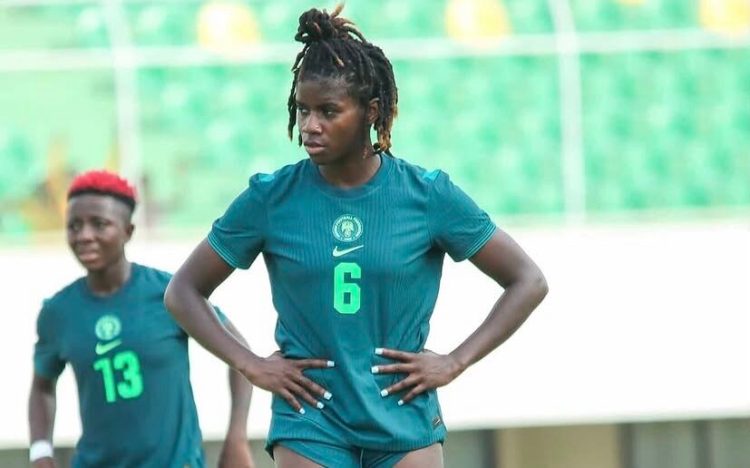
His remarks followed the Super Falcons’ quarter-final elimination from the 2026 Women’s Africa Cup of Nations by Cameroon on Sunday. The defeat also denied Nigeria automatic qualification for the 2027 FIFA Women’s World Cup.
The Flying Eagles also suffered a setback after losing 4-1 to Burkina Faso in the final of the WAFU Zone B Under-20 Championship.
The result ended Nigeria’s hopes of qualifying for the 2027 Africa Under-20 Cup of Nations and subsequently the 2027 FIFA Under-20 World Cup in Azerbaijan.
The setbacks have strengthened calls by former Super Eagles captain Segun Odegbami for the suspension of the NFF’s 2026 Executive Committee elections, scheduled for September 27 in Lafia, Nasarawa State.
Odegbami has criticised the administration of Nigerian football, arguing that the NFF election has become “a four-yearly ritual of crisis,” and called on President Bola Tinubu and other stakeholders to halt the process temporarily.
Chief Executive Officer of Monimichelle Sports Facility, Ebi Egbe, also backed the call, questioning an electoral arrangement in which 37 of the 44 Congress delegates are state Football Association chairmen.
Egbe argued that the structure could make it difficult for candidates seeking fundamental changes to compete effectively against the existing establishment.
“It will be very difficult for genuine reformers to even consider buying nomination forms for the current NFF elections when the electoral structure appears to give the 37 State Football Association members such enormous influence over the outcome,” Egbe said.
“For me, the real issue is not about who buys a form or who eventually wins. It is about whether the process gives every credible candidate a genuine and equal opportunity to compete.”
However, Ahmed Shuaibu Gara-Gombe, Founder and Chairman of the Board of Trustees of the Athletics and Other Sports Development Commission, disagreed with the push to suspend the election.
Gara-Gombe accused Odegbami of advancing a position influenced by personal interests rather than the wider development of Nigerian football.
“I disagree with many things he said in that video,” Gara-Gombe said.
“If you want to talk about issues in Nigerian sports or anything affecting our country, forget fronting or saturating people with your profile. We know who you are.”
He also questioned Odegbami’s record in relation to controversies surrounding the Shell Cup and the Nigeria Academicals Sports Committee, which he chaired, alleging that the former international had “no moral right to talk about corruption or accountability.”
Gara-Gombe further rejected the suggestion that Odegbami’s previous unsuccessful bid for an NFF position was the result of an unfair electoral system.
According to him, Odegbami failed to secure the necessary endorsement from Football Associations in his South-West zone.
Despite opposing a suspension of the election, Gara-Gombe acknowledged the need for changes to the electoral structure.
He maintained, however, that such reforms should be pursued through the National Assembly rather than through the courts.
“We need electoral reforms, not only in Nigerian football. Electoral reform is required in everything that we do,” he said.
“The issue of the composition of Nigerian Football Association Congress has to do with the National Assembly. Let the National Assembly go there and take up that challenge.”
He also urged the National Sports Commission, headed by Chairman Shehu Dikko and Director-General Bukola Olopade, to clarify its position on the ongoing controversy.
“The National Sports Commission must come out and state their position,” he said.
“Their silence shows that they are behind it, and we are going to take them on it.”
The dispute comes at a difficult period for Nigerian football, with the Super Eagles, Super Falcons and Flying Eagles all suffering major qualification setbacks within the same period.
With the NFF Elective Congress scheduled for September 27 in Lafia, the disagreement over the timing and structure of the election is expected to intensify as stakeholders continue to debate the future direction of Nigerian football.