The Trump administration is weighing a controversial move to ease sanctions on Iranian oil exports as it scrambles to stabilize global energy markets amid a deepening oil crisis triggered by war in the Middle East.
Officials are making an urgent push to secure additional crude supply as prices surge, even if it means temporarily allowing Iranian oil, previously restricted under US sanctions, to reach international buyers.
The shift reflects growing concern inside the administration that traditional policy tools are no longer sufficient to contain the shock hitting global energy markets.
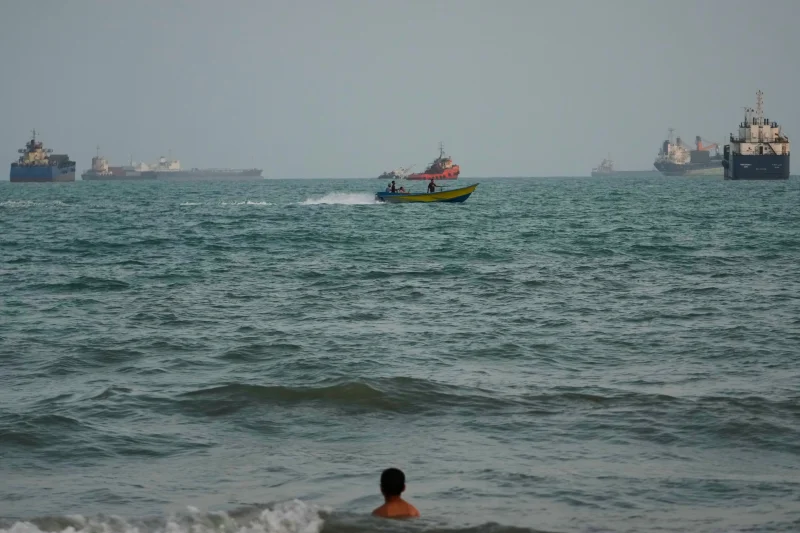
Three weeks into the war with Iran, officials privately acknowledge that elevated oil and gas prices could persist for months, especially as fighting continues and access through the Strait of Hormuz remains heavily constrained, according to people familiar with internal discussions.
“The shortfall is so large that the measures available are dwarfed by how much oil is not reaching the market,” said Neelesh Nerurkar, a former senior Trump Energy Department official. “This is the biggest disruption to the oil markets that you can imagine.”
The US has already tapped strategic reserves, relaxed some restrictions on Russian oil, and moved to accelerate domestic crude production.
But those steps have done little to curb the global price spike, with Brent crude rising to around $112 per barrel and US gasoline prices climbing toward $4 per gallon.
Now, attention has turned to Iranian oil stored at sea. The administration is considering temporarily lifting sanctions on roughly 140 million barrels currently in transit, allowing US allies facing shortages to purchase them.
Officials argue the barrels would likely reach the market regardless, with China expected to be a primary buyer under existing conditions. The revised approach would redirect those flows toward allies in Asia instead.
“Iran was going to sell those barrels anyway,” said one of the people familiar with the internal discussions. “Instead of going to China, we make it sellable to Thailand or Vietnam.”
Treasury Secretary Scott Bessent described the strategy as a pressure tactic during ongoing conflict, saying it amounts to “using the Iranian barrels against Tehran to keep the price down as we continue Operation Epic Fury.”
He added, “Iran will have difficulty accessing any revenue generated and the United States will continue to maintain maximum pressure on Iran and its ability to access the international financial system,” he wrote on X.
US Ambassador to the United Nations Mike Waltz also framed the move as temporary and targeted at allies.
“So we’re going to allow it to go in a temporary basis to some of our allies like India, Japan and others so that this strategy from Iran, the Iranian regime, doesn’t work,” Waltz told Dana Bash at a CNN town hall on Iran.
However, analysts warn that the impact may be limited. The 140 million barrels in question represent only about one-and-a-half days of global consumption, meaning any relief would likely be short-lived.
“If they pursue this strategy and allow buyers to buy off this oil on the water, it’ll go quickly,” said Gregory Brew, a senior analyst at Eurasia Group who specializes in oil and gas. “Then we’ll be faced with the interesting proposal of dropping sanctions on Iranian oil generally.”
A White House spokesperson said the administration is actively evaluating options.
“Ultimately, once the military objectives are completed, oil and gas prices will drop rapidly again, potentially even lower than before the strikes began,” she said.
The potential sanctions relief highlights the administration’s dilemma: balancing military pressure on Iran with the economic consequences of restricted global oil supply. President Donald Trump has downplayed the price surge, calling it acceptable “short-term pain.”
He also dismissed concerns about restoring maritime flow through the Strait of Hormuz, saying that “at a certain point, it’ll open itself.”
Even within the administration, officials acknowledge limited visibility into next steps as decision-making remains tightly controlled among senior advisers.
“They’re kind of resigned to watching,” said one of the people familiar with the internal discussions. “The way this administration has run its policy is a very small group, and that only expands to solve problems.”
Other measures under consideration include temporary relaxation of fuel regulations, though officials say such steps would likely have only marginal effects.
For now, the core challenge remains unresolved: whether easing sanctions on Iranian oil can provide enough relief to calm markets, or whether deeper structural disruptions will continue to drive prices higher in the months ahead.