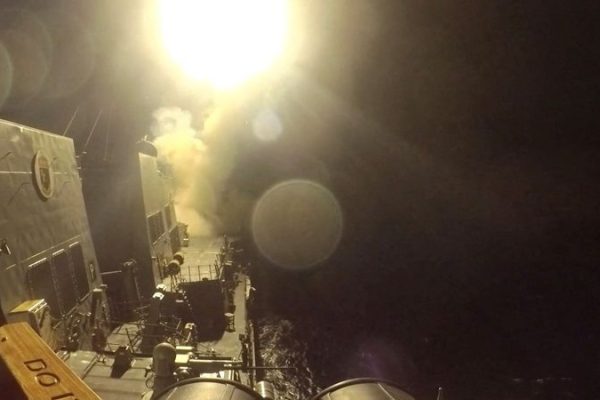
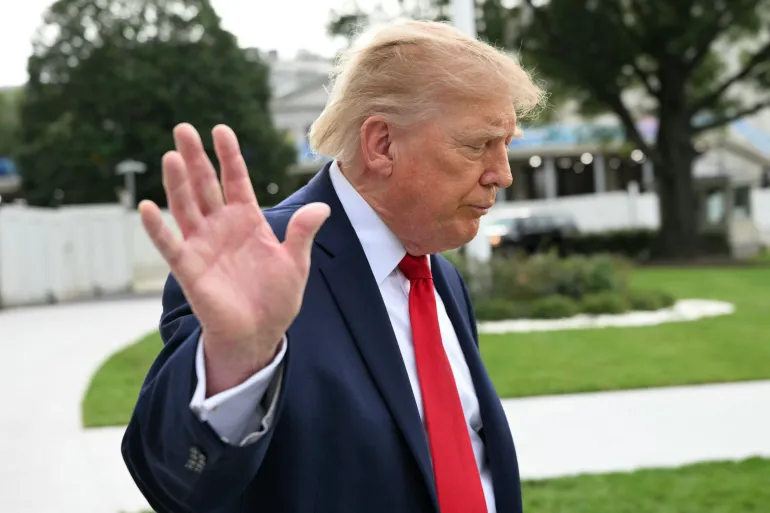
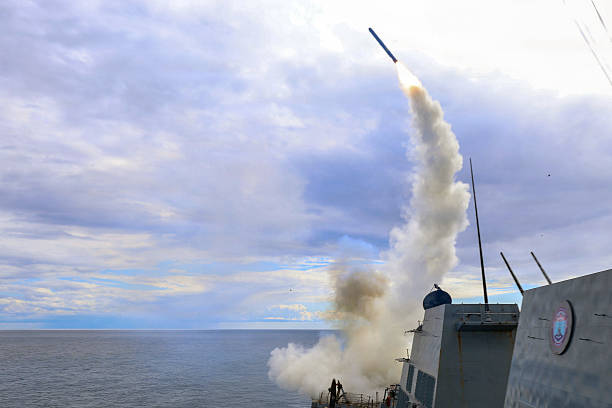
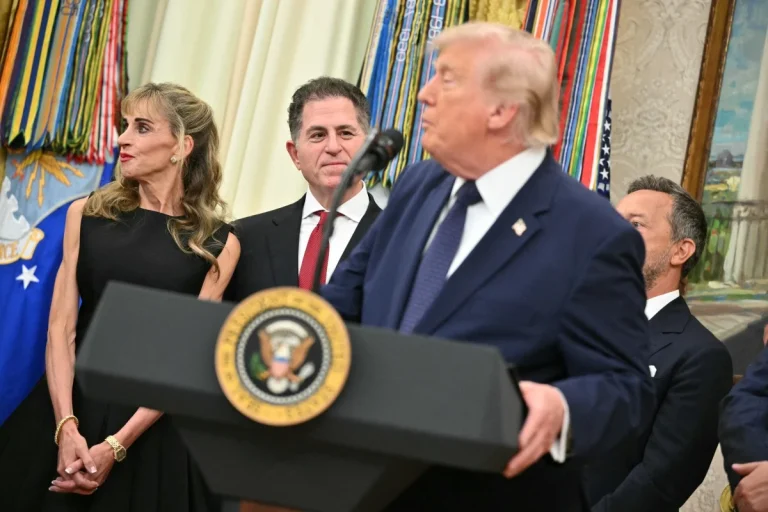
United States President, Donald Trump, announced Monday that operations against Iran could last several weeks, as Israel and the United States intensified strikes across the region.
Tehran and its allies retaliated, targeting Israel and various sites in Gulf states, including energy facilities in Qatar and the U.S. embassy in Saudi Arabia.
The conflict escalated sharply following the killing of Iranian Supreme Leader Ayatollah Ali Khamenei, with no clear exit strategy, setting the stage for a prolonged crisis.
Even cities previously considered safe, such as Dubai, have come under fire, while hundreds of thousands of airline passengers remain stranded.
Energy prices have surged, and U.S. allies pledged to help counter Iranian missiles and drones.
Trump warned that operations could continue for four to five weeks but added he was prepared “to go far longer than that.”
The State Department, citing safety concerns, urged Americans to leave more than a dozen Middle Eastern countries.
“The hardest hits are yet to come from the U.S. military,” Secretary of State Marco Rubio said. “The next phase will be even more punishing on Iran than it is right now.”
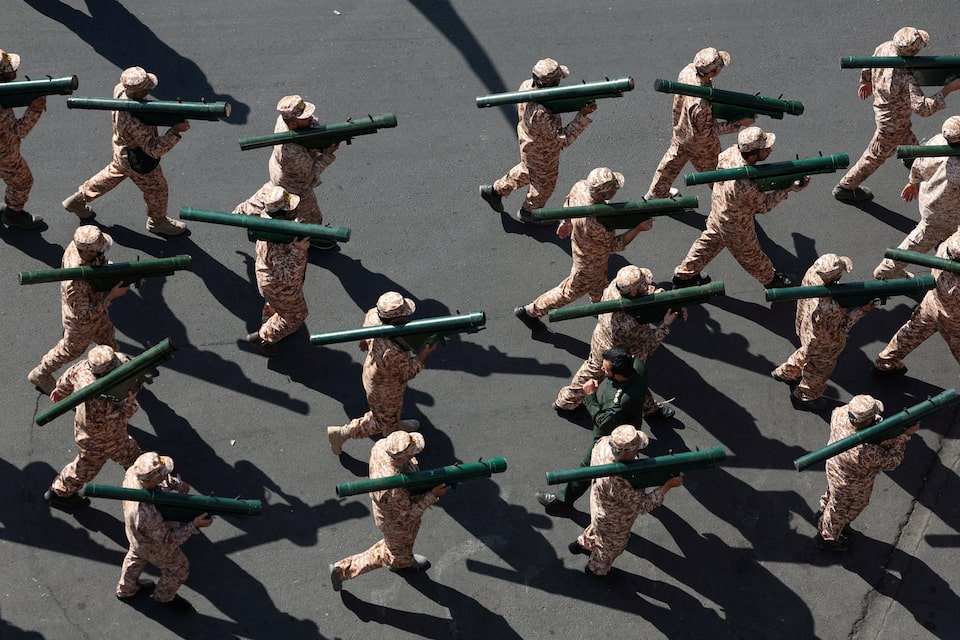
The campaign’s objectives, Trump said, are to destroy Iran’s missile capabilities, dismantle its navy, prevent it from obtaining nuclear weapons, and stop support for allied groups like Lebanon’s Hezbollah, which fired missiles at Israel Monday.
Chaos erupted when the U.S. military reported that Kuwait had “mistakenly shot down” three American F-15E Strike Eagles amid Iranian attacks involving aircraft, ballistic missiles, and drones.
All six pilots ejected safely. As airstrikes hit Tehran, top security official Ali Larijani vowed on X: “We will not negotiate with the United States.”
Iran Expands Attacks Across the Region
Markets were shaken as the fighting spread through a region crucial to energy supplies.
In Israel, mourners at the funeral of Sarah Elimelech and her daughter Ronit took cover as air-raid sirens warned of incoming missiles fired by Iran in Beit Shemesh on Monday.
Saudi Arabia reported that the U.S. Embassy in Riyadh was struck by two drones, causing a “limited fire” and minor damage. A local resident described light smoke coming from the compound.
On Monday, the U.S. Embassy in Kuwait was also hit.
Saudi Arabia’s Ras Tanura oil refinery was attacked but successfully defended by its security systems.
The refinery produces over half a million barrels of crude oil daily. “The attack on Saudi Arabia’s Ras Tanura refinery marks a significant escalation, with Gulf energy infrastructure now squarely in Iran’s sights,” said Torbjorn Soltvedt, an analyst at Verisk Maplecroft.
QatarEnergy announced it would stop producing liquefied natural gas indefinitely after two of its facilities were struck, removing one of the world’s top suppliers from the market.
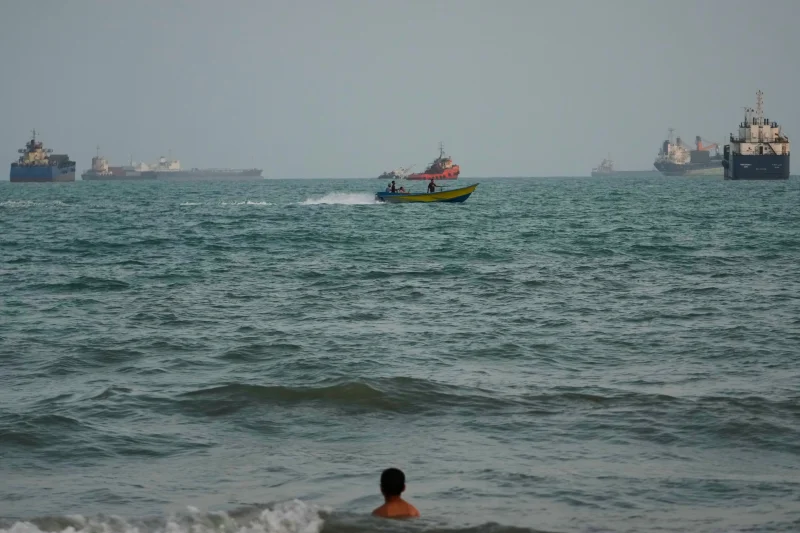
European natural gas prices surged by 40%. Several ships in the Strait of Hormuz, a critical oil trade route, were also attacked.
Iran’s ambassador to the International Atomic Energy Agency, Reza Najafi, said airstrikes targeted the Natanz nuclear enrichment site on Sunday.
“Their justification that Iran wants to develop nuclear weapons is simply a big lie,” he said.
Israel and the U.S. have not confirmed strikes on Natanz, though Israel has previously targeted “leadership and nuclear infrastructure.” Iran maintains its nuclear program is peaceful and says it has not enriched uranium since June, while asserting its right to do so.
Rising Death Toll
The Iranian Red Crescent reported at least 555 people killed in U.S.-Israeli operations. In Israel, 11 people died from Iranian missile attacks. Retaliatory strikes against Hezbollah in Lebanon killed dozens.
The U.S. confirmed two previously missing service members dead, bringing total U.S. military casualties to six, all Army personnel from the same logistics unit in Kuwait. Three fatalities were reported in the UAE, and one each in Kuwait and Bahrain.
Iran’s foreign minister, Abbas Araghchi shared aerial photos of graves he claimed were for over 160 girls killed during a U.S.-Israeli strike on an elementary school in Minab.
“Their bodies were torn to shreds,” he said. In Israel, three young siblings killed by Iranian strikes were buried at the Mount of Olives in Jerusalem Monday night.
Hezbollah said it launched missiles at Israel early Monday in response to Khamenei’s killing and “repeated Israeli aggressions,” marking its first claimed attack in over a year. No injuries or damage were reported.
Israel retaliated with strikes across Lebanon, where the Health Ministry reported at least 52 deaths and 154 wounded in Beirut suburbs and southern Lebanon.
Brig. Gen. Effie Defrin, an Israeli military spokesman, said all options remain on the table, including a potential ground invasion of Lebanon. Israel also struck Al-Manar channel studios in southern Beirut after issuing an evacuation warning.
No End in Sight
The U.S. military reported using B-2 stealth bombers to strike Iranian ballistic missile facilities with 2,000-pound bombs, destroying 11 Iranian warships.
Trump claimed the Iranian navy headquarters had been “largely destroyed.”
Danny Danon, Israel’s ambassador to the U.N., said the conflict would continue “as long as it takes.” Defense Secretary Pete Hegseth emphasized the U.S. is not engaged in nation-building: “This is not Iraq. This is not endless.”
Trump reiterated the campaign’s objectives, citing grievances since Iran’s 1979 Islamic Revolution, and encouraged Iranians to “take over” their government, though no uprising has occurred. He also indicated openness to dialogue with Iran’s soon-to-be-appointed new leadership.
Tehran’s Streets Deserted
Residents of Tehran largely stayed indoors during airstrikes, while the paramilitary Basij set up checkpoints.
In Babol, a student told the AP anonymously that armed riot police were on the streets following Khamenei’s death, “We don’t know whether to be happy about the elimination of the criminals who oppress us or to remain silent in the face of the U.S. and Israel’s war against the country and its interests and the terror that is taking place.”