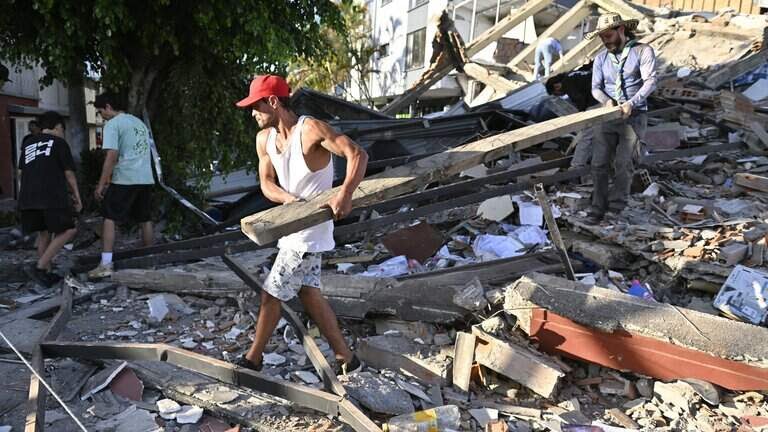
Rescue teams in Colombia are racing to locate survivors trapped beneath collapsed buildings following a powerful earthquake that struck the western part of the country on Monday.
At least 181 people have been confirmed dead, with the cities of Cali and Pereira recording the highest number of fatalities.
However, figures compiled from local authorities suggest the death toll could exceed 240.
The magnitude 7.4 earthquake struck at 7:34 a.m. local time (12:34 GMT), sending powerful tremors across hundreds of miles of western Colombia.
More than 70 aftershocks have since been recorded, with further tremors reported on Tuesday.
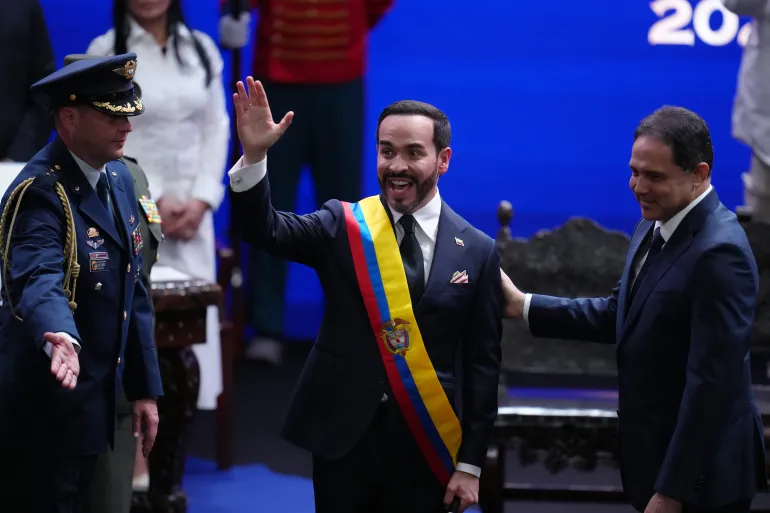
President Abelardo de la Espriella declared a state of emergency as rescue operations continued.
Speaking from Pereira, one of the worst-affected cities, he said nearly 2,600 people had been injured, while almost 200 remained missing.
The president also disclosed that more than 1,100 homes had been destroyed and over 8,000 others damaged.
Many residents in Cali and Pereira spent Monday night outdoors after their homes were destroyed or amid fears that weakened structures could collapse during further aftershocks.
In Cali, where 95 deaths have been reported, authorities established a unified command centre to coordinate rescue operations.
Mayor Alejandro Eder said 239 people were still trapped, while 949 had sustained injuries. He added that 45 buildings had either partially or completely collapsed.
Parts of a hospital in Cali, including upper floors used for paediatric care, also collapsed, leaving some patients trapped inside.
Four children were killed when part of the Gimnasio Calima school collapsed in the Calima neighbourhood of northern Cali.
Thirty children were taken to medical facilities, with some reportedly suffering serious injuries.
Authorities in the area introduced a curfew from 8 p.m. until 6 a.m. on Wednesday in an effort to prevent looting.
In Pereira, the city’s fire department reported 79 deaths.
Authorities also introduced a car-free day to ease access for rescue workers, while residents were urged to cooperate with the emergency response.
Hundreds of volunteers have joined professional rescuers in removing debris and searching collapsed structures for survivors.
A resident of Pereira’s Parque Industrial neighbourhood told BBC Mundo that the extent of the destruction had made movement through the city difficult.
“It’s impossible to get around the city center. In Bolívar Square (the city’s main square), at least one building collapsed. Furthermore, there are structures where buses and trucks are trapped, and people are afraid those structures will collapse as well,” he said.
“We’re all in shock. It was really awful.”
Manizales has also suffered significant damage, with Mayor Jorge Eduardo Rojas confirming five deaths and saying 60 buildings had partially or completely collapsed.
Rojas warned residents to remain cautious because of the possibility of additional aftershocks. He also urged people not to circulate unverified messages online, warning that they “may contain false or unverified information… which could cause greater concern and alarm among the public”.
International assistance has begun reaching Colombia as the country responds to the disaster.
A spokesperson for UN Secretary-General António Guterres said he “expresses his solidarity with the people and government of Colombia” and that the organisation was working to support the government’s response.
Spain’s Foreign Minister, José Manuel Albares, said 164 Spanish nationals remained missing, although there had been no reports of deaths or injuries among Spanish citizens.
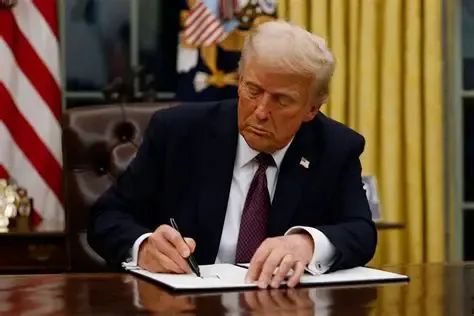
The Trump administration, which supported President Espriella during his successful election campaign earlier this year, announced a $15.5m (£11.5m) donation to assist Colombia.
Ecuador, Brazil, El Salvador and Venezuela have also offered assistance as rescue workers continue their search for people trapped beneath the rubble.