The United Nations Office on Drugs and Crime has revealed that youths make up approximately 60% of those impacted by the Boko Haram insurgency in Nigeria’s North-East.
Mr. Cheikh Ousmane Toure, UNODC’s Country Director in Nigeria, made this known on Monday in Maiduguri during the 5th World Congress on Justice with Children.
The theme of the event was “Advancing Child-Centred Justice: Preventing and Responding to Violence Affecting Children in Justice Systems.”
The congress was convened by UNODC in collaboration with the governments of Borno, Adamawa, and Yobe States, Strive Juvenile, and Justice for Children, with support from the European Union.
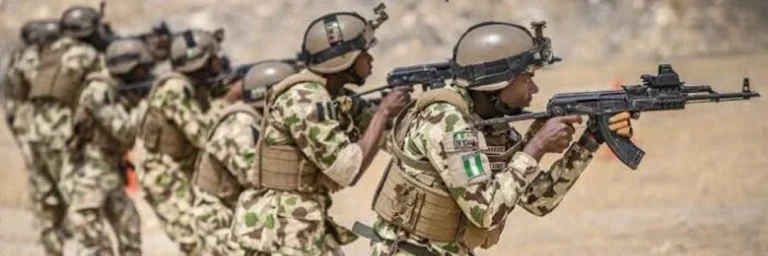
Highlighting the devastating impact of the insurgency, particularly on children, Toure said youngsters in the BAY states, Borno, Adamawa, and Yobe, have faced years of trauma, with many abducted, trafficked, and forcibly recruited into armed groups since the conflict began in 2009.
“Available reports indicate that at least 1,385 children were recruited between 2017 and 2019,” he said.
Toure emphasized the need for immediate and consistent interventions to safeguard children caught in conflict zones, especially in the North-East, where terrorist factions continue to exploit young lives.
“These figures are not just statistics. Each one represents a child whose life, dignity, and future are at risk,” he said. “About 60 percent of those affected are youths. Nigeria’s development depends on the protection and empowerment of its young population.”
Commending the strength and resilience of the region’s youth, Toure praised the efforts of Youth Peace Champions, an initiative supported by UNODC that empowers young people to become ambassadors for peace and child protection.
“These courageous young leaders are mentoring their peers, raising awareness, and advocating for justice that restores rather than retraumatises,” Toure stated. “They are building resilience from the ground up and showing what inclusive development looks like.”
Since taking up his role in Nigeria in October 2024, Toure noted that he has focused on youth-led programs and the empowerment of women as key components of UNODC’s operations.
“Every project must deliver measurable results—especially for youths, women, and persons with disabilities,” he asserted.
Toure also voiced confidence that the work of Youth Peace Champions in the North-East could inspire broader movements across other regions such as the North-West, North Central, and the South.
“This is the inclusive approach Nigeria needs right now. The voices of these young people must be heard, locally, nationally, and globally,” he added.
Calling for a shift from pledges to tangible efforts, he urged government actors, justice officials, development partners, and civil society organizations to act decisively.
“The protection of children is not optional. Prevention demands more than rhetoric—it requires resources, commitment, and accountability,” he stressed.
The congress brought together legal professionals, international organizations, civil society groups, and youth advocates working toward a justice system that upholds children’s rights and prioritizes rehabilitation over punishment.
“Together, we can build a future where no child is left behind—and where every child has the chance to contribute to Nigeria’s full development potential,” Toure concluded.
Also speaking at the event, Borno State Governor, Babagana Umara Zulum, pledged to keep the welfare of children at the forefront of policy-making—especially in matters concerning juvenile justice.
Represented by the state’s Commissioner of Justice, Hauwa Mohammed, Zulum described the congress as both timely and crucial, considering the long-standing suffering children have endured during the more than decade-long insurgency.
She assured that the state government would not permit the exploitation of children as soldiers or combatants.
“The Ministries of Justice and Women’s Affairs and Social Development,” she said, “will work together to ensure children’s rights are respected and enforced, while striving to secure their access to education, justice, welfare, and protection from forced labour and exploitation in conflicts.”