United States President Donald Trump has strongly opposed international moves to recognise a Palestinian state, insisting that such a decision would embolden Hamas rather than advance peace in the Middle East.
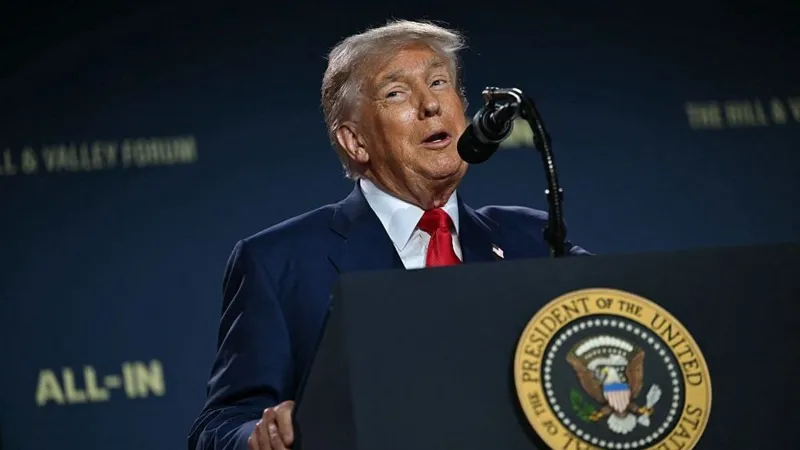
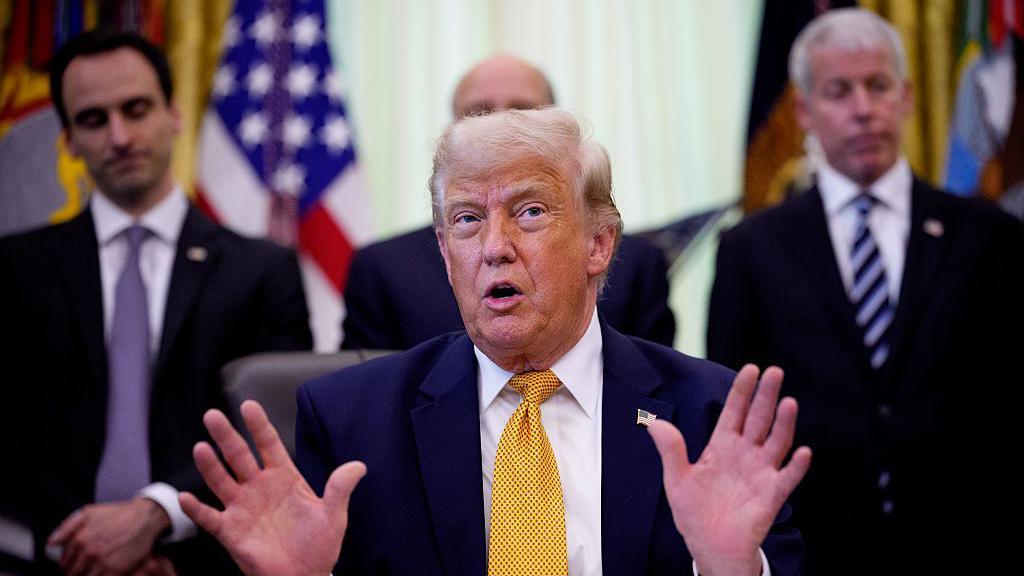
Speaking during a bilateral meeting with French President Emmanuel Macron on the sidelines of the United Nations General Assembly in New York on Tuesday, Trump said the idea of Palestinian statehood would be tantamount to “rewarding terrorism.”
“Well, I think it honors Hamas, and you can’t do that because of October 7,” Trump declared, referring to the 2023 attacks on Israel.
“You can’t do that. But we want our hostages back. People forget October 7 was one of the most savage days in the history of the world.”
The US leader’s comments come after France officially recognised Palestine, joining the United Kingdom, Canada, Australia, and Portugal in backing a two-state solution.
Macron, sitting alongside Trump, maintained that acknowledging Palestinian statehood does not mean overlooking Hamas’ actions.
“Recognising Palestine is not about ignoring the October 7 attacks,” Macron argued. He added that the move is meant to advance long-term peace efforts while ensuring accountability for violence.
Trump, however, framed his stance as a necessary stand against terrorism. “It would be a gift to Hamas, and we cannot afford that,” he reiterated.
The ongoing Gaza war, triggered by Hamas’ October 7, 2023 offensive against Israel, has fuelled renewed international debate on the two-state solution.
Israel has since carried out military operations in Gaza in retaliation, deepening divisions among world powers over how best to end the conflict.
During the meeting, Trump also credited Macron for his role in global diplomacy.
“Emmanuel has actually helped me with a couple of the wars,” he said, in response to Macron’s recent comment that the US president could earn a Nobel Peace Prize by ending the Gaza war.
The disagreement highlights a growing split between Washington and some of its closest allies over the path to resolving the Middle East crisis.