The United States and Nigeria have strengthened their collaboration to tackle sextortion, romance scams and other cybercrimes, with both countries committing to improved intelligence sharing, joint investigations and prosecution of offenders.
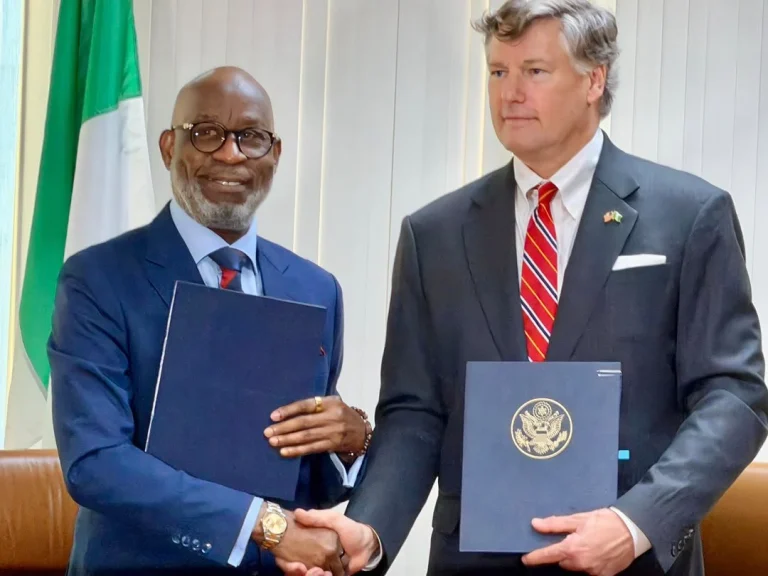
The renewed partnership followed a visit to Abuja by the US Deputy Assistant Secretary of State for International Narcotics and Law Enforcement Affairs, Michael Gonzales, who met with senior officials of the Economic and Financial Crimes Commission, the Office of the National Security Adviser, the National Drug Law Enforcement Agency and the Nigeria Police Force.
The US Embassy in Abuja disclosed in a statement on Monday that the engagements coincided with Nigeria’s Cybercrime Awareness Week, with discussions centred on expanding joint operations against financially motivated sextortion, romance scams and other cyber-enabled offences.
Gonzales emphasised the need for stronger international cooperation to address cybercriminals who exploit national borders to evade law enforcement.
He said, “Recent extraditions demonstrates that criminals could not rely on international boundaries to evade justice when both countries combine their investigative, diplomatic and law enforcement capabilities.”
According to the embassy, Nigeria extradited two alleged cybercriminals to the United States in August.
The suspects are facing separate charges relating to financially motivated sextortion involving American minors who died by suicide.
The statement added that the FBI’s Legal Attaché Office at the US Embassy in Abuja had collaborated with the EFCC on 41 extraditions since 2022, including five completed in 2026.
This marked a substantial rise from the period between 2012 and 2021, when the two countries recorded four arrests and five extraditions.
Gonzales praised the EFCC, the Federal Ministry of Justice and the Office of the Attorney General of the Federation for their contributions to investigations and extradition proceedings involving suspects wanted in the US.
He also stressed that prompt and visible enforcement actions were necessary to ensure accountability and discourage other individuals from engaging in cybercrime.
The embassy highlighted the growing impact of financially motivated sextortion on young people and their families, noting that the US National Center for Missing and Exploited Children received over 50,000 reports of the crime in 2025.
“The figure translates to approximately 137 reports daily,” the statement noted.
The FBI, according to the statement, has identified Nigeria and other parts of West Africa, alongside Southeast Asia, as locations where some of the most widespread sextortion networks have operated.
Through Operation Artemis and other related initiatives, the FBI works with Nigerian law enforcement agencies to identify and dismantle networks targeting American victims.
The joint efforts also cover romance scams, in which fraudsters exploit emotional relationships and victims’ trust to steal money, including savings and retirement funds.
The Nigeria Police Force’s National Cybercrime Centre launched a nationwide online safety and cyber-hygiene campaign in March to raise awareness about romance scams, sextortion, phishing, identity theft and business email compromise.
The initiative is aimed at educating members of the public on how to identify online threats and report suspicious activities.
During his engagement with the EFCC, Gonzales described the commission as one of Africa’s most prominent economic crime enforcement agencies, citing its record of high-profile prosecutions, asset recovery and public engagement.
He also commended the EFCC’s partnership with the FBI, describing it as an example of effective international law enforcement collaboration.
The embassy said the partnership had facilitated intelligence sharing, suspect identification, arrests and complex extradition proceedings, with some investigations requiring years of joint efforts.
Gonzales, however, called for “the process to become faster, more routine and proactive, with greater emphasis on dismantling criminal networks rather than pursuing individual suspects alone.”
The statement said the US and Nigeria planned to expand their efforts to target the financial structures and facilitators sustaining cybercrime networks before additional victims were affected.
The next phase of the partnership is expected to focus on improved information sharing between agencies, faster conversion of cyber and financial intelligence into investigations, increased public awareness and enhanced Nigerian investigative, prosecutorial and cybercrime-reporting capacity.
US authorities also noted that the success of the collaboration would be assessed based on measurable outcomes rather than the number of programmes funded.
These outcomes include victim protection, disruption of criminal networks, progress in investigations, successful convictions and stronger Nigerian institutions.
The embassy said the ultimate goal was to develop sustainable law enforcement capacity that would benefit both Nigerians and Americans.