The United States Army has detonated nearly five tonnes of unstable bomb-making chemicals at a military ammunition plant in Iowa, with initial assessments indicating that measures to prevent the spread of toxic lead dust were successful.
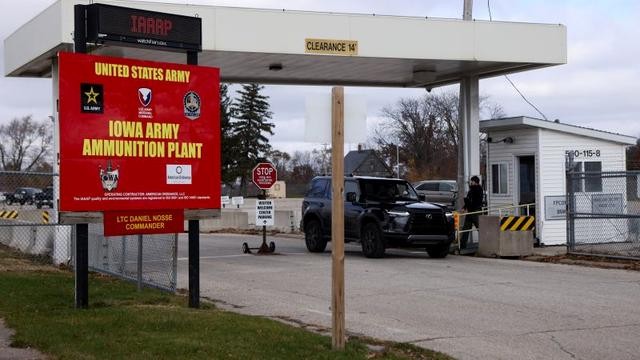
The controlled explosion took place at about 10 a.m. local time on Wednesday at the Iowa Army Ammunition Plant in Middletown, following concerns that the deteriorating chemicals could trigger an uncontrolled blast if left untreated.
The substance, known as lead azide, is highly unstable and is used in the manufacture of explosives.
Federal officials had warned that attempts to open the containers and chemically neutralise the material could also trigger an explosion, making controlled detonation the preferred disposal method.
However, the operation had faced legal opposition over fears that the explosion could release toxic lead particles into the atmosphere, potentially exposing residents in parts of rural Iowa and neighbouring northeastern Missouri to health and environmental risks.
A federal court had earlier postponed the operation, which was initially scheduled for last week, before reinstating the permit on Monday, allowing the Army to proceed with the controlled blast.
Following the explosion, Environmental Protection Agency Administrator Lee Zeldin said initial readings from air monitoring equipment showed no detectable lead particles more than 30 minutes after the operation.
“It is an extraordinarily good sign when the early numbers come in so low that it equals essentially a non-detect, a zero detect,” Zeldin told CNN.
He added that the explosion had caved inward as intended, helping to limit the possibility of lead particles spreading into the atmosphere.
“The air monitors are showing a remaining zero detection, and as far as the blast itself, it caved inward perfectly,” Zeldin said.
The EPA had deployed up to 300 personnel and contractors to the area ahead of the operation to monitor air quality and conduct soil and water tests for possible contamination.
US President Donald Trump also expressed satisfaction with the initial outcome, saying reports from Iowa indicated that the Army’s mitigation efforts had exceeded expectations.
“Early reports from Iowa are that the Army’s mitigation efforts have far exceeded expectations,” Trump wrote on his Truth Social platform.
Acting Army Secretary Adam Telle described the operation as a major success, saying the threat of an uncontrolled explosion had been eliminated.
“The threat of an uncontrolled spontaneous detonation has been eliminated,” Telle wrote on X, while thanking Trump and commending American soldiers for what he described as their precision.
Meanwhile, Missouri Governor Mike Kehoe said preliminary information from federal agencies indicated that the explosion had been successfully contained.
“Initial analysis shared with us by federal partners and Iowa Homeland Security and Emergency Management indicates that the mitigation measures appear to have been successful and the explosion was well-contained,” Kehoe wrote.
Despite the encouraging initial assessments, authorities advised residents to remain indoors, keep their doors and windows closed and follow public safety instructions while environmental monitoring continued.
NASA also deployed research aircraft and scientific personnel to support the operation by collecting atmospheric and environmental data to assess the possible spread of lead particles.