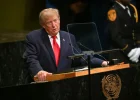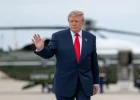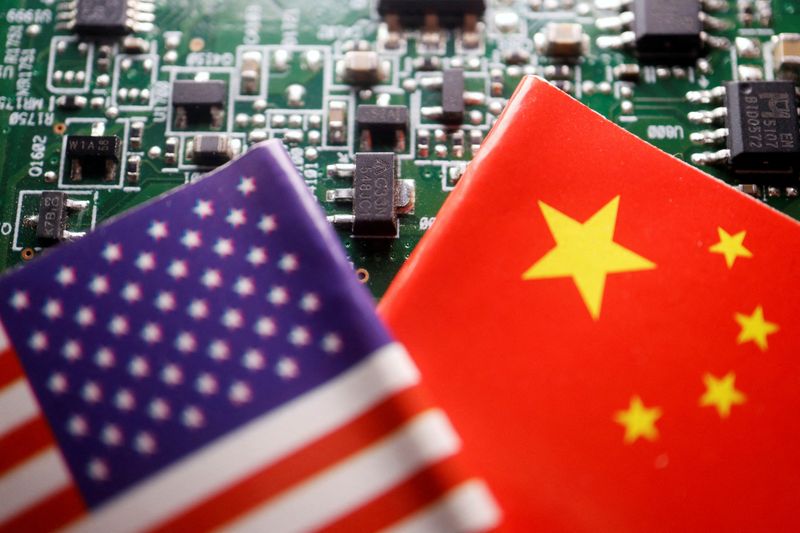
The United States has announced fresh restrictions on China’s access to advanced artificial intelligence chips, tightening export controls as US President Donald Trump prepares to meet Chinese President Xi Jinping during his Asian trip.
The new measures, announced by the US Commerce Department on Monday, target the movement of advanced chips manufactured by companies such as Nvidia through overseas data centres and countries allegedly being used to circumvent existing restrictions.
Under the new regulations, shipments of advanced AI chips to five countries — Singapore, Thailand, Malaysia, Indonesia and Brazil — will require US export licences because of concerns that the technology could be diverted to China.
The restrictions also introduce fresh requirements for overseas data centres providing significant computing power to companies headquartered in China.
Such facilities must obtain US export licences within 90 days to continue offering the services or risk facing further restrictions.
John Moolenaar, the Republican chairman of the House Select Committee on China, described the move as a warning to Beijing and other countries involved in circumventing US export controls.
The regulation sends a message “that America is serious about closing dangerous export control loopholes China has been exploiting for years,” he said in a statement.
The announcement comes amid growing scrutiny of the US government’s handling of advanced chip exports following concerns surrounding Singapore-based cloud computing company Megaspeed, an Nvidia partner accused of potentially diverting restricted AI chips to China.
US authorities began investigating Megaspeed in 2024 over possible export control violations, while Nvidia reportedly placed the company on its no-sale list in June 2025, according to a joint statement by the Commerce and Justice departments on Monday.
Meanwhile, Commerce Secretary Howard Lutnick, whose handling of chip export restrictions has attracted criticism following the controversy, is among the officials accompanying Trump on his Asian trip.
Reuters reported last week that senior White House officials had discussed whether Lutnick should be removed from his position.
However, Trump told journalists on Monday that he had no plans to replace the Commerce Secretary.
The US President also acknowledged differences within his administration over its approach to China, saying, “It’s a different viewpoint. One wants to be friendly with China and one wants to have a blowup with China. They both are acceptable but they are different views.”
Trump is scheduled to meet Xi on Thursday in Shenzhen, southern China, during the Asia-Pacific Economic Cooperation summit.
The new regulation also formally withdraws a policy introduced under former President Joe Biden that restricted global access to advanced AI chips through licensing requirements.
The Commerce Department had announced in early 2025 that it would not enforce the Biden-era regulation and intended to replace it.
However, the delay in formally withdrawing the policy allowed billions of dollars’ worth of restricted Nvidia chips to reach data centres used by Chinese artificial intelligence companies.
Under the latest measures, exemptions will apply to US companies operating data centres in the five countries, while systems used by online retailers and social media companies will also be excluded from certain licensing requirements.
Nvidia declined to comment on the new restrictions, while Megaspeed said it complies with all applicable laws and regulatory requirements, including US export control rules.