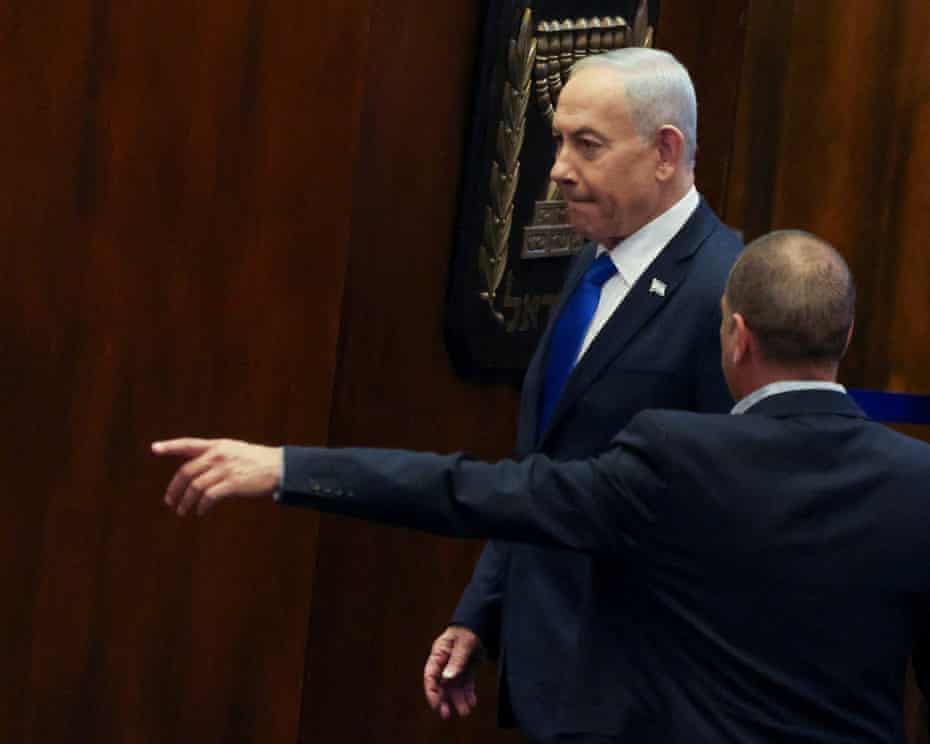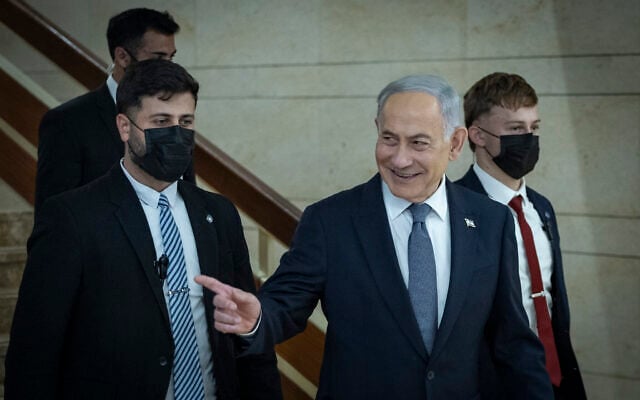
An Israeli court has recommended that prosecutors drop the most serious corruption charge against Prime Minister Benjamin Netanyahu, casting fresh doubt on the case that has kept the country’s longest-serving leader in a prolonged legal battle.
The recommendation was made on Wednesday during a hearing in Jerusalem, where the presiding judge, Rivka Friedman-Feldman, told Attorney General Gali Baharav-Miara that securing a conviction in the case, known as Case 4000, appeared unlikely.
According to a court spokesperson, the judges expressed concerns about the evidence supporting the bribery allegation against Netanyahu.
“It seems to us that the bribery charge presents considerable difficulties,” the court said. “There is serious doubt as to whether the evidentiary foundation supports this allegation.”
The case centres on allegations that Netanyahu granted regulatory benefits worth more than one billion shekels, approximately $300m, to businessman Shaul Elovitch, whose telecommunications company, Bezeq, owned the Walla! news website.
Prosecutors accused the prime minister of bribery, fraud and breach of trust over the alleged arrangement.
The court also advised prosecutors to reconsider Case 2000, in which Netanyahu was accused of seeking favourable media coverage from one of Israel’s leading newspapers in exchange for restricting the circulation of a rival publication.
“We have serious doubts as to whether the conduct described in the indictment actually constitutes a criminal offense,” the court said.
In Case 1000, the remaining corruption case, the judges encouraged Netanyahu’s lawyers to reach an agreement with prosecutors.
The case involves allegations that he received gifts, including cigars and champagne, from wealthy businessmen overseas in exchange for favours.
The court indicated that the matter could be resolved through an agreement.
Although the recommendations do not constitute a final ruling or acquittal, they represent a significant legal boost for Netanyahu, who has consistently denied wrongdoing and described the prosecution as a political witch hunt.
Netanyahu’s political allies welcomed the development, with Defence Minister Israel Katz describing the prosecution as persecution.
“After years of persecution against Prime Minister Benjamin Netanyahu, the time has come to put an end to a trial that was tainted from the outset, divides Israeli society, and exacts a heavy price from the country,” Katz said in a statement on X.
However, Baharav-Miara said she would carefully examine the court’s recommendations alongside the prosecution team, stressing that the proceedings could only end through a verdict or an appropriate plea agreement.
“There are only two ways to bring the case to a conclusion: a verdict or an appropriate plea agreement that reflects the nature of the acts and offenses,” she said.
Netanyahu was indicted in January 2020, becoming the first sitting Israeli prime minister to appear in court as a defendant.
His trial began in May that year and continued through several wars, multiple elections and changes in the United States administration.
He began testifying in his trial in December 2024.
The allegations against him had first emerged publicly in 2018, when Israeli police said there was sufficient evidence to recommend his indictment.
In November 2025, Netanyahu formally requested a presidential pardon from Israeli President Isaac Herzog, arguing that the trial had become a source of deep division in the country.
He did not admit guilt or make any commitment regarding his political future.
US President Donald Trump had also written to Herzog urging him to pardon Netanyahu, describing the prosecution as politically motivated and unjustified.
Under Israeli law, the president has the authority to grant pardons.
Netanyahu’s political opponents, who are seeking to remove him from office in the October elections, had yet to publicly react to Wednesday’s court recommendations.