The United Nations has revealed that attacks on schools across the world increased by 166 per cent between 2021 and 2024, raising concerns about the safety and well-being of children in conflict zones.
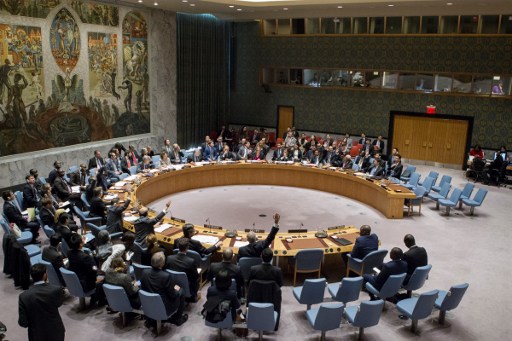
The UN Deputy High Commissioner for Human Rights, Nada Al-Nashif, disclosed this on Monday during the annual meeting of the United Nations Human Rights Council focused on the rights of children.
The meeting, held under the theme “Mainstreaming the Rights of Children in Armed Conflict: Prevention and Protection,” highlighted the growing risks children face in war-affected areas.
Al-Nashif said schools have increasingly become targets in several conflict zones, including Sudan, Ukraine, the Gaza Strip, Myanmar and Ethiopia.
“Attacks on schools worldwide surged by 166 per cent between 2021 and 2024, with several conflict-affected regions experiencing particularly high levels of violence,” she said.
She noted that the council had recently received disturbing reports of severe violations affecting children in more than 60 armed conflicts across the globe.
According to her, children continue to bear a disproportionate burden of the violence.
“In 2024 alone, armed conflict directly affected nearly one in six children globally, which is about 470 million children,” Al-Nashif stated.
She warned that the consequences of war extend beyond immediate physical harm, often leaving long-term social and psychological scars.
“Years of lost education, trauma and lasting mental scars shape societies for generations. Even after the fighting ends, children continue to face serious risks in their daily lives,” she said.
Al-Nashif cited the situation in Gaza, noting that the territory now has one of the highest numbers of amputee children per capita due to the ongoing conflict.
She also highlighted the humanitarian crisis in Lebanon, where recent clashes have displaced more than 450,000 people, with at least 394 deaths, including 83 children.
The UN official further stressed that forced displacement often exposes children to life-threatening conditions such as unsafe water and poor sanitation, sometimes making disease a greater killer than direct violence.
She referenced the Democratic Republic of Congo, where a cholera outbreak reportedly killed 340 children in 2025.
Al-Nashif emphasised that international laws clearly require governments to safeguard the rights of children, particularly during conflicts.
“States have a clear obligation to protect all children within their jurisdiction without discrimination based on age, gender, disability or other status,” she said.
“When these obligations are not fulfilled, international law requires independent investigations, accountability for violations and reparations for victims.”
Despite the grim statistics, she acknowledged that children can also play constructive roles in peacebuilding and reconciliation processes.
“Children can help promote dialogue, build bridges and find common ground when given the opportunity to participate meaningfully in decisions that affect them,” she added.
Also speaking at the meeting, the UN Secretary-General’s Special Representative for Children and Armed Conflict, Vanessa Frazier, said violence against children in conflict settings remained extremely high in 2025.
Frazier stressed the need to integrate child protection efforts into broader peace, humanitarian and development initiatives.
“It is crucial to ensure that the children and armed conflict agenda is integrated into peace and security efforts at every stage of the conflict cycle—from prevention and early warning to response and post-conflict recovery,” she said.
She also emphasised the importance of including children’s voices in peace and security discussions.
“Child participation in peace processes, when conducted safely and inclusively, can contribute significantly to sustainable peace efforts,” Frazier noted.
The UN officials called on governments, international organisations and civil society groups to strengthen cooperation and ensure better protection for children affected by armed conflicts worldwide.