The United Nations High Commissioner for Refugees has raised the alarm over a severe funding shortfall, warning that dwindling resources are undermining its ability to support millions of forcibly displaced people worldwide.
The UN High Commissioner for Refugees, Barham Salih, said on Monday that the agency was struggling to meet growing humanitarian needs following significant budget cuts and a reduction in its workforce.
Speaking at the opening of UNHCR’s annual Executive Committee meeting, Salih said the agency had only secured a fraction of the funding required for its 2026 operations.
“As of October 9, we have funds available of $3 billion, representing 35 per cent of the requirement of the $8.5 billion needed for 2026,” he said.
The agency is projecting approximately $2.68 billion in funding for 2027, raising further concerns about its capacity to sustain humanitarian assistance.
Salih acknowledged the financial pressures facing donor governments but warned that the scale of the cuts was becoming increasingly difficult to manage.
“There is again a difference between doing more with less and being asked to do the impossible,” he said.
He added, “We cannot ask organisations, struggling to survive, to keep millions of others alive.”
The UNHCR chief disclosed that the agency had responded to 22 emergency declarations across 18 countries in 2026, including 17 newly declared emergencies in 15 countries.
He also revealed that nearly 8,000 staff members had left the organisation since 2024, reducing its workforce from almost 20,000 to fewer than 12,000.
According to him, the loss of experienced personnel has weakened the agency’s operational capacity, noting that their expertise would be difficult to replace.
The funding crisis comes amid a persistently high number of people displaced by conflict, persecution and other crises.
UNHCR figures show that 117.8 million people were forcibly displaced worldwide at the end of 2025, slightly below the record 123.2 million recorded in 2024.
Of the total, 35.6 million were refugees under the agency’s mandate, with two-thirds originating from Venezuela, Ukraine, Syria, Afghanistan and Sudan.
The agency has also faced reduced support from major donors, including the United States, which has traditionally been its largest financial contributor.
The report said the US contributed $89 million in 2026, compared with $812 million the previous year, placing it ninth among contributors.
The European Union topped the list with $408 million, followed by Germany, Sweden, the Netherlands and Denmark.
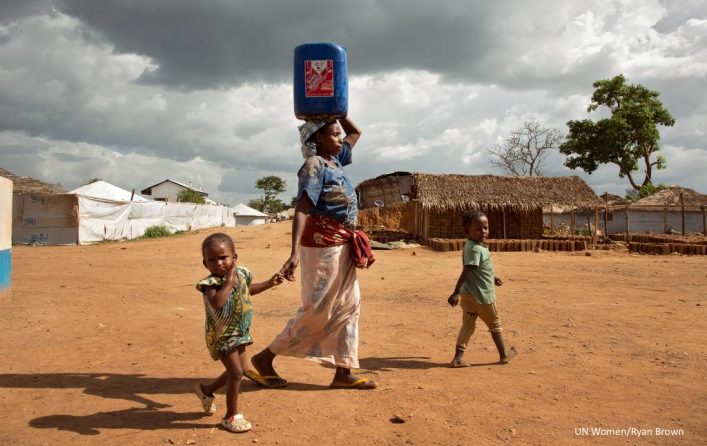
Salih also expressed concern over the long-term consequences of displacement, warning that temporary refuge was increasingly becoming a multigenerational experience for some families.
He said children born in displacement settlements risked growing into adulthood without ever experiencing life outside them.
“We must work toward a future where one generation of refugees is not forced to pass its displacement to the next,” he said.
The UNHCR’s Executive Committee meeting is scheduled to run until Friday, with the agency continuing to seek support for its humanitarian operations.