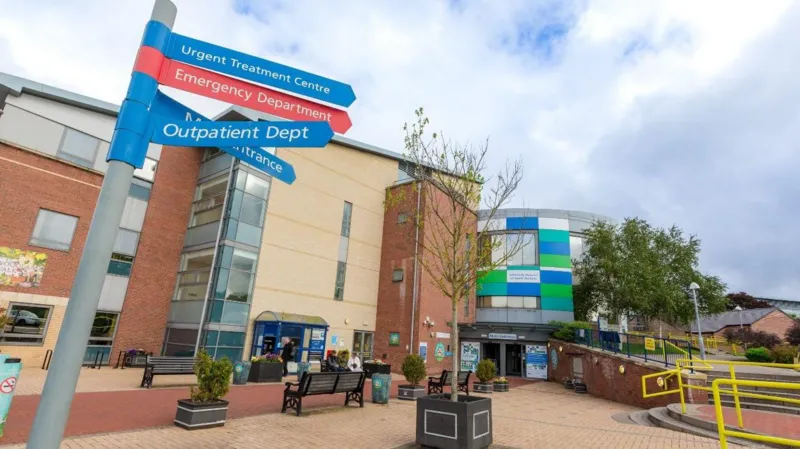
An NHS trust in the United Kingdom has agreed to review up to 4,500 additional breast cancer cases following findings of delayed diagnoses, unnecessary surgeries and other failings in patient care.
The County Durham and Darlington NHS Foundation Trust said the expanded review would cover cases dating back to 2015, after hundreds of patients were found to have suffered harm under its breast services.
The trust’s board approved the extension at an extraordinary meeting in Durham, with members offering apologies to women and their families affected by the failures.
Board chair Alison Marshall said, “I would like to offer a sincere apology to all the women and their families who have been affected by the failings in our breast services. I can’t imagine the impact that has had.”
She added that while the trust could “not turn back the clock”, it would remain “open, honest and transparent” about the failures.
Chief nurse Gill Hunt told the board that concerns about the service were first raised in 2015 following a “service reconfiguration” and the loss of breast surgical trainee positions.
She said several organisations, including the Northern Cancer Alliance, Care Quality Commission and NHS England, subsequently raised concerns over the years.
According to Hunt, the issues identified included treatment that was “not aligned to best practice”, excessive surgery and delays in diagnosing breast cancer.
The trust began its current review in April 2025, initially examining cases between January 2023 and February 2025. Of the 538 cases assessed so far, 321 patients were found to have experienced some form of harm, including one death.
About 640 patients have also contacted a dedicated helpline seeking a review of their treatment.
The first year of the review cost approximately £523,000, with nine reviewers examining around 80 cases each month.
The expanded exercise is expected to take about five years and will be extended one year at a time to cover cases dating back to 2015.
Hunt said the wider review would “provide a proportionate and evidence-led clinical approach” in response to “emerging findings”, with decisions “supported by clear clinical rationale and formal governance review”.
She said the review had also produced “important learning” about how concerns raised by patients and external agencies should be handled.
“We are committed to doing the right thing,” she said.
Chief executive Steve Russell said the trust was “incredibly conscious women and their families” had experienced “distress, uncertainty and harm”.
He said no apology could reverse what had happened but pledged that the trust would “support women who have been impacted” in any way possible.
Russell said some women who underwent unnecessary mastectomies could be offered breast reconstruction surgery, which he said should have been provided previously.
He added that the trust was now exceeding national standards in some areas of breast cancer treatment, including breast-conservation surgery and immediate reconstruction.
“None of that changes what has happened to women in the past but hopefully gives confidence the changes made in the service have had an impact on the outcomes,” Russell said.
He said patients currently receiving treatment could be “confident” they would be “treated appropriately” and receive “good clinical outcomes”.
The trust said its helpline would remain available by telephone and email, urging anyone concerned about their treatment to make contact “irrespective” of when they received care.