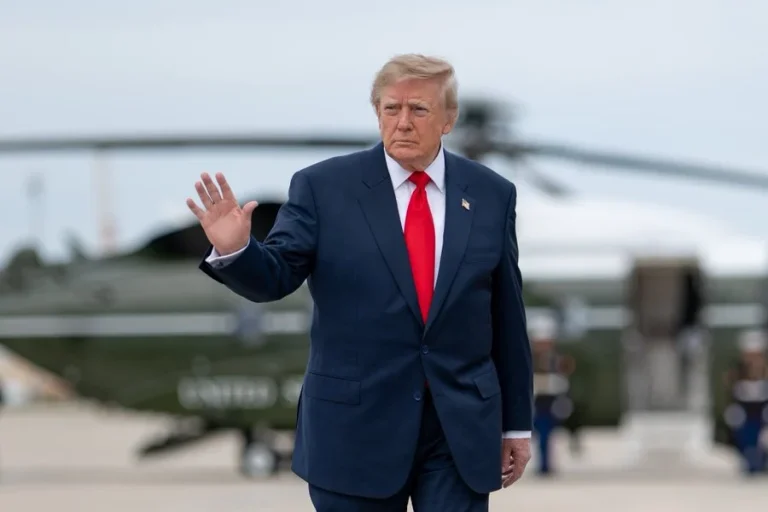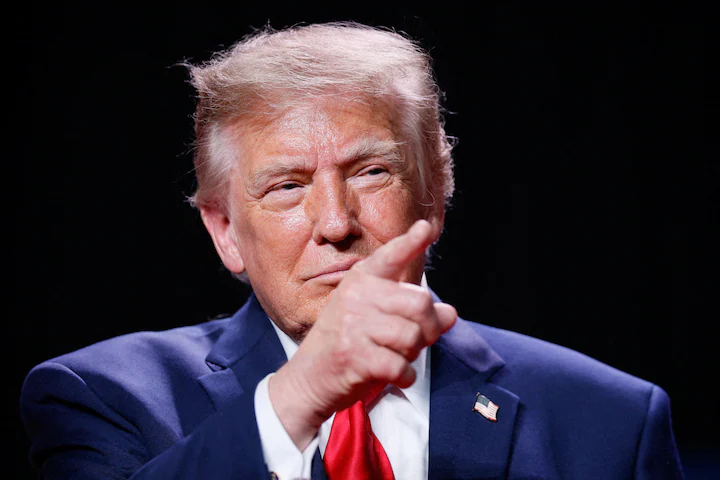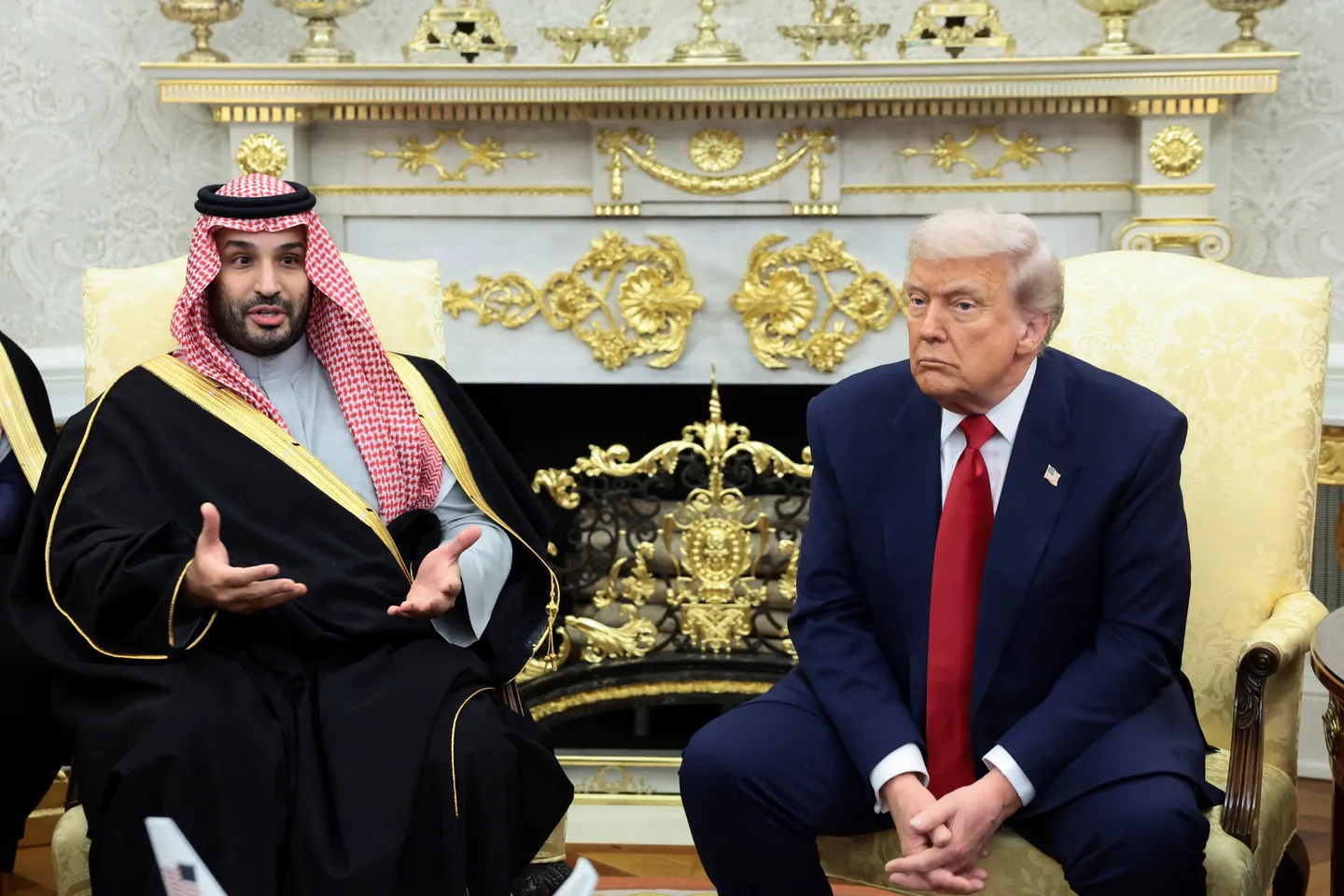
United States President, Donald Trump, has approved a civilian nuclear cooperation agreement with Saudi Arabia that could allow the kingdom to enrich its own nuclear fuel without adopting the international “gold standard” oversight framework, according to two US officials and a source familiar with the matter.
The US Department of Energy announced on Wednesday that the agreement had been signed and would now be forwarded to Congress for the required review period.
Known as a 123 agreement, the pact is expected to remain in force for 30 years. One US official said it would enable American companies to supply technology and expertise for the development of Saudi Arabia’s civilian nuclear programme.
The agreement has drawn attention because giving Saudi Arabia access to nuclear technology could raise concerns in Washington and across the Middle East. Although intended for civilian energy production, the capability to enrich nuclear fuel could theoretically be used in the future to develop nuclear weapons.
Energy Secretary Chris Wright defended the agreement, saying, “the agreements uphold the highest standards of nuclear safety and nonproliferation.”
CNN had previously reported that the Trump administration delayed moving forward with the deal due to concerns over the conflict involving Iran and the possibility of opposition in Congress.
Before Saudi Arabia can begin enriching uranium, a joint US-Saudi team will assess whether the project is necessary and commercially viable. The enrichment facility would be built by American companies, but sensitive enrichment technology would not be transferred to Saudi Arabia.
According to the Wall Street Journal, which first reported the approval, the agreement also prevents Riyadh from developing its own enrichment technology or acquiring it from another country for the next 10 years.
US officials and sources said the deal contains restrictions on inspection arrangements, a provision that could face scrutiny from lawmakers.
Unlike the United Arab Emirates, which accepted the International Atomic Energy Agency’s Additional Protocol when it signed a similar agreement with the US in 2009, Saudi Arabia will not be required to adopt that standard.
Officials said Riyadh had long opposed the protocol over concerns that it could potentially allow inspectors access to sensitive locations, including the holy city of Mecca or royal palaces.
Instead, the agreement establishes a bilateral safeguards arrangement similar to the model protocol but without the provisions Saudi Arabia found objectionable. The IAEA Board of Governors must still approve its terms.
Supporters argue the agreement will create significant commercial opportunities for the US nuclear industry while limiting the influence of rivals such as Russia and China.
The Department of Energy said the agreement marks the start of “a decades-long, multi-billion-dollar partnership,” adding that it will “create high-paying US jobs and long-term economic growth.”
Saudi Arabia’s embassy in Washington also confirmed the agreement, saying it “reflects the shared vision of both countries to expand cooperation in energy and future technologies.”
Dan Joyner, a nuclear regulatory consultant and law professor at the University of Alabama, told CNN the agreement would allow “American and allied companies” to provide “reactors, components, fuel services, training, and technical assistance” with US government approval.
Joyner also said the arrangement could strengthen Washington’s strategic influence by tying Saudi Arabia to US nuclear technology and allowing continued oversight of “its safety, security, and nonproliferation practices.”
He added, “Saudi Arabia could turn to Russia or China, giving those countries long-term influence over critical Saudi infrastructure,” if the agreement does not proceed.
The development is expected to attract close attention across the region.
Israel, widely believed to possess undeclared nuclear weapons, has consistently expressed concern over Saudi Arabia’s access to nuclear technology.
Iran, Riyadh’s chief regional rival, maintains a stockpile of enriched uranium and has insisted on continuing its nuclear programme despite months of US bombardment, saying it is intended for civilian purposes.
Saudi Crown Prince Mohammed bin Salman has previously pledged to pursue a nuclear weapon if Iran ever succeeds in producing one.
Uranium enrichment and plutonium reprocessing remain the two principal methods of obtaining the materials needed to build nuclear weapons.
Most countries operating civilian nuclear reactors purchase enriched uranium from suppliers such as the US or Russia under strict international monitoring rather than producing it themselves.
Washington has sought a civilian nuclear agreement with Saudi Arabia for years. During former President Joe Biden’s administration, the proposal formed part of broader efforts to normalise relations between Saudi Arabia and Israel, but those talks stalled following the October 7, 2023, Hamas attacks. The Trump administration later resumed negotiations.
The agreement will now undergo the mandatory congressional review process. Congress has the authority to block it if both the House of Representatives and the Senate approve resolutions of disapproval.
Criticism emerged shortly after the agreement became public.
Democratic Senator Ed Markey of Massachusetts said the deal risks “potentially enabling nuclear proliferation in Saudi Arabia and igniting an arms race in the region.”
Henry Sokolski, executive director of the Nonproliferation Policy Education Center, also raised concerns, asking, “What new standard is the Saudi deal going to set for the UAE, Turkey, and Egypt?”