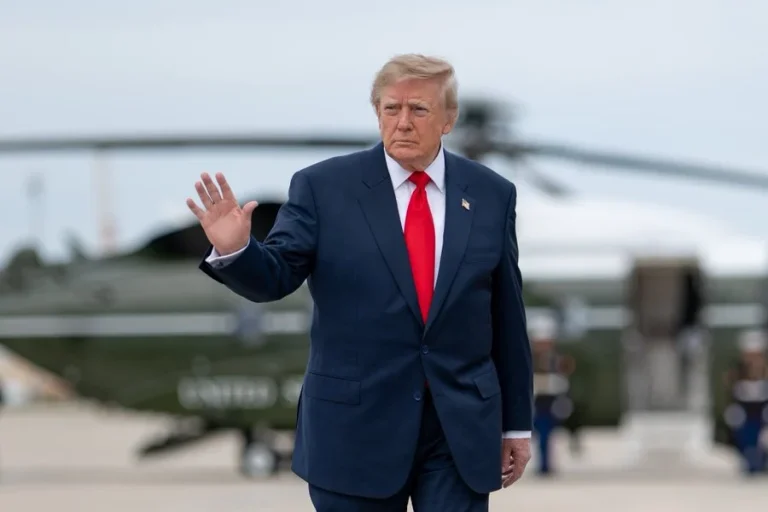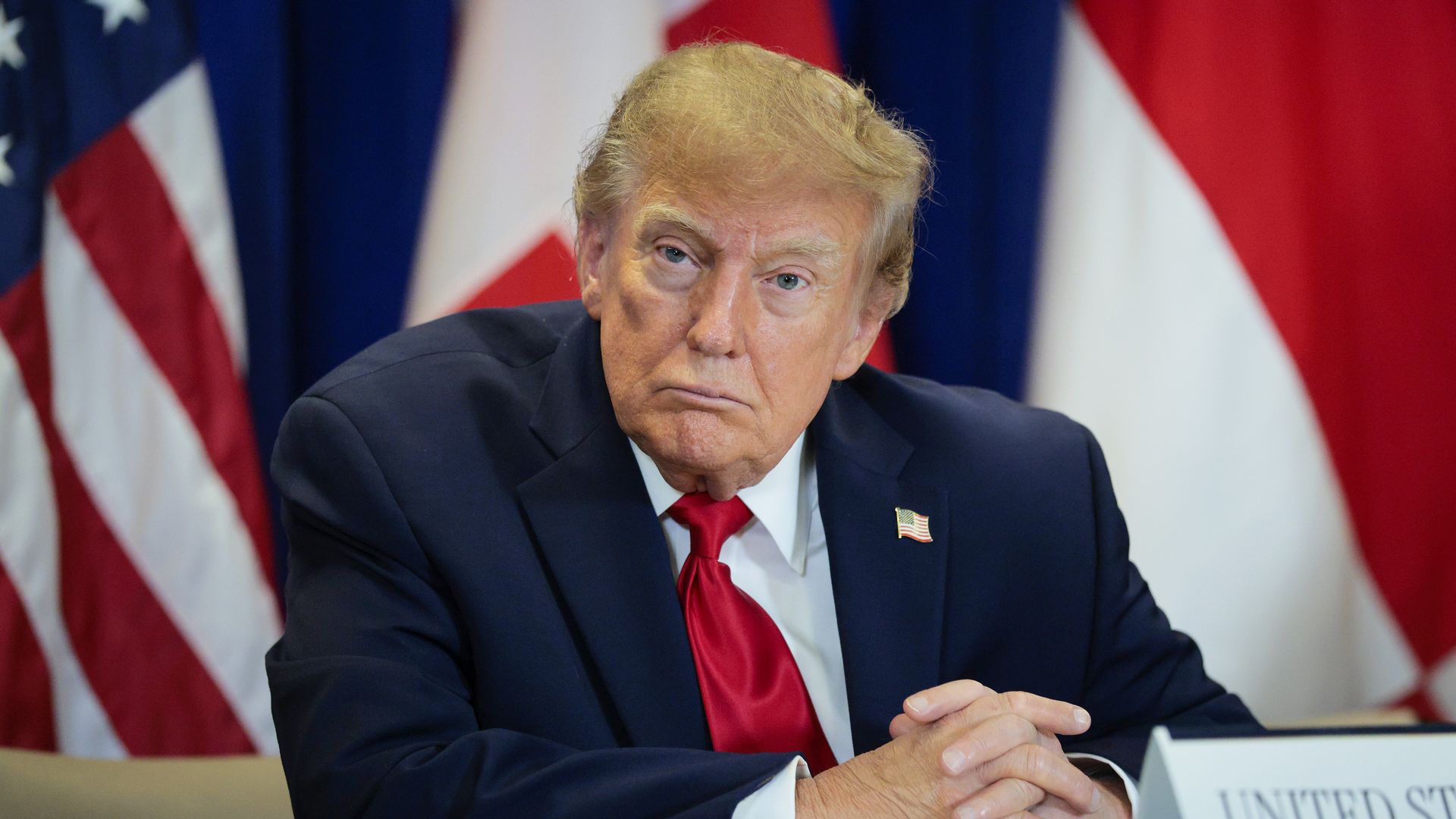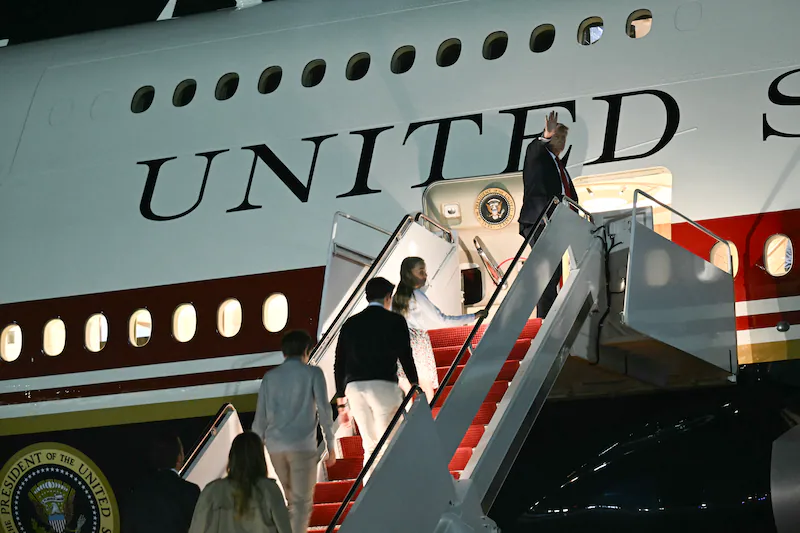
United States President, Donald Trump, arrived in Ireland on Saturday for a two-day visit combining diplomatic engagements with a major golf tournament at his luxury resort in Doonbeg.
The visit has prompted a major security operation, with about 4,000 police officers and other personnel, including snipers, deployed across the country. Trump briefly spoke to reporters before departing for Dublin, saying, “we’re having a lot of meetings with European leaders and others, so it’ll be a very interesting time”.
Thousands of protesters are expected to demonstrate against Trump in Dublin, where he is scheduled to meet Irish Prime Minister Micheal Martin and President Catherine Connolly.
After his engagements in the capital, Trump will travel to his resort in Doonbeg, County Clare, where the Irish Open golf tournament is being held.
The event features some of the world’s leading golfers, including six-time major winner and current world number two Rory McIlroy.
The president’s decision to visit his own resort while on an official trip has drawn criticism, with some experts arguing that it highlights the overlap between his presidential duties and private business interests.
“He’s really just visiting the golf resort he owns and dropping into Dublin for a courtesy visit,” Daniel Geary, a US history professor at Trinity College Dublin, told AFP.
“He sees little difference between his private interests and his role as president.”
Trump, 80, has openly promoted his family’s golf business since returning to the White House for a second term in January 2025.
He visited his Turnberry resort in Scotland last summer, where he hosted then-British Prime Minister Keir Starmer and European Commission President Ursula von der Leyen.
Richard Painter, a University of Minnesota law professor and government ethics expert, said Trump’s focus on his golf properties could prove politically damaging.
“He certainly sends a message that he is passionately interested in his own family’s business,” Painter said.
“It’s not going to help the Republican party in the midterms to have the president… promoting his golf courses for the super-wealthy, when other people are having trouble making ends meet,” he added.
The security operation for the visit is reportedly costing Ireland €20m ($23m), adding to the country’s existing policing demands as it oversees its six-month presidency of the European Union.
Trump’s presence at Doonbeg, which the Trump Organization bought in 2014, is expected to increase the security burden, with about 40,000 spectators anticipated at the golf tournament over the weekend.
McIlroy, who has previously played golf with Trump, said the tournament would feel different with the US president at the venue but indicated that the players would remain focused on the competition.
In Dublin, Trump is expected to discuss issues including the Middle East, the war involving Iran and Israel, US tariffs on European Union pharmaceuticals and immigration with Martin.
Although Ireland and the United States have maintained close relations, their governments differ on several issues, particularly the conflict involving Israel and the Palestinians.
Connolly, whose role is largely ceremonial, is a left-wing politician and outspoken critic of Trump. Her meeting with the US president could therefore prove more challenging.
“Martin is experienced enough that it should be fine at the political level. The big uncertainty is President Connolly,” Eoin O’Malley, a political scientist at Dublin City University, told AFP.
“She protested against his last visit (in 2019), and her supporters will expect her to make some show for them. But she’s also aware that she cannot do or say anything that might inflict damage on the relationship.
“I expect it will be short and courteous.”