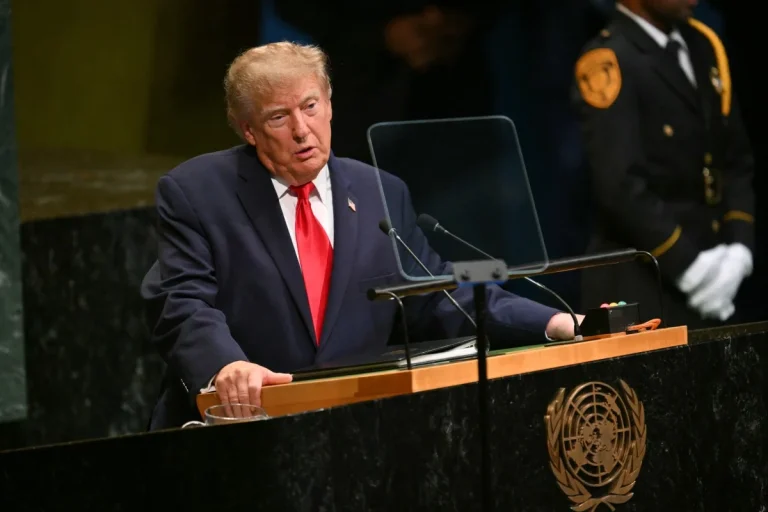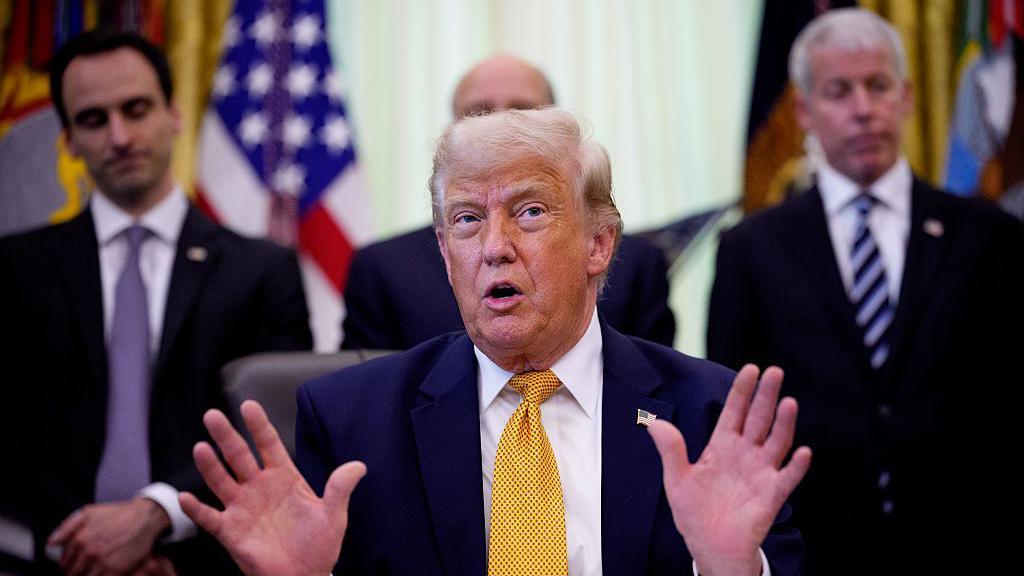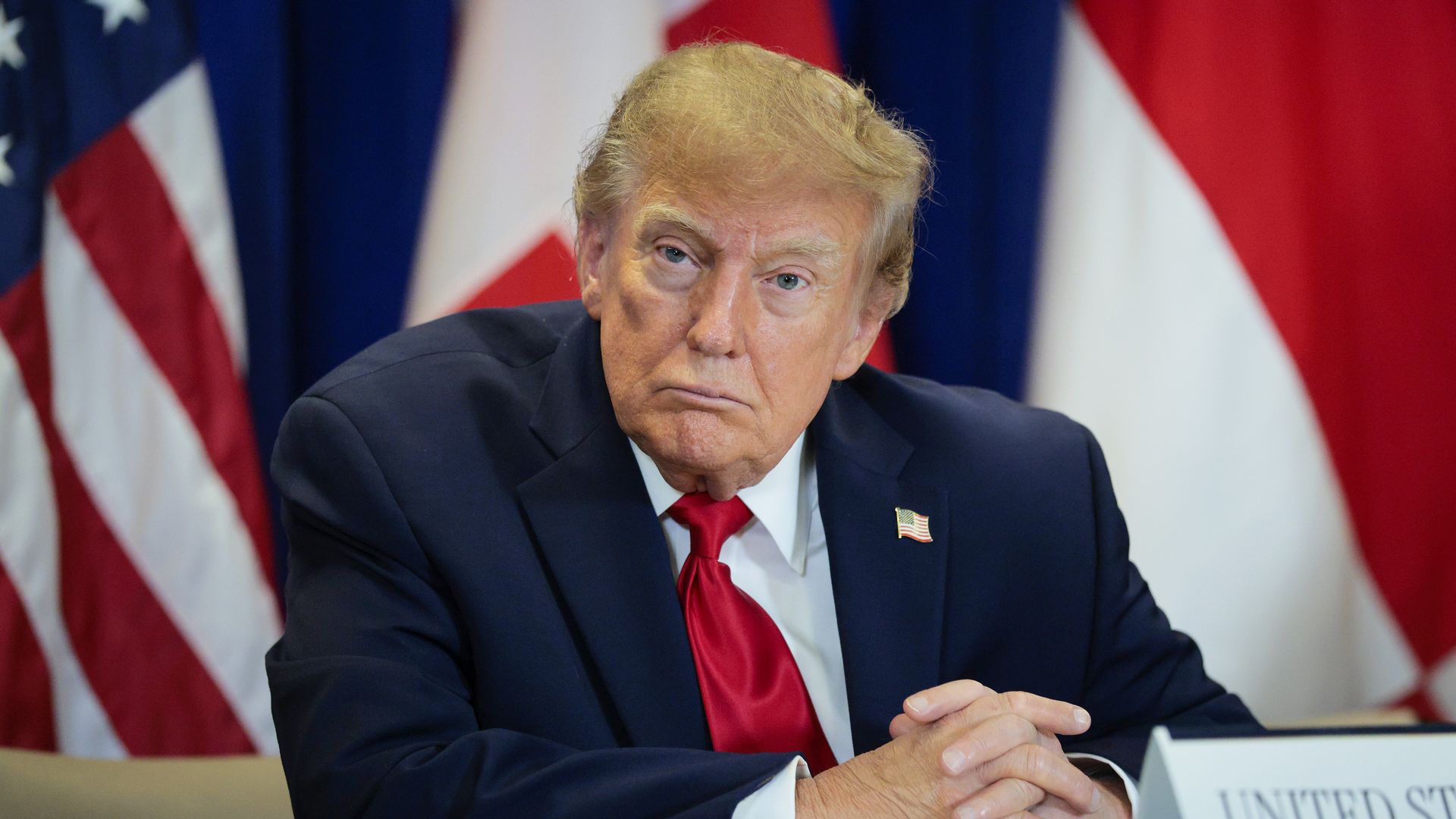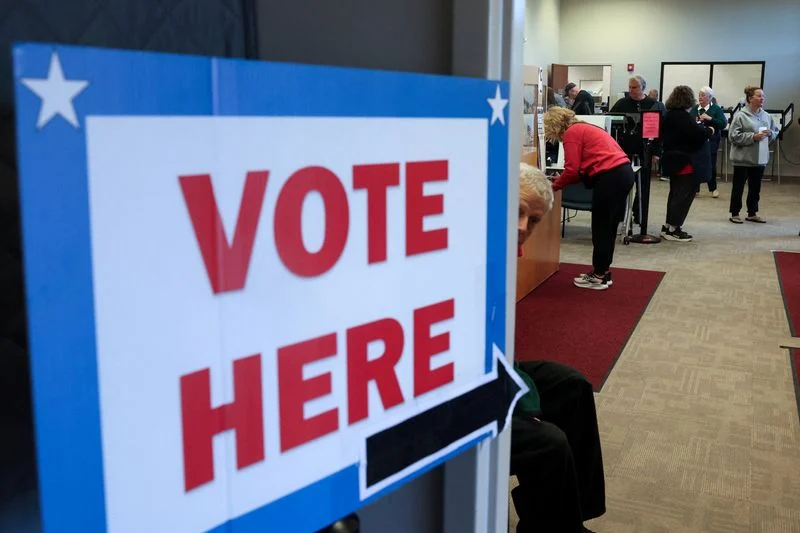
Democrats in the United States may struggle to achieve a sweeping victory in the November 3 midterm elections despite growing dissatisfaction with President Donald Trump’s administration, high living costs and opposition to the Iran war.
Although opinion polls and political analysts predict that Democrats could make significant gains in Congress, six analysts and party strategists have identified factors that may limit the party’s success, according to Reuters.
The challenges include a shrinking number of competitive House seats, uncertainty over control of the Senate, voter turnout concerns, a Republican fundraising advantage, possible polling errors and Republican attacks portraying Democrats as socialists and extremists.
Fewer competitive House races
The number of closely contested seats in the US House of Representatives has declined considerably over the past three decades, as political polarisation and redistricting have created more constituencies that consistently favour either party.
Analysts estimate that only between 40 and 50 of the House’s 435 seats are genuinely competitive in this year’s elections.
While Democrats are widely expected to regain control of the chamber from Republicans, their eventual majority could be limited to between five and 20 seats.
This would fall short of the 41 seats the party gained in the 2018 midterm elections.
Bill Galston, a former White House adviser to President Bill Clinton, said a gain of 25 seats would still give Democrats control of the chamber.
“If Democrats gain even 25 House seats, “they’d have a working majority, but not a huge one,” he said.
A narrow majority could make it difficult for Democrats to advance controversial legislation and claim the kind of sweeping electoral mandate associated with previous midterm victories.
Senate control remains uncertain
Democrats are also expected to make gains in the 100-member Senate, but securing the four additional seats required to establish a 51-49 majority remains uncertain.
The party’s challenge is complicated by the fact that several Republican-held seats it hopes to win are in states Trump carried by double-digit margins in the 2024 presidential election.
David Wasserman, an elections analyst at the nonpartisan Cook Political Report, said Democrats would need to make substantial progress in states that strongly supported Trump.
He said even a 10-percentage-point national swing towards Democrats would probably leave the party two seats short of a Senate majority.
Democrats are also facing stronger-than-expected opposition in states such as Maine and Michigan, where they had hoped to enjoy safer electoral positions.
“Republicans are hanging very close in those races,” said Andrew Busch, a public policy professor at the University of Tennessee, Knoxville, and author of a history of midterm elections.
“That’s not necessarily what you would expect if things were going well for Democrats across the board.”
Turnout could affect Democratic performance
Despite polls indicating greater enthusiasm among Democratic voters, strategists are concerned that turnout among some of the party’s key constituencies may fall short of expectations.
Young, Black and Hispanic voters have historically participated in midterm elections at lower rates than in presidential elections.
Surveys have also indicated persistent dissatisfaction with both major parties among these groups, particularly over the rising cost of living.
Analysts warn that weaker participation among these voters could undermine Democratic candidates on Election Day.
The voting patterns of older Americans could also prove significant.
In the 2022 midterm elections, voters aged 50 and above accounted for nearly twice the share of the electorate as those below 50.
Older voters have leaned Republican in recent years, according to exit polls.
Republicans hold financial advantage
Republicans are entering the final weeks of the campaign with a substantial fundraising advantage over their Democratic opponents, although the impact of campaign spending on individual races has been mixed.
Filings from political committees and data from the Federal Election Commission show that Republican national committees and allied super PACs held a cash advantage worth several hundred million dollars.
Trump’s MAGA Inc. super PAC had $416m in cash at the beginning of September.
The president also said on October 20 that he planned to spend $400m on Republican campaign efforts before Election Day, largely through his super PAC.
Republicans had also spent $188m more than Democrats on advertising in Senate battleground states by the end of September, according to AdImpact, which tracks political advertising expenditure.
Busch said the financial imbalance could influence the outcome of closely contested races.
“Any time you have one side with a big financial advantage and the ability to pour it into races at the last minute, it can tip the result of close races,” he said.
Polling errors could favour Republicans
Another potential obstacle for Democrats is the possibility that opinion polls could once again underestimate Republican support.
A Reuters/Ipsos survey showed registered voters favouring Democrats over Republicans by 47 per cent to 35 per cent in the congressional generic ballot.
However, polls have underestimated Republican strength in several recent election cycles, particularly when Trump was a candidate.
Although Trump is not on the ballot in the November midterms, he has urged his supporters to approach the elections as though he were contesting them.
Republicans recorded a sweeping Senate victory in the 2014 midterms, when polling failed to capture the full extent of their support.
However, polling in the 2022 midterms underestimated Democratic performance, highlighting the uncertainty surrounding electoral forecasts.
Republican attacks on socialism
Republican candidates and Trump have also sought to portray Democrats as socialists and political extremists who threaten the future of the United States.
The strategy has prompted Democratic candidates in competitive races to increasingly identify themselves as capitalists, amid concerns that the Republican messaging could influence independent voters.
Republicans have highlighted victories by members of the Democratic Socialists of America movement and progressive candidates in Democratic primaries to suggest that socialist ideas are gaining influence across the party.
Fewer than two dozen such candidates won primaries this year, according to the report.
Galston said the attacks could affect the outcome of closely contested races by persuading some undecided voters to support Republicans.
“It might be effective at the margins,” he said. “It could reduce the Democratic advantage by one or two points in the close races.”
Despite the favourable political climate for Democrats, the six factors could prevent the party from achieving a landslide victory, even if it makes gains in Congress.