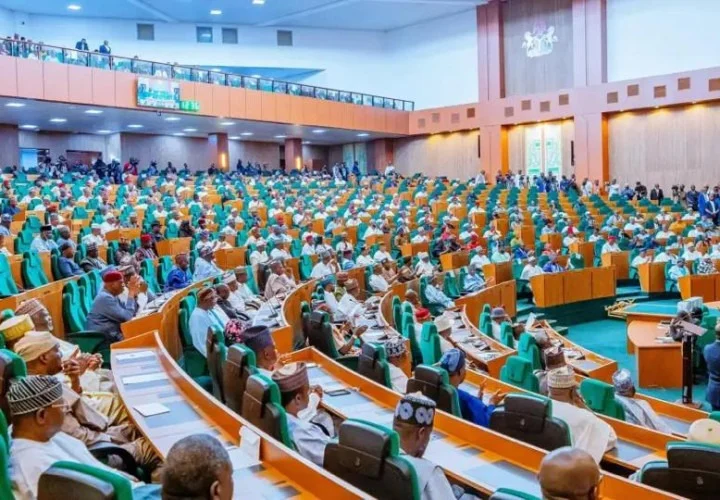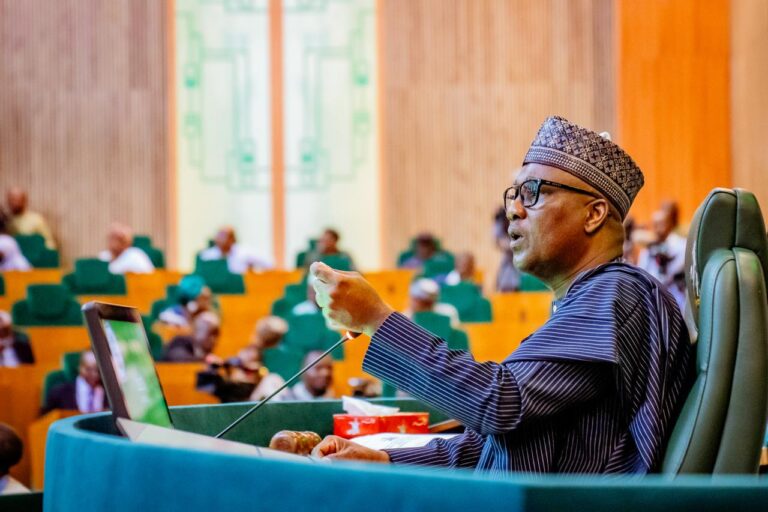
The House of Representatives’ investigation into the controversial Presidential Foreign Investment Promotion Council took a fresh twist on Monday after the Accountant-General of the Federation, Shamseldeen Ogunjimi, disclosed that a forged State House letter was used to secure official government recognition for the alleged fake agency.
The Punch reported that Ogunjimi made the revelation while appearing before the House Ad Hoc Committee investigating the circumstances surrounding the establishment and activities of the council.
He explained that the Office of the Accountant-General acted on what appeared to be a genuine communication from the Presidency requesting the creation of an administrative code for the PIFPC, only for subsequent investigations to reveal that the correspondence did not originate from the State House.
The latest disclosure adds to a growing list of findings before the committee, which is examining how the purported presidential agency allegedly obtained office space within the Federal Secretariat, pursued budgetary allocations, recruited personnel and secured official government recognition using what investigators believe were forged documents.
Presenting his report, Ogunjimi said the Office of the Accountant-General first came into contact with the organisation in November 2024.
According to him, “a letter dated November 7, 2024, bearing a State House reference number, requested the creation of an administrative code for the Presidential Economic Advisory Council to facilitate budgeting, accounting and financial reporting.”
He stated that, in accordance with due process, “the Office of the Accountant-General processed the request, created the administrative code and communicated its approval to the State House,” while a copy of the approval was also forwarded to the Office of the Auditor-General for the Federation.
Following the approval, the treasury received several additional requests from the organisation, including applications for self-accounting status, deployment of personnel, the opening of Treasury Single Account and domiciliary accounts, as well as funding approvals.
Despite processing some administrative requests, Ogunjimi emphasised that no government funds were disbursed to the council.
“It is important to note that no funds were released under salaries, overhead, capital, or any form of intervention or special allocation to the council,” Ogunjimi told lawmakers.
He further disclosed that the council sought an establishment grant of ₦27.4bn, but the request was turned down because there was no budgetary provision to support it.
The Accountant-General also revealed that although the Central Bank of Nigeria opened two domiciliary accounts for the organisation to receive inflows, the accounts never became operational because the council failed to meet the regulatory requirements for activation.
Committee members expressed concern over how the alleged agency was able to pass through several government processes without attracting suspicion.
Responding, Ogunjimi made what lawmakers described as one of the hearing’s most significant revelations.
“The letter that was received by the Treasury was respectfully addressed as coming from the State House. That letter was never issued by the State House”, he said.
The disclosure led committee members to conclude that a hijacked State House letter was allegedly used to deceive government institutions into processing official requests for an agency with no legal backing.
Lawmakers also sought clarification on how civil servants originally posted to the Office of the Chief Economic Adviser to the President later became attached to the purported council without the knowledge of the Office of the Accountant-General.
Ogunjimi explained that two officers deployed to the Office of the Chief Economic Adviser in 2010 and 2013 remained in the office after it was allegedly taken over by the new council, but no official communication was sent to notify the treasury of the change.
“It was never assumed or written to us that those two officers were being taken over. The staff also never reported to the office to say that another council had taken over the office and the name had changed. As far as I was concerned, we were dealing with a new agency, not the Office of the Chief Economic Adviser,” he said.
He added that when the organisation later requested the deployment of five additional officers, only three were approved after an assessment showed the agency did not require the number requested.
“It was when all this matter came to light that I got to know that two of our staff were actually working or being absorbed by the agency. We never knew. We believed, based on the records available to us, that those officers were still with the Office of the Chief Economic Adviser,” he added.
The House investigation is focused on allegations that forged presidential approvals, counterfeit State House correspondence, fake Acts of the National Assembly and other falsified government documents were used to establish and operate the purported Presidential Foreign Investment Promotion Council and the Presidential Economic Advisory Council.
The committee has already received evidence from the Nigeria Police Force confirming that criminal charges bordering on conspiracy and fraud have been filed against the prime suspect, Adeyemi Adeniyi, before the Federal High Court.
At Monday’s sitting, lawmakers directed the Inspector-General of Police to produce Adeniyi before the committee by noon on Wednesday to answer questions over the alleged forgery of official government documents and the operations of the purported presidential agency.
The committee is expected to conclude its investigation with recommendations on possible administrative, legislative and criminal sanctions against anyone found culpable.