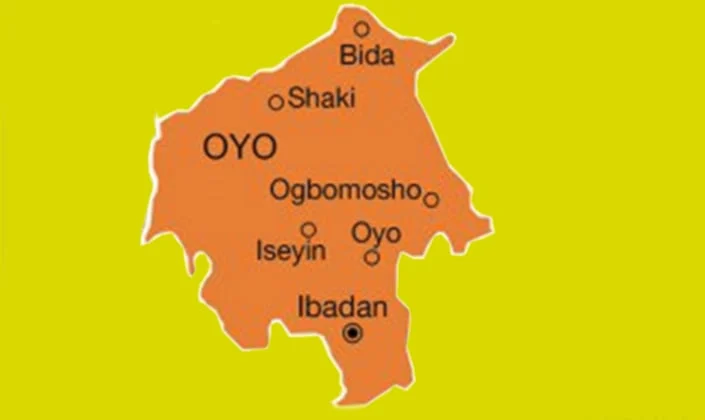
The Oyo State Real Properties Protection Law Agency has cautioned residents against using force to settle land disputes, stressing that unlawful attempts to reclaim property amount to criminal conduct punishable under the law.
The agency urged individuals who believe their land has been encroached upon to pursue legal remedies rather than resort to violence, noting that self-help often fuels conflicts and threatens public order.
The warning was conveyed by the state Commissioner for Information, Dotun Oyelade, who said the agency’s chairman, Olajumoke Aiki, issued the directive in Ibadan while reviewing its performance two years after establishment.
Justice Aiki said the state government remained committed to confronting land grabbing and ensuring that offenders face the law regardless of their status.
“No individual or group is above the law. Anyone found culpable in land grabbing or violent takeover of property will be prosecuted,” she stated.
She explained that the agency works closely with the Ministry of Justice and the Office of the Attorney-General to protect lawful property owners and pursue cases against suspected offenders.
Aiki commended the administration of Seyi Makinde for backing the agency’s work, saying the government had demonstrated strong political will in tackling land-related crimes.
“The governor has made it clear that nobody is untouchable. Even traditional authorities in Ibadan have supported the principle that anyone involved in land grabbing must face prosecution,” she added.
According to her, several cases involving suspected land grabbers are already before the courts, signalling that impunity will not be tolerated.
Responding to complaints that influential figures sometimes intimidate landowners using state structures, the retired jurist said such incidents had declined significantly, noting that none had been officially reported in the past year.
She also addressed the activities of local touts commonly called “Omo Onile,” urging residents and developers to formally report harassment or illegal encroachment so the agency can intervene.
To improve operations, Aiki disclosed that the agency is considering recruiting more investigators and procuring motorcycles to enhance rapid response, especially in remote communities.
Giving an overview of its work, she said the agency had received nearly 4,000 complaint forms since inception, with close to 3,000 petitions formally filed.
“About 1,000 of these matters were resolved without litigation after investigation and due diligence, while others were referred to mediation or the courts for determination,” she said.
She added that hundreds of cases are currently being prosecuted at both High Court and Magistrates’ Court levels, with some already concluded and one conviction secured.
Justice Aiki further stressed that all services provided by the agency — from filing complaints to prosecution where necessary — remain free, in line with government policy.
The agency reaffirmed its commitment to protecting property rights, discouraging violent land seizures and ensuring that disputes are resolved strictly through lawful processes.