

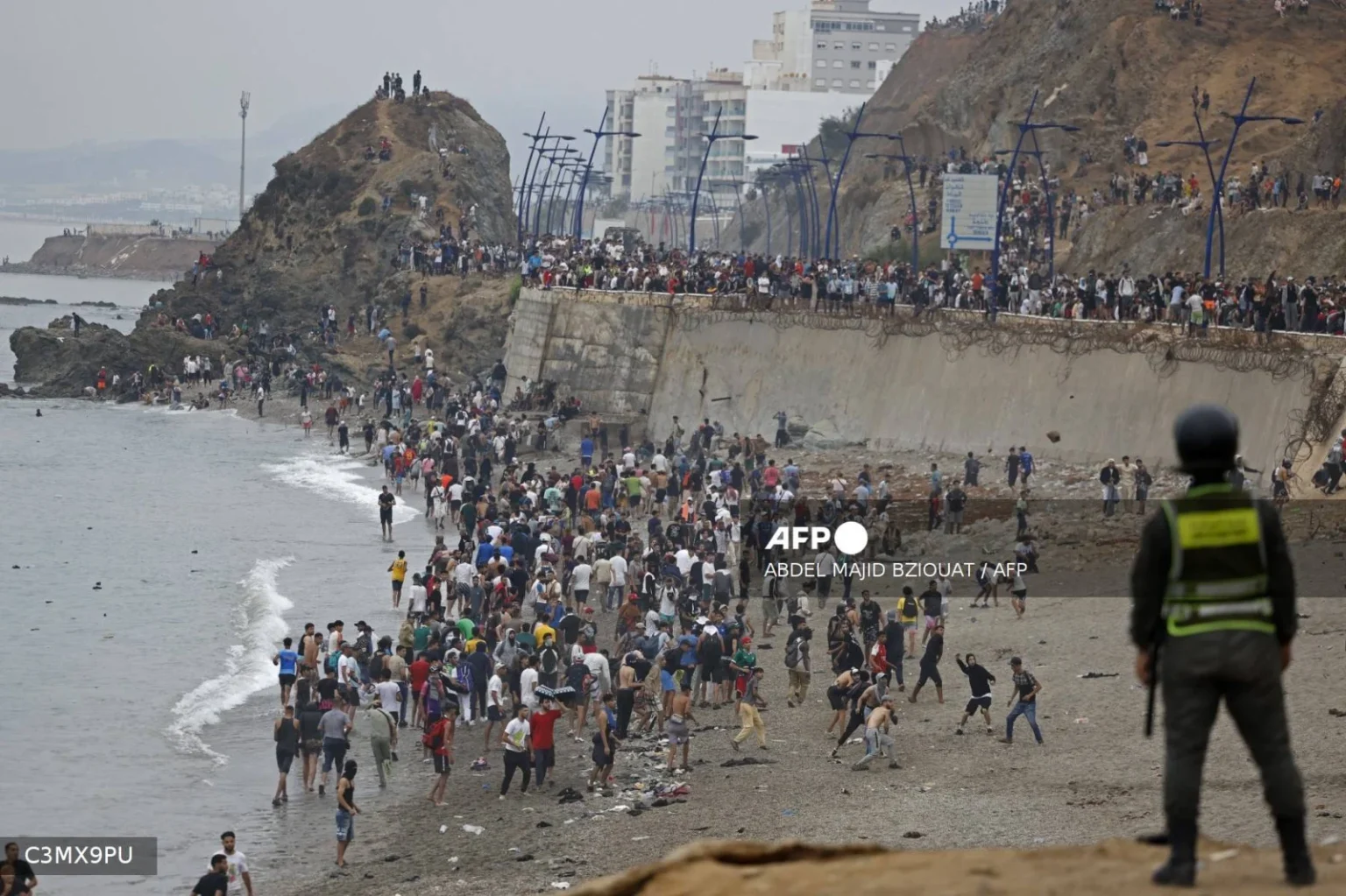
The death toll from the mass migration attempt from Morocco into Spain’s North African enclave of Ceuta has climbed to 67, as Spanish Prime Minister Pedro Sánchez criticised what he described as the “selfish” response of some European Union member states to the crisis.
Spanish authorities said between 50,000 and 60,000 migrants attempted to cross into Ceuta this week, with the majority returning to Morocco by Friday.
Officials in Ceuta said many of the victims drowned while trying to enter the enclave by land and sea, as thousands of migrants overwhelmed border security personnel.
Reacting to the development, Sánchez condemned moves by some EU countries to tighten border controls with Spain following the mass crossings.
In a statement, he said, “The European Union cannot afford this kind of selfish, polarising and unlawful reaction,” adding that such actions were “driven by prejudice, fake news, ignorance or political interest.”
Italy temporarily introduced additional border checks on travellers arriving from Spain, while French authorities also stepped up inspections along their shared border. Italian Prime Minister Giorgia Meloni called for Spain’s participation in the Schengen free-travel zone to be suspended.
In response to the growing crisis, Ireland, which currently holds the rotating presidency of the European Union, announced plans for an emergency meeting of member states to discuss the situation.
Irish Justice, Home Affairs and Migration Minister Jim O’Callaghan said he remained in close contact with EU member states and was continuing to monitor developments.
Spanish authorities said efforts were underway to quickly process and return migrants who entered the territory irregularly. The mass movement followed a recent ruling by Spain’s Supreme Court restricting the summary deportation of migrants arriving by sea without due legal process.
However, migration experts believe the court decision may have been misunderstood by many migrants and human traffickers, fueling false expectations about entry into Spain.
By Friday, hundreds of migrants had voluntarily returned to Morocco after struggling to find food and shelter in Ceuta.
Spanish officials have also begun installing a floating barrier near the Tarajal breakwater, one of the main entry points into the enclave, as part of measures to strengthen border security.
Meanwhile, Prime Minister Sánchez described the mass crossings as “a violation of Spain’s territorial integrity” and blamed the surge on misinformation spread by human traffickers following the Supreme Court ruling.
One of the migrants, 16-year-old Moroccan Ayoub El Abyad, said he decided to make the journey after watching videos on Instagram showing others crossing into Ceuta.
“Migration is about improving our lives. We agreed we would try crossing and trust in God,” he said.
Authorities have continued to warn that social media misinformation and human trafficking networks are encouraging dangerous migration attempts, placing thousands of lives at risk.






