Japan on Friday officially launched its first centralized intelligence agency since the end of World War II, marking a major shift in the country’s national security framework as it seeks to address long-standing vulnerabilities that have earned it the reputation of being a “paradise for spies.”
The newly established National Intelligence Bureau replaces the Cabinet Intelligence and Research Office, a body long criticized for lacking coordination and authority.
Security experts believe the reform could pave the way for broader measures, including an anti-espionage law and the eventual creation of an overseas intelligence service comparable to the US Central Intelligence Agency or Britain’s MI6.
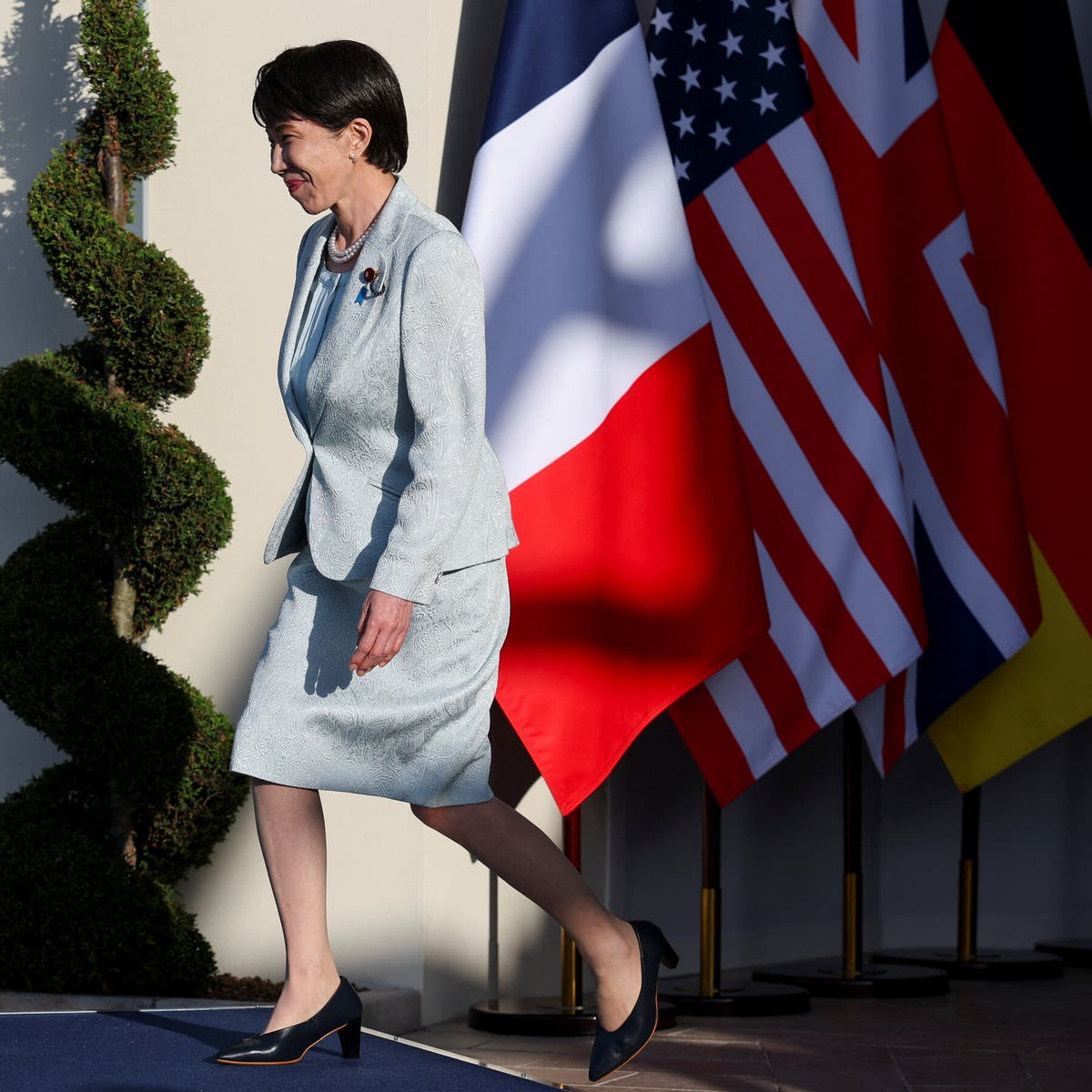
Prime Minister Sanae Takaichi described the bureau’s establishment as the beginning of a broader transformation.
“These measures are merely the first step in intelligence reform.”
“As we look at the increasingly unstable global situation, it is imperative that we address new methods of warfare,” she said.
Since taking office in October, Takaichi has prioritized strengthening Japan’s security architecture. Known for her conservative stance, she has consistently advocated enhanced defense capabilities and supports amending Japan’s pacifist constitution.
According to a July report by The New York Times, her administration has consulted key allies, including the United States, Australia and Germany, on improving Japan’s intelligence operations.
Previously, Japan relied on CIRO, an agency with roughly 700 personnel but limited operational influence. Intelligence gathering was spread across several government institutions, including the ministries of Foreign Affairs, Justice and Defense, as well as the National Police Agency, often resulting in fragmented information sharing.
James D.J. Brown, a professor of political science at Temple University’s Japan campus and author of a book on Russian espionage in Japan, said the lack of coordination has weakened the country’s intelligence system.
Under the new arrangement, the National Intelligence Bureau will serve as the central body responsible for collecting, integrating and analyzing intelligence supplied by government agencies.
The bureau has also been granted greater institutional authority, with ministries now formally required to share intelligence. It will operate under the supervision of the newly established National Intelligence Council, chaired by Takaichi and comprising senior cabinet ministers.
Its responsibilities will cover counterterrorism, emergency response, and efforts to combat foreign espionage and covert influence campaigns.
Why the reform is seen as necessary
Japan’s intelligence apparatus was once among the most powerful in the world during the imperial era, but it was also used to suppress political dissent and monitor citizens before and during the early 20th century.
Following Japan’s defeat in World War II, sweeping reforms were introduced to dismantle much of that security structure and prevent a return to authoritarian rule.
While those reforms strengthened democratic governance, analysts argue they also left modern Japan with significant intelligence shortcomings.
Unlike several major US allies, including the United Kingdom, Australia, Canada and New Zealand—Japan does not maintain an independent foreign intelligence agency.
Philip Shetler-Jones, senior research fellow for Indo-Pacific security at the Royal United Services Institute, also noted that Japan lacks a comprehensive anti-espionage law, allowing foreign operatives and local collaborators to gather information “without breaking the law.”
“It’s an anomaly because of the postwar situation. The occupation of Japan, followed by the security relationship with America, meant that the government of Japan didn’t really have to do a lot of that work because they were defended by America,” Shetler-Jones said.
Experts argue that these vulnerabilities have weakened confidence among Japan’s intelligence partners.
“Japan is being seen as quite leaky and if that’s the case, others won’t be so willing to share information because the next day you might find that it’s appearing in the papers, or it’s been leaked to a foreign power,” Brown said.
Those concerns gained renewed attention after a New York Times investigation in July alleged that Russia had exploited Japan’s weak intelligence safeguards to obtain Japanese-made components later used in missiles and drones deployed in Ukraine.
Attempts to tighten Japan’s espionage laws are not new. Former Prime Minister Yasuhiro Nakasone warned in 1983 that the country had become a “paradise for spies,” but his proposal for an anti-espionage law, which included the death penalty, sparked public outrage and never became law.
Brown said the proposal failed partly because memories of wartime repression remained vivid, leaving many Japanese fearful that expanded intelligence powers could revive surveillance, militarism and political oppression.
Why the timing has changed
Analysts believe the political and security landscape has changed considerably in recent years.
Brown said the passage of time has reduced fears of returning to a police state, while growing regional tensions have increased public support for stronger national security measures.
Japan faces increasing pressure from neighbouring China, North Korea and Russia, all of which possess extensive intelligence capabilities. As a key US ally hosting around 55,000 American troops, Japan is viewed as a high-value intelligence target.
Brown said Russia may seek sensitive political information, including Tokyo’s future approach to the war in Ukraine, while China is likely interested in advanced technologies held by Japanese companies. Intelligence on US military deployments and weapon systems stationed in Japan is also considered valuable.
Shetler-Jones noted that Japanese concerns have intensified because China, Russia and North Korea have strengthened their cooperation.
This growing alignment was highlighted during a military parade in Beijing last September, where Chinese President Xi Jinping, Russian President Vladimir Putin and North Korean leader Kim Jong Un appeared together.
Their cooperation has also extended to joint naval exercises and North Korea’s military support for Russia’s war in Ukraine.
“There’s a sense that Japan will have to do more for the (US) alliance and for itself,” said Shetler-Jones. “Watching the war unfold in Europe, in Ukraine, has added to that sense that you’ve got to be proactive – even if you are fortunate enough to have a big, powerful ally like America.”
Takaichi’s commanding parliamentary majority, secured after February’s snap election, has further strengthened her ability to pursue security reforms with limited political resistance.
Concerns over oversight
Despite government support, the reforms remain controversial.
Several lawmakers opposed the legislation establishing the National Intelligence Bureau, while more than 200 demonstrators protested against the bill before its parliamentary approval in May, according to NHK.
Makoto Oniki of the Constitutional Democratic Party warned that expanding intelligence powers without sufficient oversight could threaten civil liberties.
“A nation’s intelligence apparatus is one of its most powerful institutions, and if allowed to run amok, it could seriously and unjustly infringe upon the human rights of its citizens,” he said.
“I oppose this bill, which not only raises concerns about unnecessary infringements on personal information and privacy but also strengthens its authority without any checks and balances in the form of democratic oversight, it is a bill with serious flaws,” Oniki said.
Takaichi’s expected next steps, introducing an anti-espionage law and creating a foreign intelligence service—are also expected to trigger intense public debate.
Brown cautioned that while democratic countries have successfully implemented such laws, authoritarian governments have sometimes used them to silence critics.
“There are laws around the world like this that are perfectly fine and democratic, but there are also authoritarian regimes that use such laws in order to prosecute critics,” said Brown.
Shetler-Jones stressed that effective oversight would be essential to maintaining public trust.
“We haven’t seen as much as we might have expected about oversight mechanisms, and so I think it’s quite reasonable for people to continue to ask about that.”