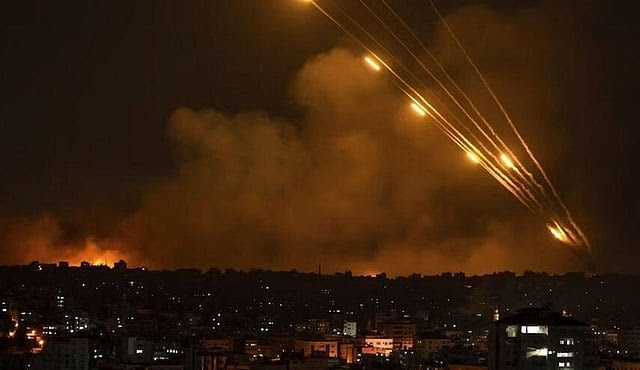
Israel has carried out a fresh round of strikes on Tehran on Friday, as tensions with Iran intensified and regional Gulf states came under renewed attack.
The Iranian capital has faced almost continuous bombardment since a joint US–Israeli offensive began the conflict on February 28.
The Israeli military said the latest strikes were aimed at what it described as “infrastructure of the Iranian terror regime”.
The renewed assault came shortly after Israeli Prime Minister Benjamin Netanyahu declared that the Middle East war had severely degraded Iran’s nuclear and missile capabilities as the conflict moves into its fourth week.
“We are winning and Iran is being decimated,” the Israeli premier said at a press conference.
Despite Israel’s claims, Iran has continued retaliatory attacks on Israel and Gulf countries, targeting oil and gas infrastructure and deepening fears of a global energy shock.
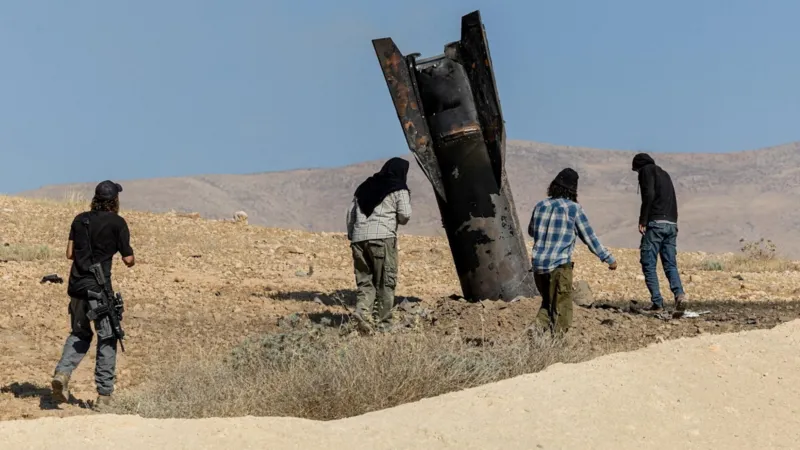
Explosions were reported over Jerusalem on Thursday night as Israel’s military said it detected three waves of Iranian missile fire, with no casualties reported.
Elsewhere, the United Arab Emirates and Kuwait reported missile activity, while Saudi Arabia said it intercepted more than a dozen drones early Friday, as Eid al-Fitr celebrations began across the region.
The conflict, which has killed hundreds and displaced thousands, has also expanded into Lebanon, where Israeli forces have intensified strikes in response to rocket fire from Iran-backed Hezbollah.
Lebanon’s health ministry said fatalities from Israeli strikes across southern and eastern regions, as well as Beirut and its southern suburbs, have now exceeded 1,000.
During talks with French officials, Lebanese President Joseph Aoun renewed calls for a ceasefire and negotiations, a position later echoed by French President Emmanuel Macron, who said progress depended on Israeli participation.
Israeli Prime Minister Netanyahu, whose domestic popularity has risen amid the conflict, insisted Israel was gaining the upper hand.
“I also see this war ending a lot faster than people think,” he said, without offering a timeline.
He also suggested fractures within Iran’s leadership.
Netanyahu said Israel saw “cracks” in the Iranian leadership and was trying to exploit them.
“Mojtaba, the replacement ayatollah, has not shown his face,” he said, referring to Iran’s newly appointed supreme leader, the son of Ayatollah Ali Khamenei, who was killed in an Israeli airstrike on the first day of the war.
Energy infrastructure across the Gulf has also been hit in recent days, worsening market instability and raising global inflation concerns.
Markets reacted sharply after Iranian missiles struck Qatar’s Ras Laffan gas facility in retaliation for Israel’s strike on Iran’s South Pars field.
Iran warned it would show “zero restraint” if its energy infrastructure was targeted again, while also intensifying pressure around the Strait of Hormuz, through which a significant share of global oil and LNG flows.
The Ras Laffan strike reportedly caused extensive damage, with Qatar’s state energy firm estimating losses of up to $20 billion annually and a possible five-year repair timeline.
Oil and gas prices have surged amid supply fears, with crude hovering around $100 per barrel.
Some relief emerged in early Asian trading after Netanyahu suggested the conflict could end sooner than expected.
However, attacks continued across the Gulf. Iran’s Revolutionary Guards said they targeted US forces at the United Arab Emirates’ Al-Dhafra air base.
In Kuwait, drone strikes triggered a fire at the Mina Al-Ahmadi refinery, forcing shutdowns of several units as emergency teams responded.
Across the region, many marked the end of Ramadan under the shadow of conflict and economic strain.
“There’s nothing to celebrate,” said Aziza Ahmad, describing how displacement and hardship have replaced traditional Eid festivities in Beirut.
Iran also observed Nowruz celebrations alongside Ramadan’s conclusion, with state media saying Eid would be marked on Saturday.
US President Donald Trump said he was not informed in advance of Israel’s strike on South Pars, which supplies a large portion of Iran’s domestic energy needs.
“We get along great. It’s coordinated, but on occasion, he’ll do something” that Washington opposes, Trump said.
Netanyahu maintained Israel acted independently in that operation but said it would respect Trump’s request to avoid further strikes on the gas field.
Trump also warned that the United States would “blow up” South Pars if Iran continued attacks on Qatar, though he ruled out sending ground troops.
Netanyahu suggested that regime change in Tehran could require “a ground component”, without elaborating.
“There are many possibilities for this ground component and I take the liberty of not sharing (those) with you,” he said.
French President Emmanuel Macron said France would consult UN Security Council members on a framework to secure maritime traffic in the Strait of Hormuz once fighting subsides.
Meanwhile, Pentagon chief Pete Hegseth said there was no clear end in sight for the war.
“We wouldn’t want to set a definitive timeframe,” he told reporters.
“It will be at the president’s choosing, ultimately, where we say, ‘Hey, we’ve achieved what we need to.’”