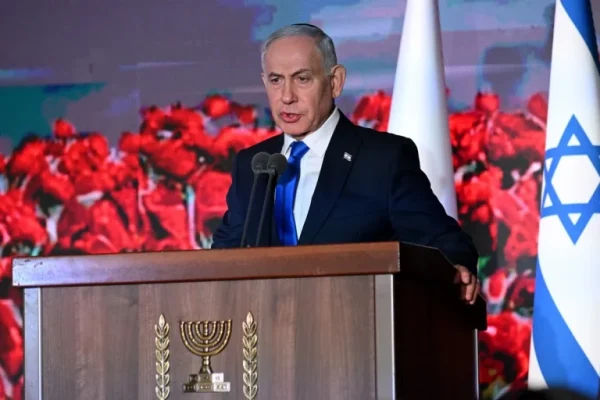
Israeli Prime Minister Benjamin Netanyahu has issued an apology to Qatar following the death of a Qatari citizen in an unprecedented Israeli strike on Hamas leaders in Doha earlier this month, an attack that drew widespread international condemnation.
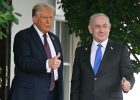
Qatari Prime Minister, Sheikh Mohammed bin Abdulrahman bin Jassim Al Thani, received the apology on Monday during a joint phone call with Netanyahu and United States President, Donald Trump, held as part of efforts at the White House.
“As a first step, Prime Minister Netanyahu expressed his deep regret that Israel’s missile strike against Hamas targets in Qatar unintentionally killed a Qatari serviceman,” a White House statement said.
“He further expressed regret that, in targeting Hamas leadership during hostage negotiations, Israel violated Qatari sovereignty and affirmed that Israel will not conduct such an attack again in the future.”
The September 9 strike killed at least five lower-ranking Hamas members along with a Qatari security official, though Hamas’s top leaders, who were involved in negotiations over a US-backed ceasefire proposal, survived the assassination attempt.
Apology Seen as Crucial for Regional Mediation
The attack marked the first Israeli military action on Qatari soil, a sensitive move given Qatar’s role as a key mediator in ceasefire efforts and as host to Al Udeid, the largest US military base in the Middle East.
Qatar’s Ministry of Foreign Affairs confirmed the call, describing it as “part of US efforts to address the repercussions of the Israeli aggression that targeted a residential neighbourhood in Doha city, which included housing for the Hamas negotiating delegation, resulting in a blatant violation of the sovereignty of the State of Qatar.”
“At the beginning of the call, the Prime Minister and Minister of Foreign Affairs expressed his gratitude to the US President for his efforts to achieve peace in the region, including guarantees to prevent a recurrence of aggression against the State of Qatar and the US commitment to its defense partnership with Qatar,” the ministry added.
“For his part, the Israeli Prime Minister apologised during the call for the attack and the violation of Qatari sovereignty, which resulted in the martyrdom of Qatari citizen Badr Al-Dosari, pledging not to repeat any targeting of Qatari territory in the future.”
Netanyahu’s official X account reported his remarks to the Qatari prime minister, “Mr Prime Minister, I want you to know that Israel regrets that one of your citizens was killed in our strike. I want to assure you that Israel was targeting Hamas, not Qataris.
“I also want to assure you that Israel has no plan to violate your sovereignty again in the future, and I have made that commitment to the president.”
He also added, “Israel has grievances against Qatar, from support for the Muslim Brotherhood to how Israel is portrayed on Al Jazeera to support for anti-Israel sentiment on college campuses.”
The attack was condemned internationally, with United Nations Secretary-General Antonio Guterres calling it a “flagrant violation” of Qatar’s sovereignty and territorial integrity.
Muslim leaders across the region later gathered in Doha to demonstrate solidarity in the wake of the strike.
Following Netanyahu’s apology, the White House reported that Qatar’s prime minister “welcomed these assurances, emphasising Qatar’s readiness to continue contributing meaningfully to regional security and stability. Prime Minister Netanyahu expressed commitment to the same.”
Sultan Barakat, a professor at Hamad Bin Khalifa University in Qatar, described the apology as “significant.”
“Qatar has said from the beginning that it would not be able to continue mediation efforts without a public apology and a confirmation from Netanyahu that he won’t attempt to do it again,” Barakat told Al Jazeera.
“It is important not just for the mediation between Hamas and Israel but for the whole portfolio of mediation in general. You can’t protect the space for mediation when parties to the conflict want to settle their accounts directly.”
Despite the apology, experts and diplomats warn that without tangible actions to hold Israel accountable, words alone may not protect Palestinians or secure meaningful peace.