Recent United States intelligence assessments indicate that Iran still retains about half of its missile launchers and thousands of one-way attack drones, despite weeks of sustained US and Israeli strikes on military targets, CNN reported citing three sources familiar with the intelligence.
“They are still very much poised to wreak absolute havoc throughout the entire region,” one of the sources said of Iran.
The assessment may also include launchers that are currently unusable but not destroyed, such as those buried underground by airstrikes.
According to two of the sources, Iran still possesses thousands of drones, representing roughly 50 percent of its overall drone capability.
The intelligence also found that a large portion of Iran’s coastal defense cruise missiles remain intact.
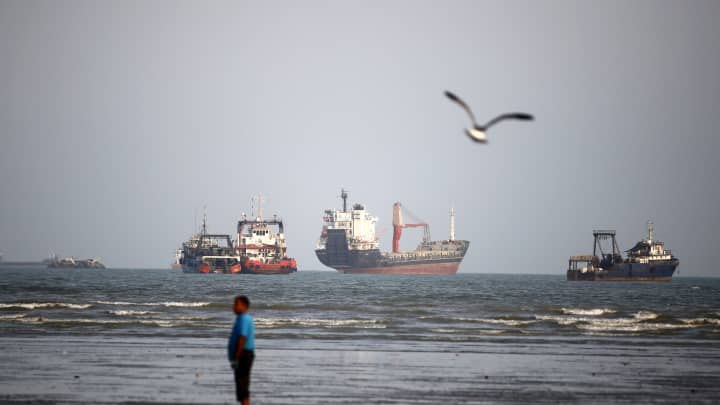
The missiles are a major component of Iran’s ability to threaten maritime traffic through the Strait of Hormuz. Sources said the US military has not heavily targeted coastal assets, focusing instead on capabilities that can strike allies in the region.
The intelligence paints a more measured picture than the optimistic public statements from US President Donald Trump and members of his administration.
Speaking on Wednesday evening, Trump said Iran’s “ability to launch missiles and drones is dramatically curtailed, and their weapons factories and rocket launchers are being blown to pieces, very few of them left.”
US Central Command said on Wednesday that more than 12,300 targets have been hit inside Iran since the start of operations.
The sources noted that Iran’s military capabilities have been significantly weakened and that key figures have been killed in US and Israeli attacks, including Supreme Leader Ali Khamenei and Ali Larijani, the head of Iran’s National Security Council.
Despite the damage, intelligence suggests Iran still has a large stockpile of missiles.
Publicly, the Pentagon has focused on the drop in Iranian attacks rather than the number of weapons destroyed.
Secretary of Defense Pete Hegseth said during a March 19 briefing that “ballistic missile attacks against our forces, down 90 percent since the start of the conflict, same with one way attack UAVs, think kamikaze drones, down 90 percent.”
Responding to CNN’s report, White House spokesperson Anna Kelly dismissed the findings. “anonymous sources desperately want to attack President Trump and demean the incredible work of our United States Military in achieving the goals of Operation Epic Fury.”
“Here are the facts: Iranian ballistic missile and drone attacks are down 90 percent, their navy is wiped out, two-thirds of their production facilities are damaged or destroyed, and the United States and Israel have overwhelming air dominance over Iran,” she said. “The terrorist regime is being decimated militarily and their dismal situation grows bleaker by the day – their only hope is to make a deal with President Trump’s administration and leave behind their nuclear ambitions for good. Otherwise, they will be hit harder than they’ve ever been hit before.”
Another administration official said Iran’s ballistic missile capabilities are being destroyed rapidly.
However, Israel, Gulf states and US personnel in the region continue to face regular missile and drone attacks.
Pentagon spokesman Sean Parnell also rejected CNN’s reporting.
“The United States military has delivered a crippling series of blows to the Iranian regime,” Parnell said. “We are far ahead of schedule on accomplishing our military objectives: destroy Iran’s missile arsenal, annihilate their Navy, destroy their terrorist proxies, and ensure Iran can never obtain a nuclear weapon.”
Israeli military officials reportedly estimate that only 20 to 25 percent of Iran’s launchers remain operational. Unlike the US intelligence count, Israel does not include launchers that are trapped underground or hidden in tunnels.
Trump said on Wednesday that US operations could be completed within two to three weeks.
But one source familiar with the intelligence described that timeline as unrealistic.
“We can keep f**king them up, I don’t doubt it, but you’re out of your mind if you think this will be done in two weeks,” the source said.
Hegseth maintained that Iran’s capabilities continue to shrink.
“Yes, they will still shoot some missiles, but we will shoot them down,” he said. “Of note, the last 24 hours saw the lowest number of enemy missiles and drones fired by Iran. They will go underground, but we will find them.”
Iran’s underground tunnel systems are seen as one of the main reasons its launchers have not been destroyed in greater numbers. For decades, Iran has built extensive cave and tunnel networks to shield its missile systems from attack.
Sources said Iran has also been effective at using mobile launchers that can fire and move quickly, making them difficult to locate. Analysts compared the challenge to the US struggle in tracking Houthi launchers in Yemen.
The US and Israel have increasingly shifted to striking tunnel entrances and heavy machinery used to clear access routes, according to Annika Ganzeveld, Middle East Portfolio Manager for the Critical Threats Project at the American Enterprise Institute.
The intelligence also comes as the US faces difficulty reopening the Strait of Hormuz. Officials reportedly acknowledge privately that they cannot guarantee the vital waterway will reopen before the conflict ends.
Although Iran’s conventional navy has been largely destroyed, one source said the naval arm of the Islamic Revolutionary Guard Corps still retains about half of its capabilities.
The second source said the IRGC still has “hundreds, if not thousands, of small boats and unmanned surface vessels left.”
CENTCOM said Wednesday that more than 155 Iranian vessels have been damaged or destroyed.
However, Ganzeveld said it remains unclear whether those figures refer to Iran’s regular navy or the IRGC Navy, which is primarily responsible for threatening commercial shipping in the Strait of Hormuz.
“There are certainly things that remain — the proxies, as well as the drones, and Iran recently demonstrated in the past couple of days that it still retains the ability to target shipping in the strait,” Ganzeveld said. “So there are definitely things that remain to be targeted if we want to completely destroy these capabilities.”