Iranian officials urged young people across the country to form human chains around power plants as fears mounted over possible United States strikes if Tehran failed to reopen the Strait of Hormuz before President Donald Trump’s deadline, the UK Guardian reported.
State media showed crowds gathering outside electricity stations in several cities, waving Iranian flags and holding banners. Demonstrations were reported near the country’s largest power plant outside Tehran, in Tabriz in the north-west, and in Dezful in the south-west, where people assembled on a bridge believed to be about 1,700 years old.
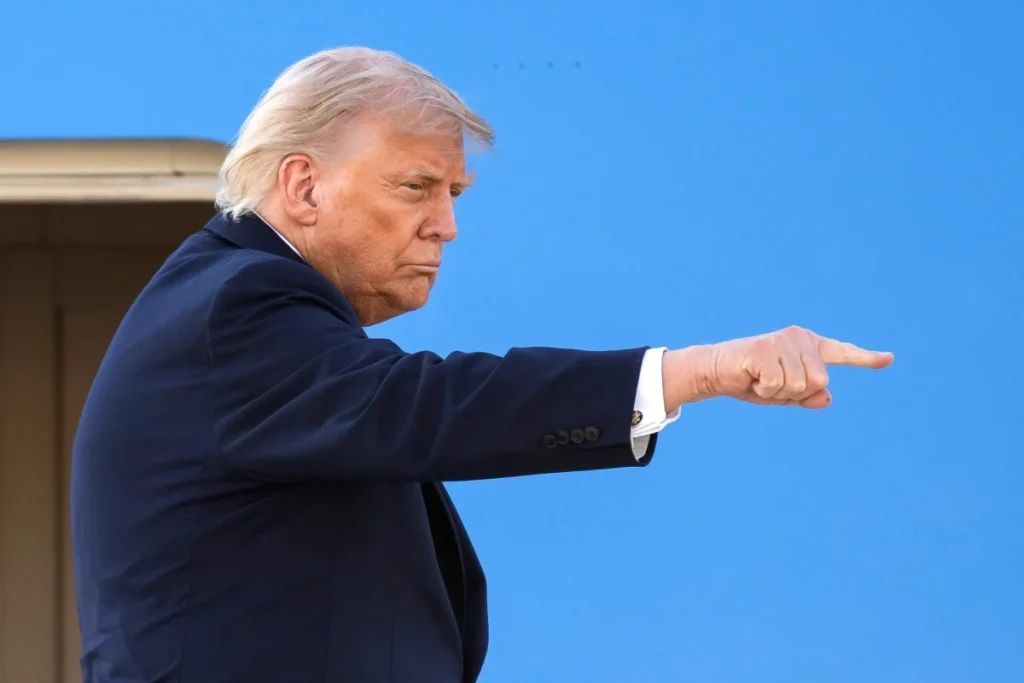
The mobilisation came after Trump warned that “a whole civilisation will die tonight” and threatened to destroy Iran’s power plants and other civilian infrastructure if the Strait of Hormuz was not reopened.
Iran’s President, Masoud Pezeshkian, claimed that 14 million people had volunteered to defend the country.
He said they had “declared their readiness to sacrifice their lives in defence of Iran”.
Iranian state television also aired a video message from Alireza Rahimi, identified as secretary of the Supreme Council of Youth and Adolescents, calling on young people to protect the country’s infrastructure.
“I invite all young people, athletes, artists, students, university students and their professors,” he said.
He urged them to gather on “Tuesday at 2pm around the power plants that are our national assets and capital, regardless of any taste or political viewpoint, [that] belong to the future of Iran and to the Iranian youth”.
Iran has used human-chain demonstrations in the past around sensitive nuclear facilities during periods of heightened tensions with Western countries.
Residents in Tehran also began stockpiling food, water and mobile charging equipment in case they needed to flee the capital.
One resident said, “No good can come out of this, since obviously the US and Israel don’t give a damn about the Iranian people.
“They are just following their own agenda.”
The fears escalated after the US and Israel carried out fresh waves of airstrikes, reducing hopes of a last-minute ceasefire before Trump’s 8pm ET deadline.
Diplomats involved in the mediation efforts said the attacks appeared to strengthen hardliners within Iran while weakening those pushing for negotiations.
Although Trump suggested there was still time for an agreement, indirect talks reportedly continued through Pakistan. However, mediators said the latest Israeli attacks were damaging efforts to find common ground.
Recent airstrikes reportedly targeted railways, bridges, the Kharg Island oil export terminal and a petrochemicals complex.
In response, Iran’s Revolutionary Guards warned that “restraint is over”.
“We will do something with the infrastructure of America and its partners that will deprive America and its allies of oil and gas in the region for years,” the statement said.
Iran is said to be seeking not just a ceasefire but a complete end to the conflict, fearing that any temporary truce could lead to renewed attacks in the future.
Pakistan’s military also said an Iranian strike on an industrial complex in Jubail, Saudi Arabia, had further complicated diplomatic efforts.
It described the attack as “an unnecessary escalation which spoils sincere efforts to resolve the conflict through peaceful means”.
Saudi Arabia has reportedly warned that it could join the conflict if such attacks continue.