The Federal Government has ruled out any immediate plan to increase electricity tariffs, saying its priority is to improve power supply and strengthen the financial and physical infrastructure supporting the sector.
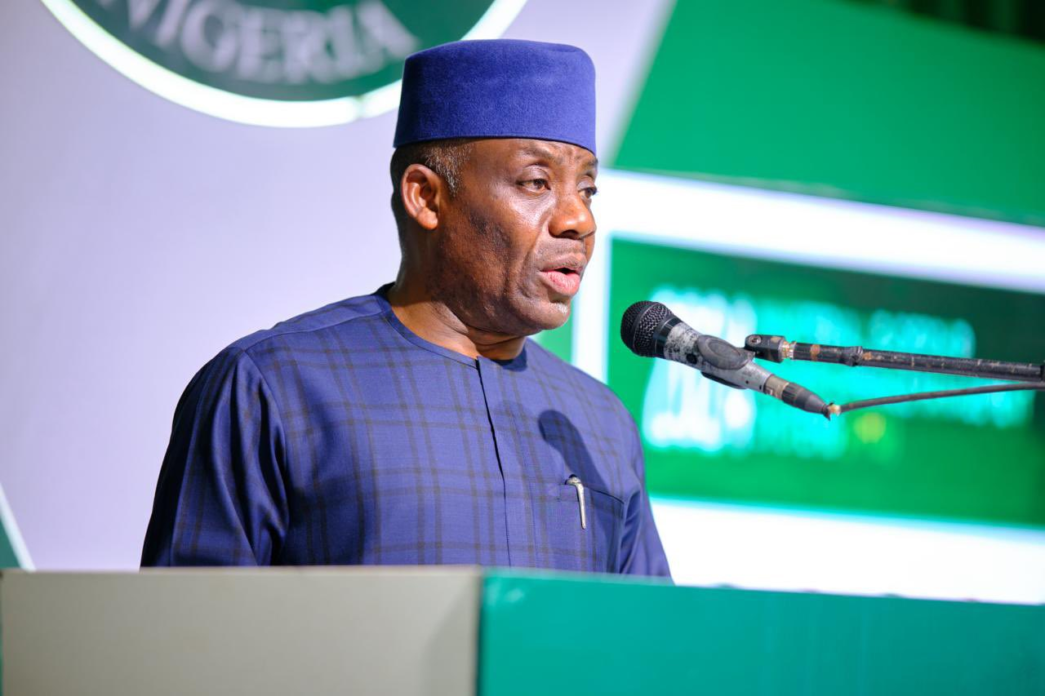
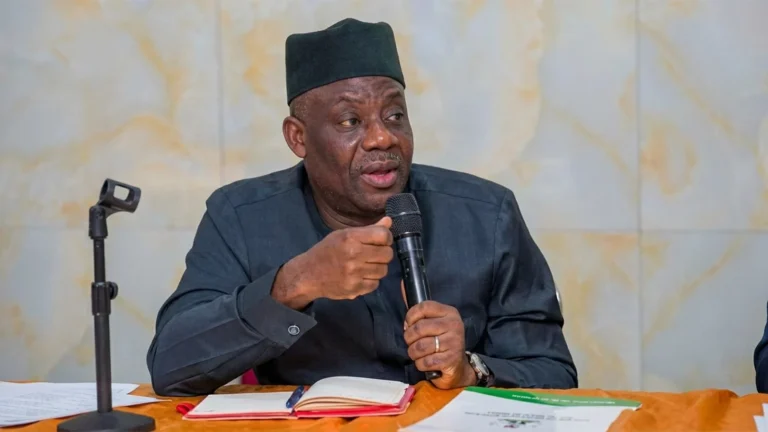
The Punch reported that the Minister of Power, Joseph Tegbe, stated this on Monday in Abuja during a media parley to mark his first 100 days in office, covering the period from June 8 to September 16.
“Let me categorically state, and this is not a political statement, we have no plan to increase electricity tariffs,” he said.
Tegbe explained that the government was concentrating on addressing the structural problems affecting the power sector instead of placing additional financial burdens on consumers.
He said the sector faced interconnected challenges across the entire electricity value chain, adding that increasing generation capacity alone would not resolve the problems.
“When President Bola Ahmed Tinubu entrusted me with the responsibility of serving as Minister of Power, I made four promises to Nigerians. I promised a disciplined approach to solving the sector’s problems. I promised to pursue grid stability through structured, strategic reforms. I promised visible incremental improvements.
“Upon assuming office, the diagnosis we undertook at the onset revealed constraints at every segment of the electricity value chain. Gas supply to power stations was limited by damaged pipelines and commercial terms that discouraged investment.
“Our generation fleet was heavily dependent on thermal plants, with ageing equipment, deferred maintenance, stalled projects and capacity unable to reach consumers. The sector diagnosis revealed payment of only 27 per cent of generation companies’ bills, undermining their ability to maintain plants and pay gas suppliers,” Tegbe stated.
The minister also identified vandalism of transmission infrastructure, overstretched equipment and frequent system failures as major challenges, while putting the combined technical, commercial and collection losses of distribution companies at between 30 and 40 per cent.
“Across the market, inflation and foreign exchange pressures raised costs. Arrears owed by ministries, departments and agencies exceeded 100 billion naira. Debts continued to accumulate, regulatory uncertainty weakened confidence, and inconsistent data made it difficult to establish a common factual basis for decisions.
“Substantial development-finance commitments also required better coordination to translate funding opportunities into electricity delivered,” he said.
Tegbe said the various challenges had created a cycle in which unpaid bills affected gas supply and maintenance, unreliable electricity reduced collections and poor collections increased sector debt.
“These problems reinforce one another. Unpaid bills weaken gas supply and maintenance; unreliable supply depresses collections; poor collections deepen debt. A new power station cannot, by itself, resolve that cycle.
“Sustainable improvement requires us to repair the physical system and the commercial relationships that keep it functioning,” Tegbe said.
He said the government used its first 100 days to assess and stabilise the sector, rather than focusing exclusively on launching new projects.
According to him, the 375MW Alaoji open-cycle power plant was returned to the national grid after being offline for three years, while transformers commissioned at Apapa, Ijora, Alausa and Lekki in Lagos helped unlock 672MW of transmission capacity.
He added that a 300MVA transformer at Katampe, Abuja, unlocked another 240MW.
Tegbe said operational data showed that power generation and transmission exceeded 5,000MW in the weeks before the media briefing, compared with between 3,700MW and 4,700MW before June.
He said generation reached a peak of 5,330MW in August and September.
However, the minister acknowledged that improvements in national generation figures did not necessarily translate into better electricity supply for every community.
“National progress can coexist with an unreliable feeder in a particular community. So, when we say that there are improvements in certain places, we do not categorically deny the experiences of those that are yet to benefit,” he said.
On the sector’s financial challenges, Tegbe said the government had raised an estimated N1.23tn towards addressing part of the N3.3tn power-sector debt backlog.
He also disclosed that approximately 350,000 electricity meters were installed within the first 100 days of his administration, bringing cumulative installations to 1,004,260 as of August 2026.
According to him, the resolution of litigation surrounding the AMMON metering programme had also cleared the way for the procurement of about 1.4 million smart meters.
Looking ahead, Tegbe said the government would prioritise the stabilisation of the Lagos, Enugu-Port Harcourt and Abuja-Kaduna-Kano transmission corridors, alongside plans to commence work on a Transmission Super Grid.
He added that technical audits had begun on the Lagos and Abuja transmission corridors, while the government would measure its progress over the next six months using electricity supply reliability, billing accuracy and the speed of resolving faults and complaints.
“Our original commitment to visible, incremental improvements remains the benchmark. We will report progress against that benchmark, including changes in supply reliability, billing accuracy and the resolution of faults and complaints,” he stated.