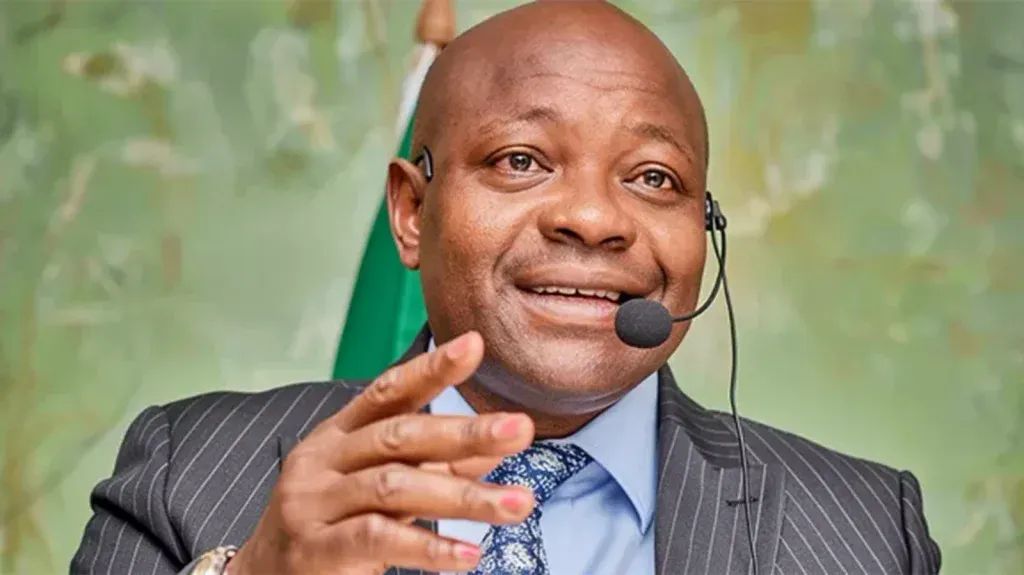
The Director-General of the Department of State Services, Oluwatosin Ajayi, has directed personnel of the agency to stop arresting individuals over matters that are purely civil.
Ajayi disclosed this in a media interview on Thursday, saying the directive was part of reforms aimed at strengthening respect for the rule of law, human rights and accountability within the service.
The DSS chief said his administration had focused its reforms on five major areas: law enforcement, cooperation with other security agencies, accountability, respect for human rights, as well as administrative and infrastructural improvements.
According to him, the reforms have helped the agency draw a clearer line between civil disputes and criminal offences.
Ajayi said his professional experience showed that the DSS had, in the past, sometimes treated civil and criminal matters similarly.
“You cannot apply the use of force in civil matters. Even some criminal matters don’t require force,” he said.
He cited the case involving constitutional lawyer, Prof Pat Utomi, who had faced allegations concerning an attempt to establish what was described as a “shadow government.”
Rather than arresting Utomi, Ajayi said the service approached the court for a judicial determination of the matter.
“Rather than arrest him, we sought judicial interpretation. And the Court ruled that his adventure was unconstitutional, illegal, and a threat to national security,” he said.
The DSS boss also referred to a legal action involving the Socio-Economic Rights and Accountability Project, SERAP, over allegations that two DSS personnel invaded its office.
According to him, the matter was handled through the courts rather than by arrest, with the court eventually awarding more than N100 million in favour of the organisation.
Asked whether the DSS had now adopted litigation as its preferred approach in civil matters, Ajayi responded, “Yes. I have told my people that there should be no arrest in any civil case.”
He added that the agency would similarly approach the courts in matters involving journalists, describing members of the media as professional colleagues.
“I call you guys our professional colleagues. The only difference is that, while you inform the public, we inform the Government,” Ajayi said.
He explained that information provided to government by the DSS remains classified until the service decides to declassify it.
The DSS director-general said the reforms were intended to improve the agency’s professionalism while ensuring that its operations remain within the bounds of the law.